


The Boom Supersonic XB-1 test flight 2026 campaign has become the single most talked-about development program in commercial aviation this year. After years of engineering, setbacks, and relentless iteration, the XB-1 demonstrator is now flying faster and higher than ever before. What we are witnessing in 2026 is nothing short of a generational shift in how the industry thinks about speed, efficiency, and the future of air travel.
For those of us who have spent careers in the cockpit, the progress is genuinely exciting. The Boom Supersonic XB-1 test flight 2026 program is not just about breaking the sound barrier with a small demonstrator jet. It is about proving that the technologies behind Overture, Boom’s full-scale commercial airliner, actually work in the real world.
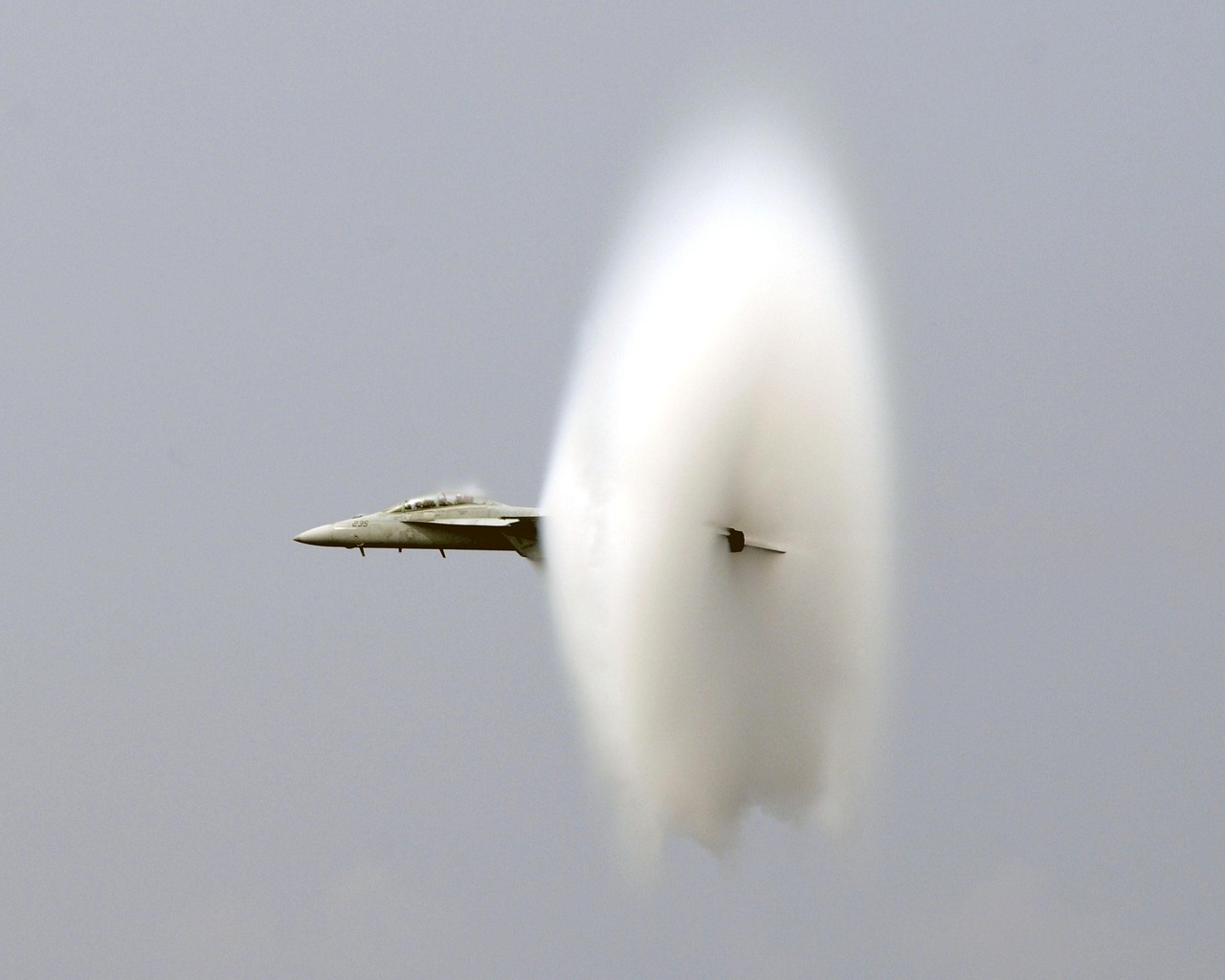
What Makes the Boom Supersonic XB-1 Test Flight 2026 Campaign So Significant?
The XB-1 is a one-third-scale prototype of Boom’s planned Overture airliner. It was designed from the start to validate key aerodynamic, propulsion, and materials technologies at supersonic speeds. The Boom Supersonic XB-1 test flight 2026 series represents the culmination of a methodical envelope expansion that began with the aircraft’s first flight in 2024.
By mid-2026, the XB-1 has completed dozens of sorties from its test base at Mojave Air and Space Port in California. Each flight pushes the aircraft closer to its design speed of Mach 1.7. The data gathered from every single sortie feeds directly into the Overture development pipeline.
What sets this test campaign apart from other demonstrator programs is the speed of iteration. Boom’s engineering team analyzes flight data within hours and applies changes to subsequent flights. This approach has compressed what would normally be a multi-year flight test schedule into a much tighter timeline.
Milestone 1: Sustained Supersonic Flight Beyond Mach 1.5
One of the headline achievements of the Boom Supersonic XB-1 test flight 2026 effort is sustained supersonic flight well beyond Mach 1. Earlier test sorties in 2025 had taken the aircraft through the transonic regime, but 2026 has seen multiple flights at speeds exceeding Mach 1.5.
Sustaining these speeds is far harder than briefly punching through Mach 1. The thermal loads, aerodynamic forces, and engine performance characteristics all change dramatically at high Mach numbers. The fact that XB-1 has flown repeated profiles at these speeds validates the airframe’s structural design.
Pilots and engineers involved in the program have described the aircraft’s handling qualities at supersonic speeds as stable and predictable. That kind of feedback is gold for the Overture team.
Milestone 2: Carbon Fiber Composite Airframe Validation
The XB-1 airframe is built almost entirely from carbon fiber composites. This is a direct technology pathway for Overture, which will rely on advanced composites to manage weight and heat at sustained cruise speeds above Mach 1.7.
During the Boom Supersonic XB-1 test flight 2026 series, the composite structure has been subjected to real-world thermal cycling and aerodynamic loading that cannot be fully replicated in a lab. Instrumentation embedded throughout the airframe provides continuous data on stress, strain, and temperature.
So far, the results are encouraging. The composite structure is performing within design limits, and no unexpected delamination or fatigue issues have been reported. This is a major confidence builder for the production-scale Overture airframe.
Milestone 3: GE J85 Engine Performance at Supersonic Speeds
The XB-1 is powered by three General Electric J85 engines, a well-proven military powerplant adapted for this demonstrator. While Overture will use a completely different engine, the J85 installation on XB-1 has allowed Boom to validate inlet design, exhaust nozzle geometry, and overall propulsion integration.
The Boom Supersonic XB-1 test flight 2026 data shows that the engine installation is delivering the expected thrust at supersonic speeds. Inlet performance, which is one of the trickiest aspects of supersonic propulsion, has matched computational predictions closely.
This work connects to the broader industry push for next-generation aircraft engine breakthroughs that will power the next wave of commercial aircraft. Overture’s eventual powerplant, the Symphony engine being developed by Boom’s propulsion team, will need to meet far stricter efficiency and emissions standards than the J85.
Milestone 4: Digital Flight Control System Maturity
Flying at supersonic speeds demands a flight control system that can manage rapidly changing aerodynamic conditions. The XB-1’s fly-by-wire system has been refined throughout the Boom Supersonic XB-1 test flight 2026 program, with software updates applied between flights based on real flight data.
The control laws governing the aircraft’s pitch, roll, and yaw responses have been tuned to provide safe and predictable handling across the entire flight envelope. For a future commercial aircraft like Overture, this kind of control system maturity is non-negotiable.
Test pilots have noted that the transition through the transonic region, historically the most challenging phase for supersonic aircraft, is smooth and well-damped. This speaks to the quality of the aerodynamic modeling and control law design.
Milestone 5: Sonic Boom Measurement and Mitigation Data
One of the biggest obstacles to commercial supersonic flight has always been the sonic boom. Overland supersonic flight remains restricted in most countries because of noise regulations. The Boom Supersonic XB-1 test flight 2026 campaign includes extensive sonic boom measurement using ground-based sensor arrays.
While XB-1 was not specifically designed as a low-boom aircraft, the data collected during supersonic flights provides valuable information about shock wave propagation and ground-level noise signatures. This data helps Boom refine the Overture airframe shape for reduced boom intensity.
Regulatory bodies including the FAA and ICAO are actively developing new noise standards for supersonic aircraft. The real-world data from XB-1 flights contributes directly to these ongoing regulatory discussions.
Milestone 6: Aerodynamic Efficiency Gains Confirmed in Flight
Computational fluid dynamics (CFD) models predicted that the XB-1’s delta wing and area-ruled fuselage would deliver specific lift-to-drag ratios at supersonic speeds. The Boom Supersonic XB-1 test flight 2026 data has confirmed these predictions, and in some flight conditions, the aircraft has actually exceeded the modeled efficiency.
This is significant because aerodynamic efficiency directly determines range and fuel burn. For Overture to be commercially viable on transoceanic routes, it must achieve efficiency numbers that make the economics work for airlines.
The efficiency data also ties into the growing focus on sustainable aviation fuel breakthroughs across the industry. Overture is designed to run on 100% sustainable aviation fuel (SAF), and every percentage point of aerodynamic efficiency gained means less fuel burned per passenger mile.
Milestone 7: Thermal Management Systems Proven Under Real Conditions
At sustained supersonic speeds, aerodynamic heating becomes a serious engineering challenge. Skin temperatures on the XB-1 rise significantly during high-speed flight segments. The Boom Supersonic XB-1 test flight 2026 program has tested the aircraft’s thermal management systems under actual flight conditions.
Sensors distributed across the airframe record temperature data in real time, allowing engineers to map thermal gradients and compare them against predictions. The thermal protection approach used on XB-1 informs the design choices for Overture, which will cruise at even higher temperatures due to its larger size and slightly higher design speed.
Managing heat is not just about the airframe. Avionics, fuel systems, and hydraulic components all need to function reliably in a heated environment. XB-1 is providing the real-world validation that lab testing alone cannot deliver.
Milestone 8: Flight Test Rate Acceleration
Earlier phases of the XB-1 program saw flights spaced weeks or even months apart. In 2026, the Boom Supersonic XB-1 test flight 2026 tempo has increased dramatically. The team is now conducting flights at a pace that would have seemed ambitious even a year ago.
This acceleration reflects growing confidence in the aircraft and the ground support infrastructure. Faster turnaround times between flights mean more data collected per month, which accelerates the entire Overture development timeline.
The increased flight rate also demonstrates the operational maturity of the maintenance and inspection processes. Every supersonic flight subjects the aircraft to significant loads, and the ability to inspect, clear, and re-fly the aircraft quickly is a testament to the team’s procedures and the airframe’s durability.
Milestone 9: Airline and Investor Confidence Building
Beyond the engineering, the Boom Supersonic XB-1 test flight 2026 program is having a measurable impact on airline and investor interest. Boom has announced pre-orders and letters of intent from multiple carriers, and the successful test flight campaign is reinforcing confidence in those commitments.
Airlines evaluate new aircraft programs based on technical risk, and a demonstrator that flies repeatedly at supersonic speeds significantly de-risks the Overture program. Every successful XB-1 sortie makes the business case for Overture stronger.
The commercial aviation market is already seeing major new aircraft programs move forward, including the Boeing 777X first commercial flight details that have drawn significant industry attention. Overture represents a different kind of opportunity, one focused on premium speed rather than subsonic efficiency, but the market appetite for both is clearly growing.
What Comes Next After the XB-1 Test Campaign?
The Boom Supersonic XB-1 test flight 2026 campaign is not the end of the road. It is the foundation. Once the XB-1 completes its planned test envelope, the focus shifts entirely to Overture production and certification.
Boom has already begun construction of the Overture Superfactory in Greensboro, North Carolina. The facility is designed to produce Overture aircraft at scale, with an initial production target that could see the first delivery before the end of the decade.
Certification of a supersonic commercial aircraft will be a lengthy process involving close collaboration with the FAA and international regulators. The data from XB-1 will play a central role in supporting the safety case for Overture’s type certificate.
How the XB-1 Program Compares to Historical Supersonic Efforts
It is worth putting the Boom Supersonic XB-1 test flight 2026 achievements in historical context. Concorde, the only commercially successful supersonic airliner, flew its first prototype in 1969 and entered service in 1976. The technology gap between Concorde’s era and today is enormous.
Modern computational tools, advanced materials, and digital engineering have compressed the development cycle dramatically. XB-1 benefits from simulation capabilities that Concorde’s designers could not have imagined.
The economic model is also fundamentally different. Concorde was a government-funded prestige project. Boom is a privately funded company that must prove commercial viability to survive. The Boom Supersonic XB-1 test flight 2026 program is therefore as much about proving a business case as it is about proving a technology case.
The Broader Impact on Supersonic Travel
Every milestone achieved in the Boom Supersonic XB-1 test flight 2026 campaign sends a signal to the entire aviation industry. Supersonic travel is no longer a theoretical concept or a nostalgic memory from the Concorde era. It is an active, funded, and progressing development program.
Other companies are also working on supersonic and hypersonic concepts, but Boom is the furthest along with a flying demonstrator. The XB-1 results are setting the benchmark that other programs will be measured against.
For pilots, the prospect of flying a supersonic airliner is becoming increasingly real. The Boom Supersonic XB-1 test flight 2026 data suggests that Overture will offer handling qualities and systems architecture that will feel familiar to pilots transitioning from modern subsonic types. That is by design.
Final Thoughts on the XB-1 Test Flight Campaign
The Boom Supersonic XB-1 test flight 2026 program is delivering on its core promise: proving that the technologies needed for a new generation of supersonic airliners actually work. Nine distinct milestones, from sustained supersonic flight to airline confidence building, tell a story of methodical progress.
There is still a long road ahead. Certification, production ramp-up, and airline integration will each present their own challenges. But the foundation being laid by XB-1 in 2026 is solid.
For those of us who watch this industry closely, the Boom Supersonic XB-1 test flight 2026 campaign is one of the most compelling stories in aviation right now. It is real hardware, flying at real speeds, generating real data. And that is what moves an industry forward.
About the Author: Capt. James Harlow is an A320 Captain holding a GCAA license with over a decade of flying in the Gulf region. He writes about aviation news, pilot careers, cockpit operations, and airline life.
