


It depends completely on which drone you mean, and the spread is enormous. A Switchblade 300 flies for about 20 minutes and reaches roughly 18 miles. An MQ-9 Reaper stays airborne for more than 27 hours at up to 50,000 feet. A US Navy MQ-4C Triton is quoted at 7,400 nautical miles. Same category, three different worlds.
“Military drone” is not a type of aircraft. It is a shelf with a 7 pound tube launched munition at one end and a 32,000 pound maritime patrol jet at the other, and almost every answer you will read online quietly picks one of them and calls it the answer. So we went to the manufacturers, pulled the figures off their own specification pages, and found something more interesting than a table.
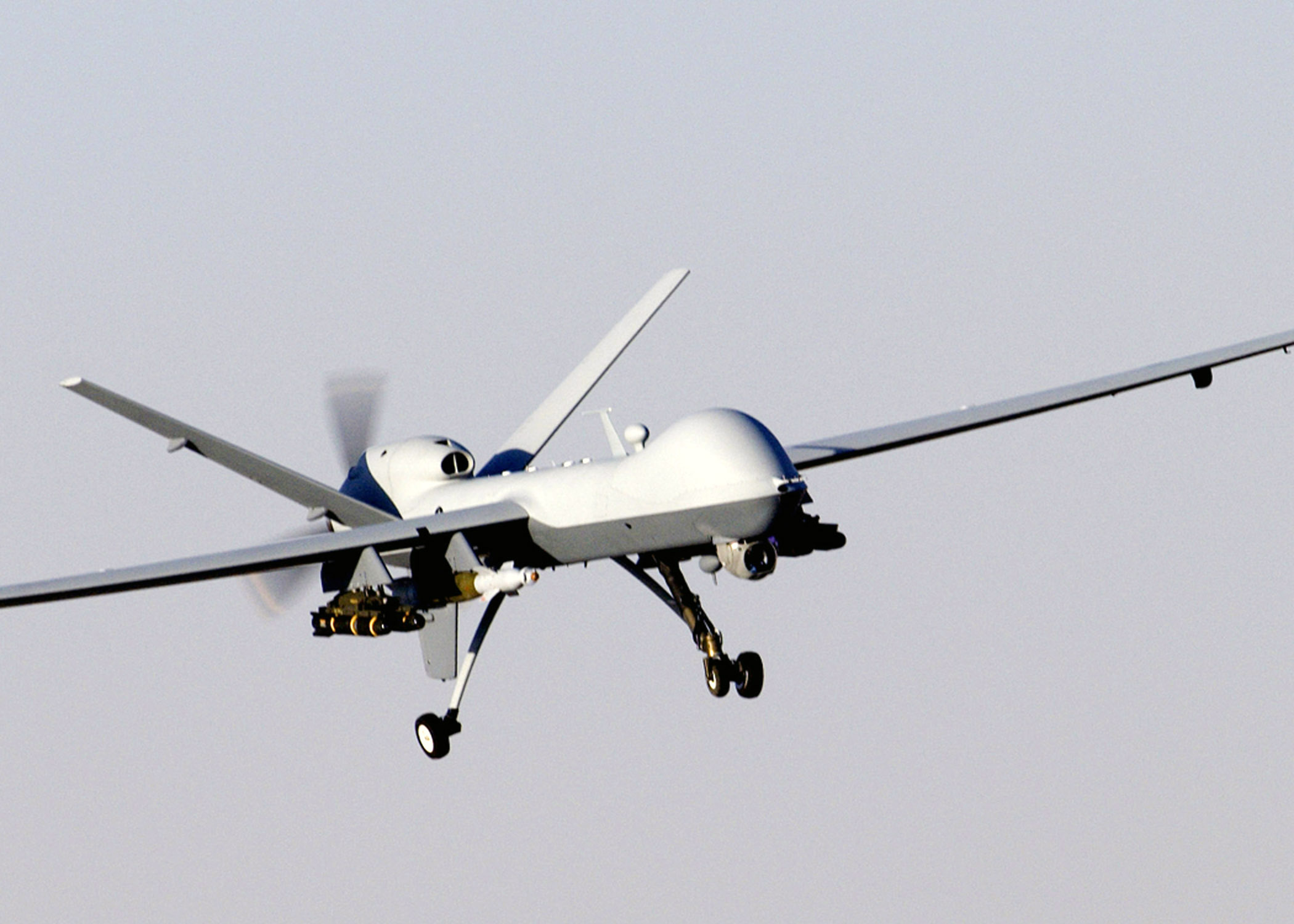
How long a military drone stays in the air
Endurance is the number that separates these aircraft more than any other, and it is the one the makers advertise hardest.
- Switchblade 300, AeroVironment: 20 plus minutes. It is a loitering munition, launched from a tube, and it does not come back.
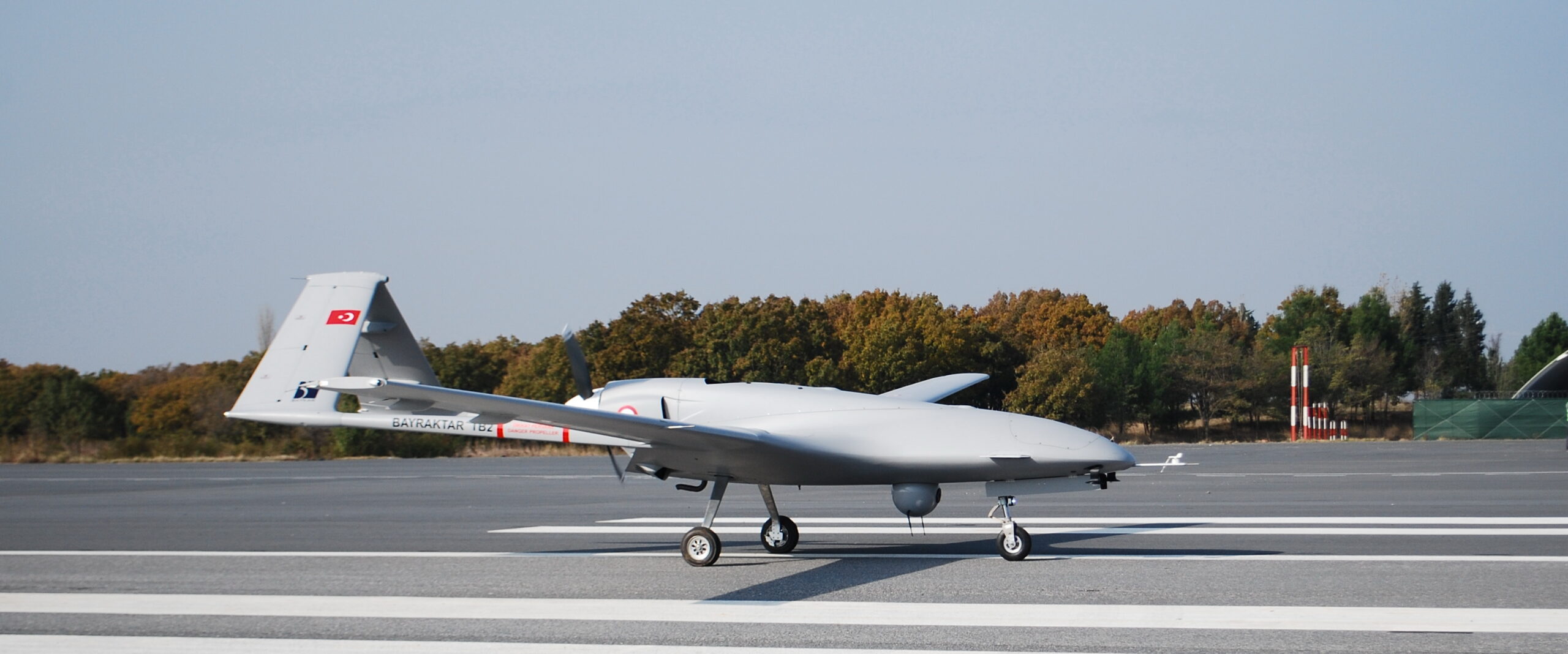
- Bayraktar TB2, Baykar: 18 plus hours on the technical specification table.
- MQ-9A Reaper, General Atomics: over 27 hours. The extended range MQ-9B is listed at 34 hours.
- MQ-4C Triton, Northrop Grumman: 24 plus hours.
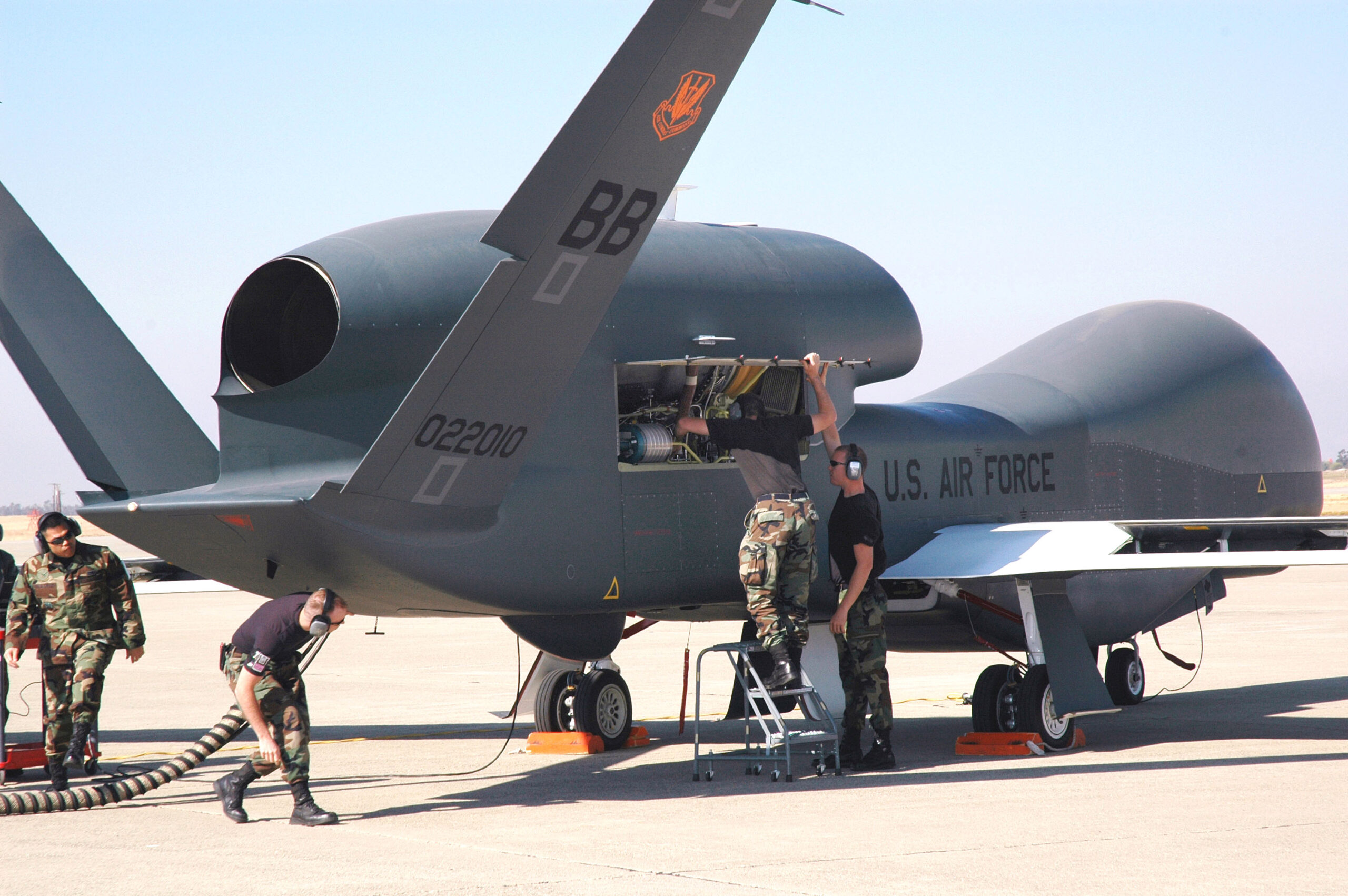
- RQ-4 Global Hawk, Northrop Grumman: greater than 30 hours.
Put that beside a human being and the point lands. A Reaper crew is relieved at the console while the aircraft keeps flying, which is why 27 hours is possible at all. The aeroplane outlasts everyone involved in operating it. For the other side of that comparison, we have written about how long a pilot is legally allowed to keep flying, and the answer is a fraction of this.
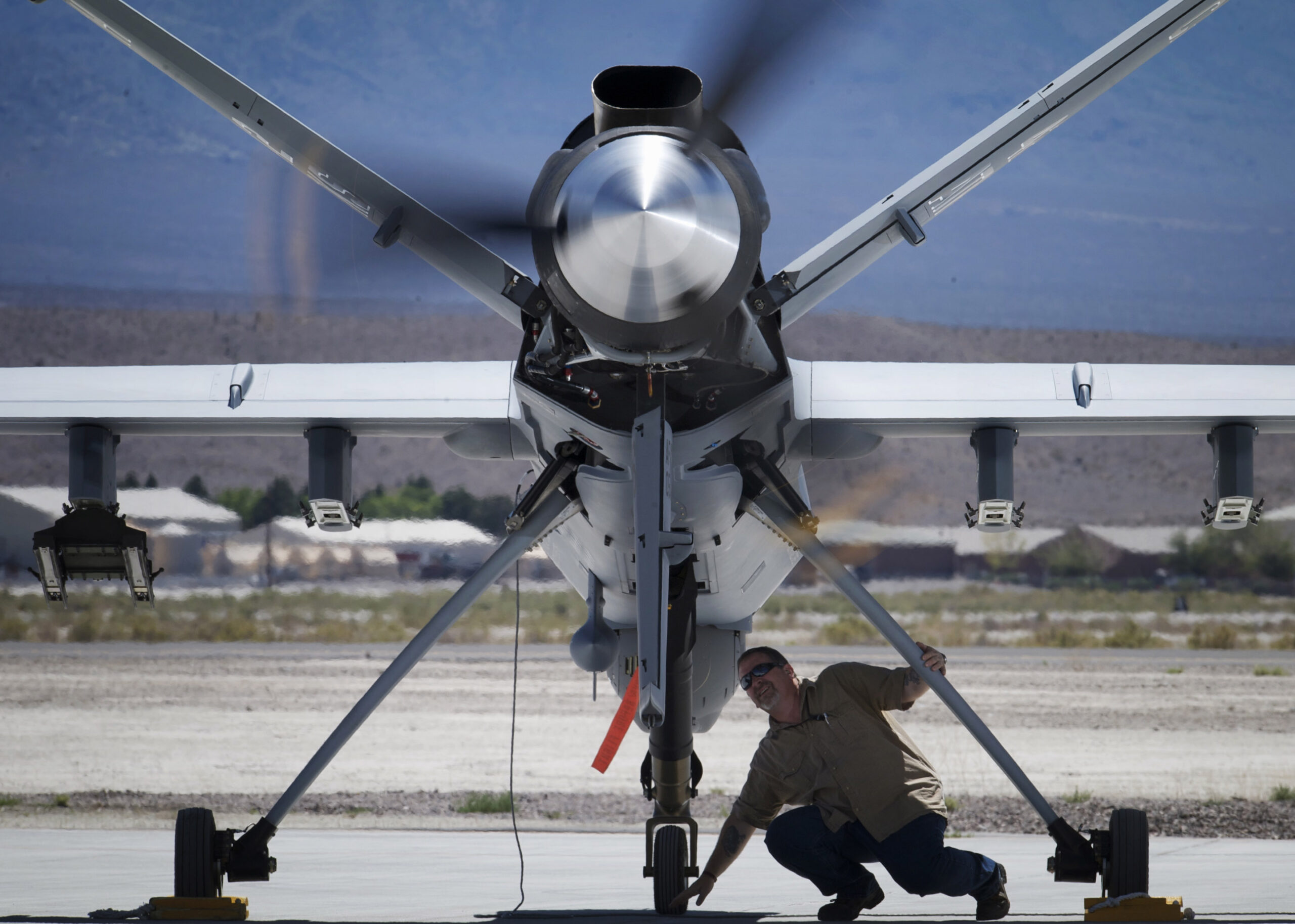
The engine is the reason. That propeller at the back of the Reaper is a turboprop, and a turboprop sipping fuel at low speed is what buys you a day in the air. Nothing about a drone makes it efficient by itself. Take the pilot out of a fast jet and it still burns fuel like a fast jet.
How high military drones fly
Altitude is where the class splits cleanly in two.
- Bayraktar TB2: operational altitude 16,000 feet, service ceiling 20,000 feet.
- MQ-9A Reaper: up to 50,000 feet.
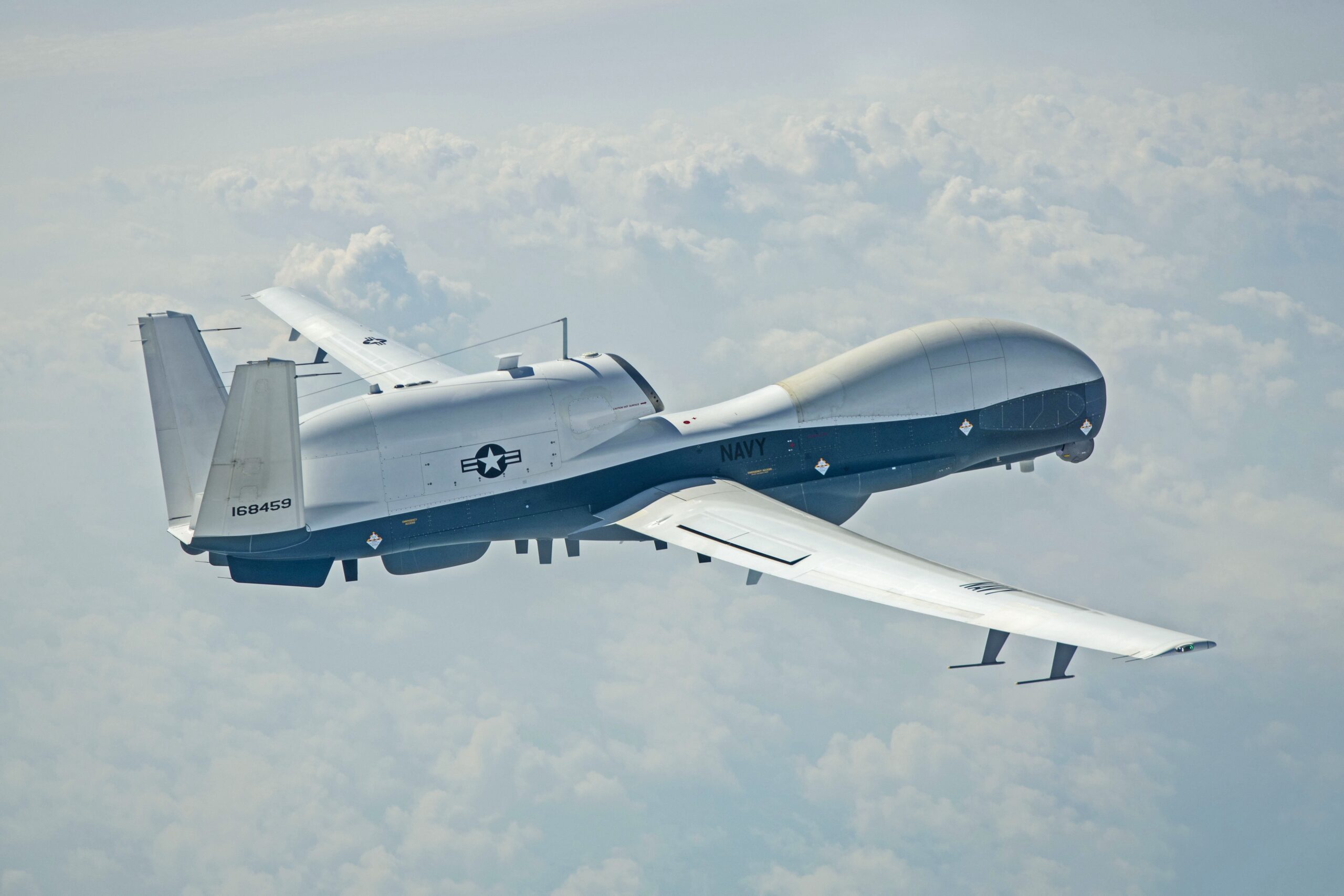
- MQ-4C Triton: above 50,000 feet.
Your airliner cruises somewhere around 35,000 to 40,000 feet. A Reaper or a Triton at the top of its range is flying well above everything in civil service, which is the entire point. From up there one aircraft can watch a very large piece of the earth, and nobody on the ground hears a thing.
The TB2 sitting at 16,000 feet is a different animal doing a different job, and its altitude is a large part of why it became famous. It is cheap, it is low, and it is replaceable.
How far they actually go
Here is where the question gets slippery, because range and endurance are not the same thing and the two get mixed up constantly.
Northrop Grumman quotes the MQ-4C Triton at 7,400 nautical miles, which is about 13,700 km. That is a genuine intercontinental figure. At the other end, AeroVironment gives the Switchblade 300 18 plus miles, or 30 km, with an extended range antenna, and that last phrase is doing real work: without the better antenna it goes less far.
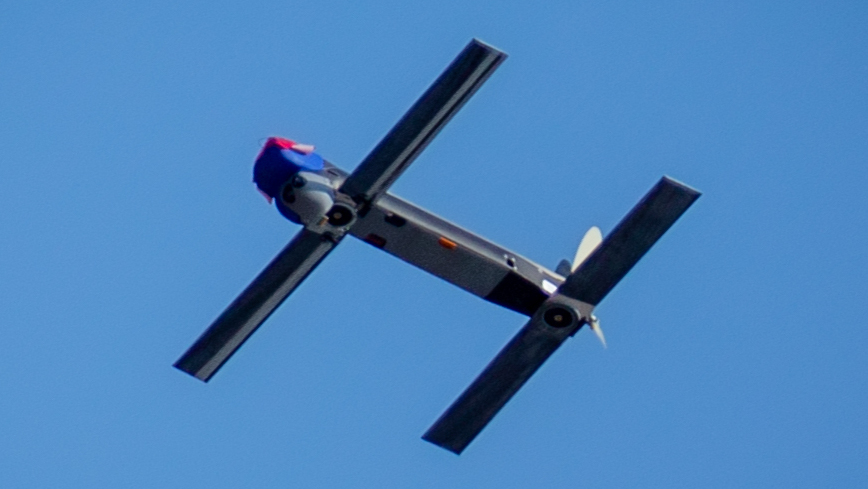
Notice what that tells you. For a small drone, the limit is not fuel. It is how far the radio link reaches. The aircraft could fly further than you can talk to it, so the antenna sets the range, not the tank.
For the larger aircraft the link problem is solved differently, with a satellite dish in that bulge on the nose. Once a drone is talking to a satellite instead of to a mast, the distance between the aircraft and the people flying it stops mattering very much. A crew in Nevada can fly an aircraft on the other side of the world, and routinely does.
How fast military drones fly
Slowly, mostly, and that surprises people who picture a drone as a miniature fighter.
- Switchblade 300: 63 mph loiter, 100 mph sprint.
- Bayraktar TB2: 90 to 110 knots.
- MQ-9A Reaper: 240 knots true airspeed.
A Reaper at 240 knots is slower than the airliner that took you on holiday. These aircraft are built to stay, not to dash, and speed is the thing they trade away to get the endurance in the first section. If you want the other extreme, our piece on the average speed of fighter jets covers the aircraft that made the opposite trade.
The manufacturers do not agree with themselves
This is the part that changed how we would answer the question, and it came out of simply reading each maker’s own page carefully rather than taking the first number.
Baykar’s TB2 page carries two different sets of figures. The banner at the top of the page says “20+ Hours in Air” and “Max Altitude 22.000 Feet”. The technical specification table further down the same page says endurance “18+ hours” and “Service Ceiling 20.000 feet”. Two hours and 2,000 feet apart, on one page, about one aircraft.
AeroVironment does the same with the Switchblade 300. The specification panel says endurance “20+ mins”. The key features section on the same page says “approximately 10 to 15 minutes of loiter time”. The larger figure is roughly double the smaller one.
General Atomics does not publish a range figure for the MQ-9A at all. Endurance, speed, altitude and payload are all there. Range, the single number somebody searching for this came to find, is absent.
None of this is a scandal. A banner figure is usually a best case under ideal conditions with no payload, and a specification table is usually something closer to what the aircraft does with equipment bolted to it. But it means there is no such thing as “the” endurance of a TB2, and anyone who quotes you a single confident number has chosen which one to repeat and has probably not told you that they chose.
So who is actually flying it
Not nobody, which is the most common misunderstanding. A large military drone is flown by a crew, usually a pilot and a sensor operator sitting side by side in a ground control station, and for a sortie lasting more than a day that means several crews in shifts.
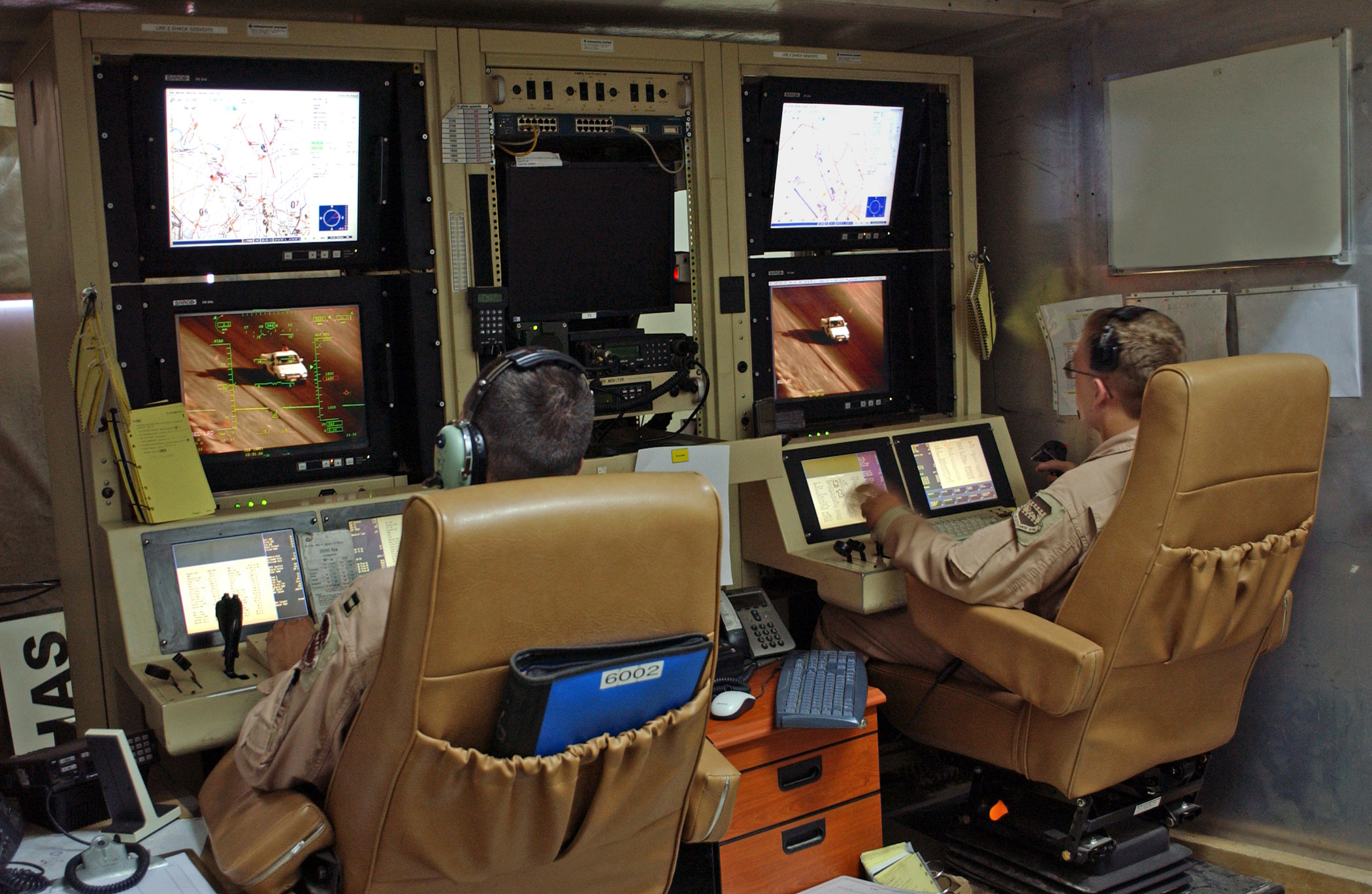
That is the current picture, and it is the thing most likely to change. The US Air Force has talked openly about fielding large numbers of uncrewed combat aircraft that fly alongside a piloted fighter rather than being flown from a trailer, and we looked at what that plan actually commits to in our piece on the 500 fighter jets with nobody on board. Those aircraft are jets, and their numbers will look nothing like the ones above.
How to read a drone number in the news
Three questions worth asking next time a figure appears in a headline.
- Which drone, specifically? The gap between the smallest and the largest in this article is a factor of about 80 on endurance. A claim about “military drones” with no model attached is not a claim about anything.
- Is that range or endurance? They are routinely swapped. Endurance is hours in the air. Range is distance, and for small drones it is usually set by the radio link rather than the fuel.
- Which of the maker’s own numbers is it? As above, there is often more than one, and the bigger one travels further.
If you want the full taxonomy of what sits on that shelf, from hand launched scouts to high altitude surveillance aircraft, our guide to the different types of military drones breaks the categories down properly.
Frequently asked questions
How far can a military drone fly?
Anywhere from about 18 miles to 7,400 nautical miles depending on the aircraft. Northrop Grumman quotes 7,400 nautical miles for the MQ-4C Triton. AeroVironment quotes 18 plus miles for the Switchblade 300, and that figure is set by its radio link rather than its fuel.
How long can a military drone stay in the air?
The MQ-9A Reaper is listed at over 27 hours and the extended range MQ-9B at 34 hours. The RQ-4 Global Hawk is listed at greater than 30 hours. Small loitering munitions like the Switchblade 300 last around 20 minutes.
How high do military drones fly?
The MQ-9A Reaper reaches up to 50,000 feet and the MQ-4C Triton operates above 50,000 feet, both well above airliner cruising altitude. The Bayraktar TB2 is much lower, with an operational altitude of 16,000 feet.
How fast do military drones fly?
Slower than most people expect. The MQ-9A Reaper is quoted at 240 knots true airspeed, the Bayraktar TB2 at 90 to 110 knots, and the Switchblade 300 at 63 mph loitering and 100 mph sprinting.
Do military drones have pilots?
Yes. A large military drone is flown by a crew in a ground control station, typically a pilot and a sensor operator. A flight lasting more than 24 hours is covered by several crews working in shifts while the aircraft stays airborne.
Sources
- General Atomics Aeronautical Systems, MQ-9A, for endurance of over 27 hours, 34 hours for the extended range variant, 240 KTAS, up to 50,000 feet and a 3,850 pound payload. Checked 6 November 2026.
- Northrop Grumman, MQ-4C Triton, for 24 plus hours, operation above 50,000 feet and a range of 7,400 nautical miles. Checked 6 November 2026.
- Northrop Grumman, RQ-4 Global Hawk, for endurance greater than 30 hours. Checked 6 November 2026.
- Baykar, Bayraktar TB2, for the conflicting banner and specification table figures, the 16,000 foot operational altitude, the 20,000 foot service ceiling, 90 to 110 KTAS, a 12 m wingspan and a 150 kg payload. Checked 6 November 2026.
- AeroVironment, Switchblade 300, for 20 plus minutes against the 10 to 15 minute loiter figure on the same page, 18 plus miles with an extended range antenna, 63 mph loiter, 100 mph sprint and a 7.2 pound all up round weight. Checked 6 November 2026.
