


For a century the rule of air combat has been simple: the most dangerous thing in the sky is a person in a cockpit. This week the US Air Force said, in as many words, that it is about to stop being true. Speaking at the Air & Space Forces Association’s Air, Space & Cyber Conference on 14 September 2026, Secretary of the Air Force Troy Meink told the room that the service will have “at least 500” autonomous fighter aircraft in service by 2032, plus another 500 cheaper strike drones, roughly a thousand combat aircraft with nobody on board, in six years. The first production examples, he added, “are already rolling off the assembly line.”
Here is what was actually announced, what these aircraft are, why they cost a tenth of a normal fighter, and what it means for the pilots who still have to fly alongside them.
What was announced
Two numbers, both bigger than anything the Air Force had said before:
- 500 Collaborative Combat Aircraft (CCAs) by 2032. These are the jet-powered, fighter-sized drones designed to fly with and ahead of crewed fighters. The previous public goal was “over 150” by the end of the decade; the original 2023 plan spoke of a thousand over the life of the programme. Meink’s line was blunt: “we could actually build more than we can afford to buy.”
- 500 Massed Modular Aircraft (MMAs) by 2032, with the first 100 fielded in 2029. These are a newer, cheaper class of drone intended to take over the surveillance-and-strike work now done by the 135-strong MQ-9 Reaper fleet, “at even a lower cost than the CCAs and a fraction of the cost of manned aircraft.”
The two Increment 1 CCA designs also got names. General Atomics’ YFQ-42A, until now referred to internally as Dark Merlin, is officially the Vengeance. Anduril’s YFQ-44A is the Fury. Both entered production in June 2026 after prototype testing at Edwards Air Force Base in California in April and at Creech in Nevada in July, and both have already demonstrated the AIM-120 air-to-air missile. An Experimental Operations Unit has been stood up to work out how squadrons will actually use them.
What a “collaborative combat aircraft” actually is
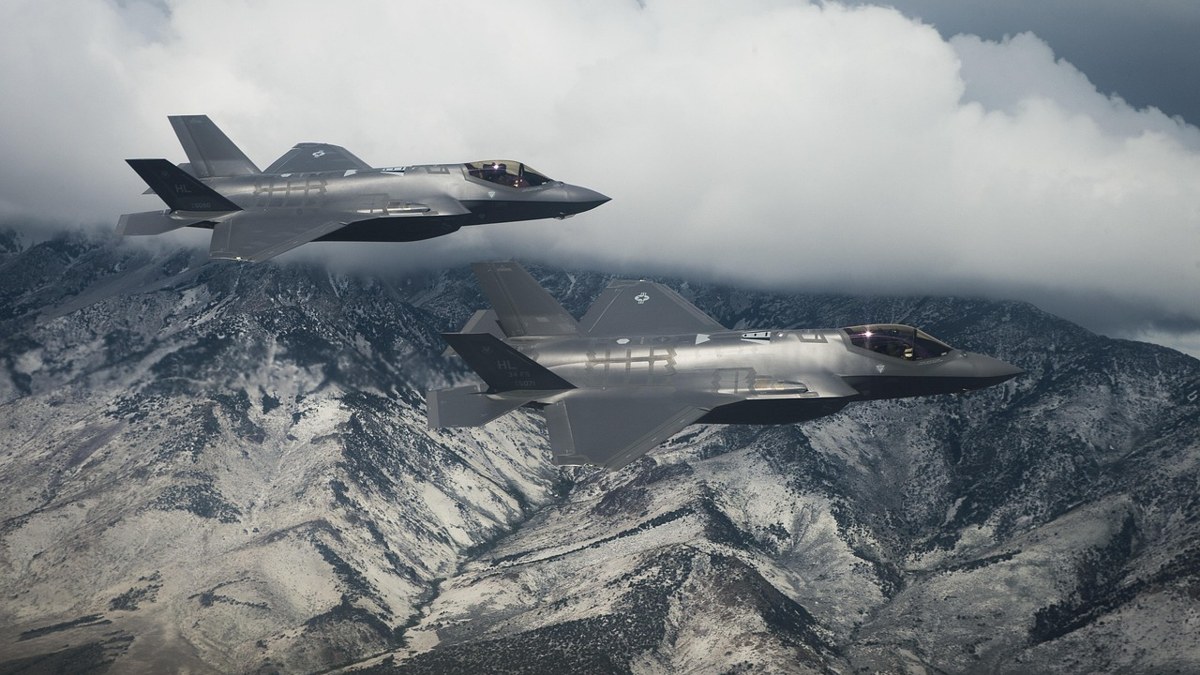
Forget the image of a Reaper loitering over a desert with a controller in a trailer thousands of kilometres away. A CCA is a genuine fighter-sized jet, roughly the length of a business jet, with an internal weapons bay, a single turbofan and a top speed in the high-subsonic range, and it is designed to fly itself. A human sets the mission and gives the orders; the aircraft handles the flying, the sensors and, within rules set by the operator, the engagement. The “collaborative” part is the point: it flies in a loose formation with an F-35, F-15EX or, later, the F-47 sixth-generation fighter, and does the jobs a crewed pilot would rather not do.
Those jobs are the reason the concept exists:
- Fly in front. A CCA can go into a defended area first, switch on its radar and draw fire, while the crewed fighter behind it stays silent and unseen.
- Carry the missiles. A stealth fighter carries a handful of weapons internally. Two or three CCAs alongside it triple the number of missiles in the formation without adding a single cockpit.
- Be lost. This is the part nobody likes to say out loud. At roughly $20 million each at full-rate production, against well over $80 million for an F-35 and far more for the F-47, a CCA is the aircraft you send where you would not send a person.
Why they are so much cheaper
The cockpit is the most expensive part of a fighter, and not because of the seat. Everything that keeps a human alive and useful, from pressurisation and oxygen to the ejection seat, the canopy, the displays, the flight-control limits that stop the airframe pulling more g than the pilot can survive, and the decades of training that pilot represents, adds weight, cost and design compromise. Take the person out and the aircraft can be smaller, simpler, built for a shorter life and, crucially, built in numbers. The MMA takes the idea further still: a modular airframe at around $10 million that trades performance for quantity.
That is the logic behind the word “massed.” The Air Force has spent thirty years buying ever more capable, ever more expensive aircraft in ever smaller numbers. Against an opponent with thousands of missiles, numbers matter again, and this is the only way to get them.
So are pilots finished?
No, and the plan does not say they are. Every CCA formation in the Air Force’s concept is led by a crewed aircraft; the F-47 is being built precisely to be the quarterback. What changes is the job. A fighter pilot in 2032 will spend less time flying their own aircraft to the edge of its envelope and more time managing a small formation of drones: assigning targets, approving weapons release, deciding which one to sacrifice. It is closer to being a flight lead of a squadron that happens to have one human in it.
The harder questions are the ones nobody has answered yet. How much autonomy does a CCA get when the datalink to its human is jammed? Who is responsible when an autonomous aircraft engages the wrong target? What does a fighter squadron look like when most of its aircraft do not need a crew room, a flight surgeon or a pension? The Experimental Operations Unit exists because the Air Force does not yet know.
Why 2032 is an aggressive date
Six years is a very short time in military procurement. The F-35 took nearly two decades from contract to full-rate production. Getting 500 CCAs into service by 2032 means the production lines that started in June have to work first time, the autonomy software has to be trusted by crews who have never flown with it, and Congress has to fund it every year. Meink’s own caveat, that the service can build more than it can afford, was a message to that audience as much as anyone.
Increment 2 is already being shaped, with Lockheed Martin’s Skunk Works Vectis and Northrop Grumman’s design among the candidates, and allies are watching closely: Boeing’s Australian-built MQ-28 Ghost Bat has been flying in integration tests with US aircraft. Whether or not the numbers land on schedule, the direction is now set, and it was set in public this week.
For what a human still brings to the fight that a drone cannot, read what 9g does to a fighter pilot’s body, and for the aircraft these drones will fly alongside, see F-22 vs F-35: which stealth fighter owns the skies.
Frequently asked questions
What is a Collaborative Combat Aircraft?
A jet-powered, fighter-sized autonomous drone designed to fly alongside crewed fighters such as the F-35 and F-47, carrying sensors and weapons and taking on the riskiest parts of a mission. The first two types are the General Atomics YFQ-42A Vengeance and the Anduril YFQ-44A Fury.
How many will the US Air Force buy?
Secretary Troy Meink said on 14 September 2026 that the service intends to have at least 500 CCAs in service by 2032, plus 500 cheaper Massed Modular Aircraft, with the first 100 MMAs fielded in 2029.
How much does a CCA cost?
Around $20 million per aircraft at full-rate production, compared with more than $80 million for an F-35. The MMA is targeted at roughly $10 million.
Will they replace fighter pilots?
Not in this plan. CCAs are designed to be led by crewed aircraft; the pilot’s job shifts towards managing a formation of drones rather than being replaced by them.
Sources: Secretary Meink’s keynote at the AFA Air, Space & Cyber Conference, 14 September 2026, as reported by The War Zone, Aviation Week, Aerospace America and AVweb.
