


Sustainable aviation fuel 2026 is no longer a future promise but a present-day reality reshaping how airlines fly millions of passengers across the globe. The industry has moved past pilot programs and press releases. Real production facilities are online, real aircraft are burning blended SAF on scheduled routes, and real policy frameworks are driving adoption at a pace few predicted even two years ago.
For pilots, operators, and aviation enthusiasts watching the industry evolve, the progress in sustainable aviation fuel 2026 represents the single most significant shift in how we power commercial aircraft since the jet age began. This article breaks down the 10 genuine breakthroughs that are making it happen.

Why Sustainable Aviation Fuel 2026 Matters More Than Ever
Aviation accounts for roughly 2.5% of global CO2 emissions. That number may sound small, but it translates to over 900 million tonnes of carbon dioxide annually. With air traffic rebounding strongly and new routes launching, including those enabled by the Airbus A321XLR entry into service, those emissions are set to climb unless the fuel itself changes.
Battery-electric and hydrogen-powered aircraft remain decades away from commercial viability at scale. Sustainable aviation fuel 2026 is the only realistic decarbonization tool available to the industry right now. It works in existing engines, existing fuel infrastructure, and existing aircraft types without modification.
That is what makes the current wave of breakthroughs so important. SAF is not theoretical. It is operational, scalable, and accelerating.
Breakthrough 1: Production Capacity Crosses the 2 Billion Gallon Mark
The most tangible sign of progress in sustainable aviation fuel 2026 is raw production volume. Global SAF output has crossed 2 billion gallons annually, roughly quadrupling from 2024 levels. New refineries in the United States, Finland, Singapore, and the UAE have come online within the past 18 months.
Companies like Neste, World Energy, and Montana Renewables are now producing SAF at industrial scale. This is not boutique fuel made in laboratories. These are full-scale refining operations integrated into existing petroleum distribution networks.
The International Air Transport Association (IATA) had previously set a target of 7.9 billion liters of SAF production by 2025. The industry fell short of that mark, but the trajectory heading into 2026 has been far steeper than anticipated. Production infrastructure is finally catching up to demand.
Breakthrough 2: Feedstock Diversification Solves the Supply Problem
One of the biggest criticisms of early SAF efforts was feedstock limitations. Early batches relied heavily on used cooking oil and animal fats, commodities with limited supply. Sustainable aviation fuel 2026 production draws from a much broader feedstock base.
Alcohol-to-jet (AtJ) pathways using ethanol from agricultural waste are now commercially certified. Gasification of municipal solid waste has moved from demonstration to deployment. Several facilities are converting forestry residues and purpose-grown energy crops into jet fuel at competitive economics.
Power-to-liquid (PtL) or e-fuel technology, which synthesizes jet fuel from captured CO2 and green hydrogen, has also reached early commercial production in Germany and Chile. This pathway has virtually unlimited feedstock potential, limited only by the availability of renewable electricity.
Breakthrough 3: Blending Limits Increase to 50% on Major Routes
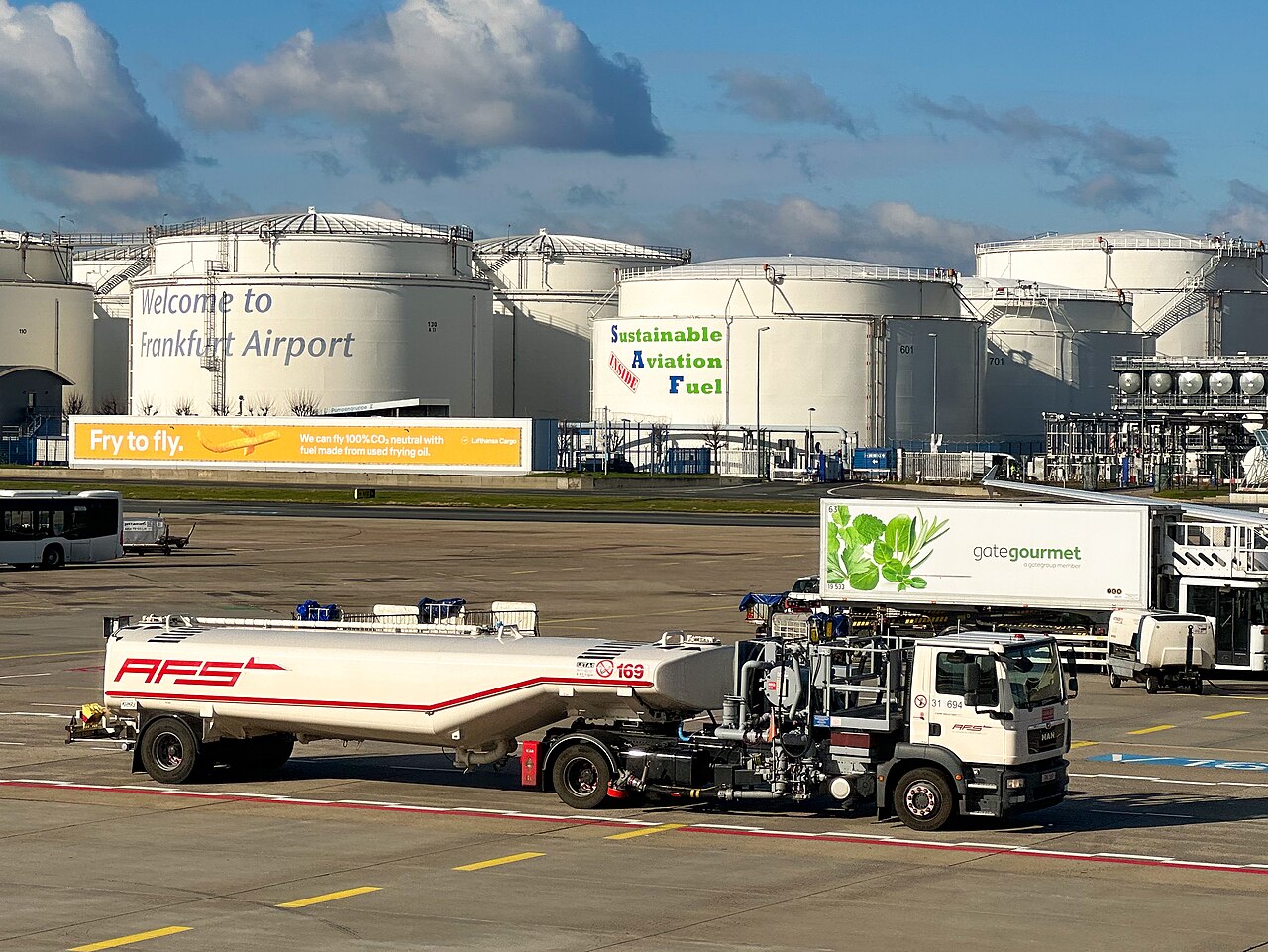
ASTM International certification has allowed SAF blending up to 50% with conventional Jet-A1 for several approved pathways. In 2026, airlines are routinely hitting that 50% ceiling on select routes. United Airlines, Lufthansa, and Singapore Airlines have all operated scheduled services at maximum blend ratios.
For pilots, this means no changes to operating procedures. The blended fuel meets all existing performance specifications. Fuel flow, specific gravity, and energy density remain within normal parameters. From the flight deck, there is zero difference.
The push toward 100% SAF certification continues. Boeing and Airbus have both completed test flights on unblended sustainable aviation fuel, and full certification for 100% SAF operations is expected by late 2027. For now, the 50% blend standard in sustainable aviation fuel 2026 operations already delivers a meaningful emissions reduction of up to 40% on a lifecycle basis.
Breakthrough 4: The EU Mandates Kick In and Drive Demand
The European Union’s ReFuelEU Aviation regulation took effect on January 1, 2025, requiring all fuel suppliers at EU airports to blend a minimum of 2% SAF. While 2% sounds modest, the mandate creates guaranteed demand that gives producers the confidence to invest in new capacity.
The regulation scales aggressively: 6% by 2030, 20% by 2035, and 70% by 2050. The early impact is already visible in sustainable aviation fuel 2026 procurement contracts. European carriers have locked in long-term offtake agreements worth billions of euros.
Other jurisdictions are following. The United Kingdom, Japan, and India have all announced or implemented SAF blending mandates of their own. This regulatory momentum is arguably the single biggest driver behind the production surge.
Breakthrough 5: SAF Price Premium Narrows Significantly
Price has always been the elephant in the room. Early SAF batches cost three to five times more than conventional jet fuel. That gap is closing. In sustainable aviation fuel 2026 markets, the price premium has narrowed to roughly 1.5 to 2 times conventional Jet-A1, depending on the pathway and region.
Several factors are driving this convergence. Higher production volumes bring economies of scale. Government incentives, particularly the U.S. Inflation Reduction Act’s SAF tax credits, directly offset production costs. Improved catalytic processes and cheaper green hydrogen are also pushing costs down.
Airlines are beginning to absorb the incremental cost or pass it along through modest fare increases. Some carriers, including KLM and JetBlue, offer passengers the option to pay a small surcharge to cover the SAF cost differential on their specific flight. Corporate travel programs are increasingly willing to pay the premium as part of ESG commitments.

Breakthrough 6: Airport Infrastructure Adapts to SAF Distribution
Getting sustainable aviation fuel from the refinery to the aircraft wing has been a logistical challenge. In 2026, that challenge is being met with real infrastructure investment. Major hubs including Los Angeles, Amsterdam Schiphol, Singapore Changi, and London Heathrow have integrated SAF into their primary fuel distribution systems.
This matters because SAF does not require separate storage tanks or dedicated fueling equipment when blended. It flows through the same hydrant systems and into the same fuel trucks. Understanding how long it takes to refuel aircraft helps illustrate that SAF blending adds zero time to turnaround operations.
Airports are also investing in on-site blending facilities that allow precise ratio control. This gives airlines and fuel suppliers flexibility to adjust blend percentages based on availability and contract terms. The infrastructure piece of sustainable aviation fuel 2026 is quietly becoming a solved problem.
Breakthrough 7: Book-and-Claim Systems Enable Global Participation
Not every airport has physical SAF supply yet. Book-and-claim accounting systems solve this by allowing airlines to purchase SAF credits that correspond to actual SAF production and use at another location. The environmental benefit is real; it is simply accounted for at a system level rather than at the individual airport.
The Roundtable on Sustainable Biomaterials (RSB) and the International Air Transport Association have endorsed standardized book-and-claim frameworks. These systems give airlines operating in regions without local SAF production the ability to participate in and fund the sustainable aviation fuel 2026 market.
Corporate customers love this model. Companies purchasing business travel can claim verified emissions reductions regardless of which airports their employees fly through. This has unlocked a significant revenue stream for SAF producers and removed a major barrier to market growth.
Breakthrough 8: New Aircraft Orders Factor SAF Into Design
The latest generation of commercial aircraft is being designed with SAF compatibility as a baseline assumption. The wave of major aircraft orders reshaping aviation in 2026 reflects this shift. Airlines placing orders for next-generation narrowbodies and widebodies are specifying fuel system materials rated for higher SAF concentrations.
Airbus has stated that all its current production aircraft are certified for 50% SAF blends and will be ready for 100% SAF upon certification. Boeing has made similar commitments. Engine manufacturers CFM International and Rolls-Royce are testing and certifying their powerplants for unblended sustainable aviation fuel operations.
This design integration means the fleet of 2030 and beyond will have no technical barriers to full SAF utilization. The aircraft being ordered today will fly for 25 to 30 years, so decisions made in sustainable aviation fuel 2026 procurement and design will have consequences well into the 2050s.
Breakthrough 9: Carbon Lifecycle Accounting Gets Standardized
One of the murkiest areas of early SAF adoption was measuring actual emissions reductions. Different feedstocks, production processes, and transportation methods all affect the lifecycle carbon intensity of a given batch of SAF. In 2026, standardized accounting frameworks have brought clarity.
ICAO’s Carbon Offsetting and Reduction Scheme for International Aviation (CORSIA) now includes detailed SAF lifecycle accounting methodologies. The EU’s delegated acts under ReFuelEU specify exactly how to calculate and verify emissions savings. These standards ensure that sustainable aviation fuel 2026 claims are credible and auditable.
For airlines, this standardization simplifies reporting and builds trust with regulators, investors, and passengers. For producers, it provides clear targets and removes the risk of “greenwashing” allegations. The science and the policy are finally aligned.
Breakthrough 10: Military and Cargo Operators Join the SAF Push
The conversation around sustainable aviation fuel 2026 is no longer limited to commercial passenger airlines. Military aviation programs in the United States, United Kingdom, and NATO member states are actively testing and procuring SAF for operational use. The U.S. Air Force has set a goal of blending SAF into its entire fuel supply chain.
Cargo operators including FedEx, UPS, and DHL have signed major SAF offtake agreements. These companies face enormous pressure from shippers and e-commerce clients to reduce supply chain emissions. Aviation fuel is the single largest component of their carbon footprint.
Private aviation is also getting involved. Business jet operators and FBOs are beginning to offer SAF at select locations. The broadening of the customer base beyond scheduled airlines is a strong market signal that sustainable aviation fuel 2026 is becoming mainstream across all segments of aviation.
What Pilots Need to Know About Flying With SAF
From an operational standpoint, sustainable aviation fuel 2026 blends are transparent to flight crews. There are no special procedures, no performance penalties, and no additional checklist items. SAF meets the same ASTM D7566 specification as conventional jet fuel once blended.
Pilots may notice slightly different fuel density figures on their loadsheets depending on the blend ratio, but these fall within normal Jet-A1 parameters. Fuel quantity indications, endurance calculations, and performance data remain standard. The fuel burns cleaner, producing fewer particulate emissions, which actually benefits engine longevity.
Some airlines have begun including SAF blend information in operational flight plans and fuel release documentation. This is largely for corporate reporting and regulatory compliance rather than any operational requirement. Crews should be aware of their airline’s specific sustainable aviation fuel 2026 policies and reporting procedures.
The Road Ahead: Challenges That Remain
Despite the genuine progress, significant challenges remain. Global SAF production still represents less than 1% of total jet fuel consumption. Scaling from 2 billion gallons to the 35 billion gallons needed by 2030 requires massive capital investment and continued policy support.
Feedstock competition with other sectors, particularly road transport biofuels and the chemical industry, could constrain supply. Power-to-liquid pathways need dramatically cheaper green hydrogen to reach cost parity. Permitting and construction timelines for new refineries remain slow in many jurisdictions.
The sustainable aviation fuel 2026 landscape is promising but fragile. A change in government policy, a collapse in carbon credit markets, or a sustained drop in conventional fuel prices could slow momentum. The industry must continue building resilience into its SAF supply chains.
Final Thoughts on Sustainable Aviation Fuel 2026
The 10 breakthroughs outlined here are not theoretical milestones. They are happening right now, backed by real investment, real production, and real operational experience. Sustainable aviation fuel 2026 marks the year SAF transitioned from an aspiration to an industry standard in the making.
For those of us who fly for a living, this shift matters deeply. The aircraft we operate today will increasingly burn cleaner fuel. The routes we fly will be shaped in part by SAF availability and regulatory mandates. The airlines we work for are making billion-dollar bets on sustainable aviation fuel 2026 and beyond.
Aviation has always been an industry built on engineering progress and bold investment. The SAF story fits that tradition perfectly. The fuel is here. The infrastructure is growing. The policy frameworks are in place. What happens next depends on sustained commitment from every stakeholder in the value chain.
About the Author: Capt. James Harlow is an A320 Captain holding a GCAA license with over a decade of flying in the Gulf region. He writes about aviation news, pilot careers, cockpit operations, and airline life.
