


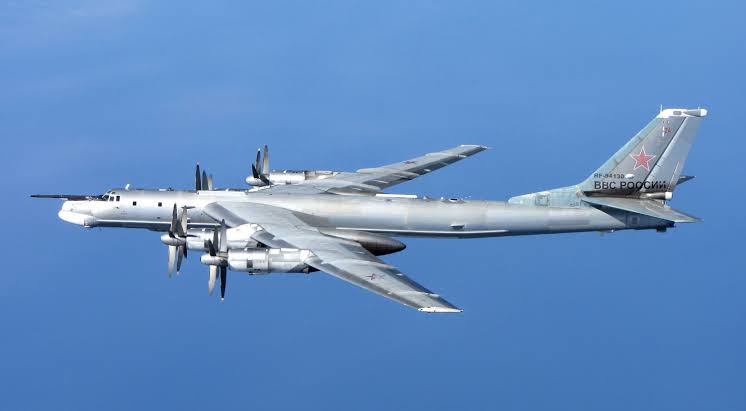
The Tupolev Tu-95, known to NATO as the Bear, is a Soviet designed strategic bomber that first flew in 1952 and is still flying combat missions today. It is the only turboprop strategic bomber in operational service anywhere, and one of very few aircraft of any kind with a service life measured in three quarters of a century.
Where it came from
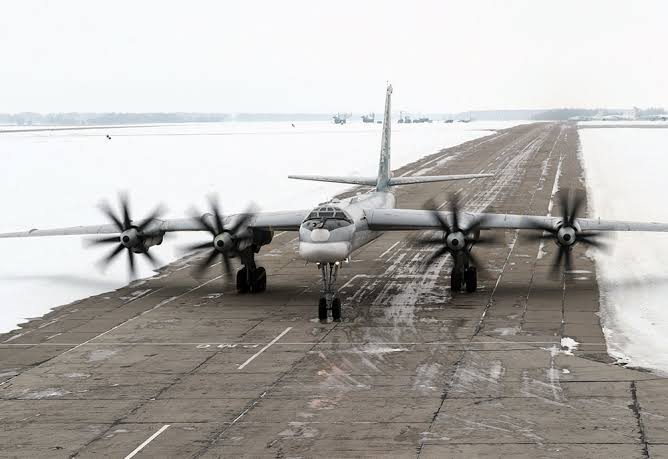
The Soviet Union’s first modern strategic bomber was the Tu-4, a reverse engineered copy of the American B-29 Superfortress, built from examples that landed in Soviet territory during the Second World War. Tupolev then worked through the Tu-80 and Tu-85 before arriving at something genuinely its own.
The Tu-95 was the aircraft that finally gave the Soviet Union intercontinental reach, and the design proved so durable that it outlived the country that built it.
First flight, and an engine problem
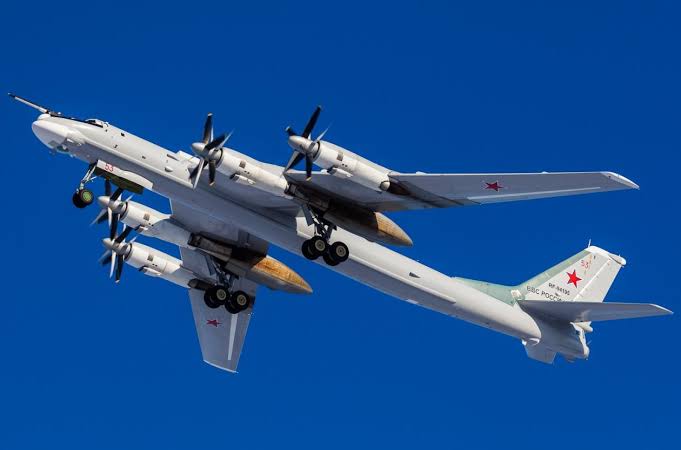
The prototype flew on 12 November 1952. It had a long tubular fuselage, high mounted swept wings and a glazed nose for the bombing crew, and the cockpit was arranged so the pilot could see all the engines from his seat.
Those first engines, the 2TV-2F, were not reliable enough. The fix was the Kuznetsov NK-12, and that engine is the reason the aircraft worked.
The engines, and why it is so loud
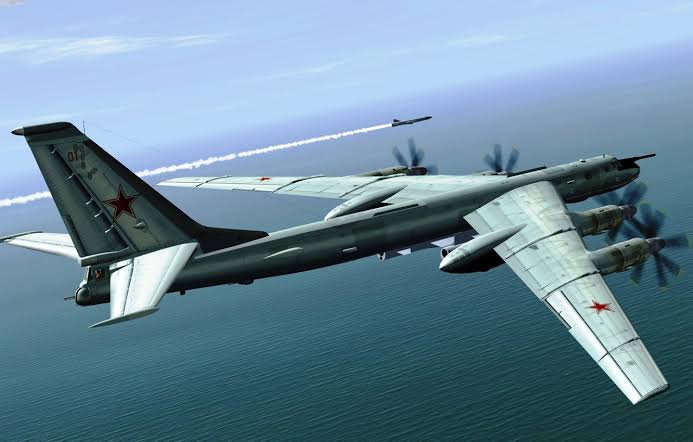
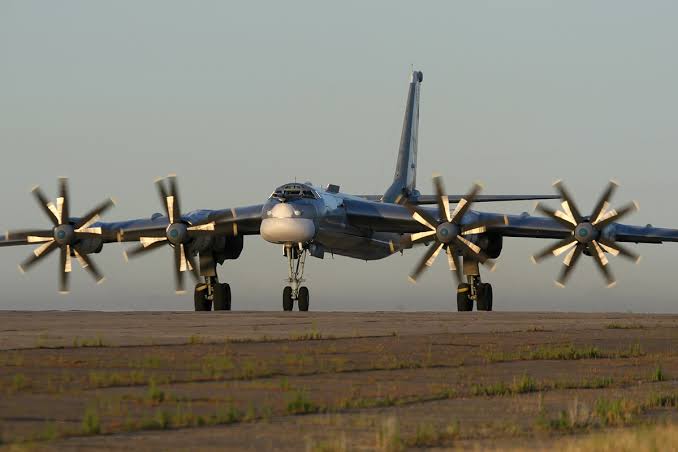
Production aircraft carry four Kuznetsov NK-12 turboprops of roughly 12,000 shaft horsepower each, driving contra rotating propellers. Two propellers per engine turn in opposite directions on the same axis, which recovers energy that a single propeller would waste.
The by-product is noise. The blade tips travel faster than the speed of sound, and supersonic propeller tips make an extraordinary racket. The Tu-95 is reckoned among the loudest aircraft ever built, loud enough to be picked up by submarine sonar and detectable at considerable distance. For a bomber meant to approach unnoticed, that is an awkward characteristic.
Speed, range and production
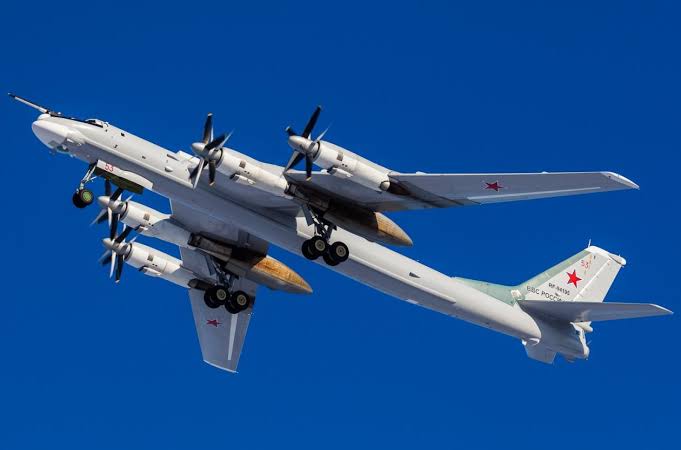
Top speed is around 530 mph, which is genuinely fast for a propeller aircraft and comparable to some early jets. Range runs to roughly 7,500 miles, and it cruises near 36,000 feet.
More than 500 were built between 1952 and 1993, by the Soviet Union and then by Russia.
The variants
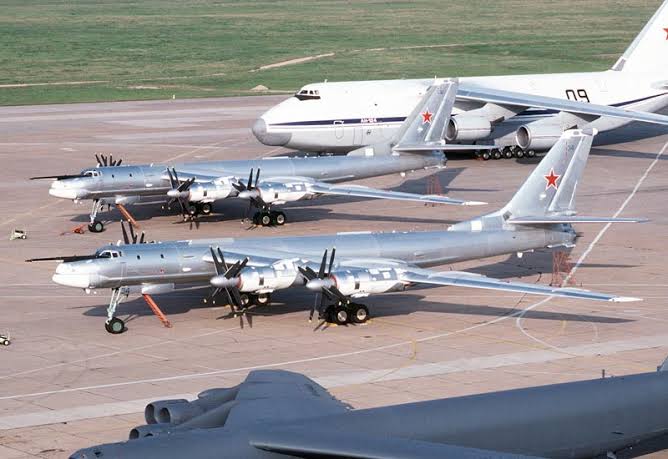
The airframe proved adaptable. The Tu-95U was a trainer converted from early airframes that had lost their bombing equipment. The Tu-95MR, known to NATO as Bear-E, was a maritime reconnaissance version with cameras and electronic collection gear in place of the bomb bay, entering service in 1964.
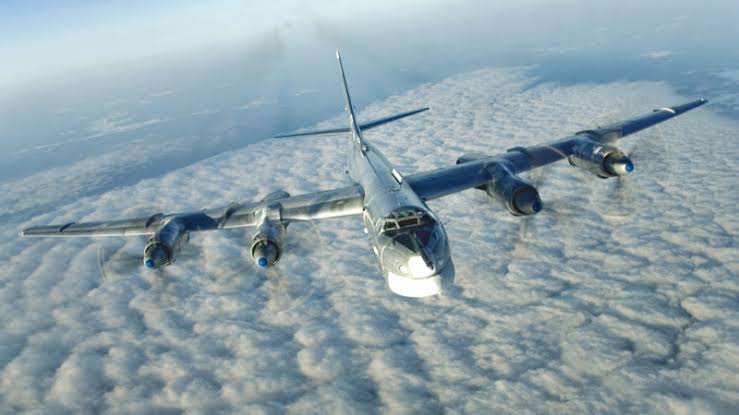
The most significant offshoot is the Tu-142, a maritime patrol and anti submarine aircraft for the Soviet and later Russian Navy, produced from 1972. India operated them too, retiring its fleet in 2017.
There was even an airliner. The Tu-114 used the same wings, engines and tail with a new fuselage, and for a time it was the fastest propeller driven airliner in the world.
Ukraine handed its Bears back
When the Soviet Union broke up, a number of Tu-95s ended up in newly independent Ukraine. Ukraine had no real use for a strategic bomber fleet, and the aircraft were transferred to Russia as part of settling debts for Russian gas deliveries. Ukraine operates none today.
Still at war, and now being destroyed on the ground
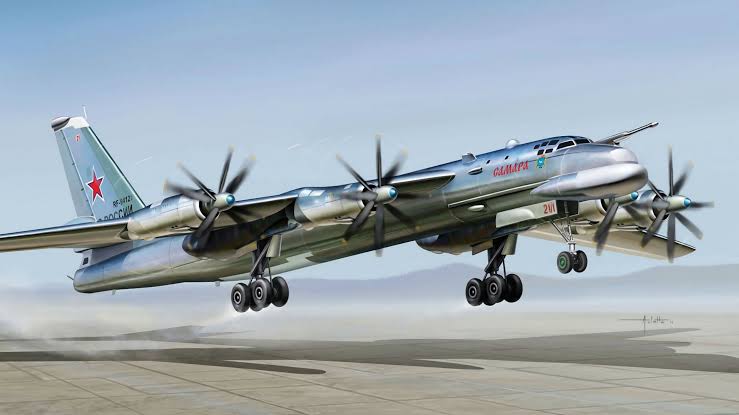
Russia has around 55 Tu-95MS in service, and the aircraft is not a museum piece. Since 2022 it has been used repeatedly to launch Kh-101 and Kh-102 cruise missiles against Ukraine, firing from inside Russian airspace well away from the target.
That standoff role also made the fleet a target. On 1 June 2025 Ukraine’s Operation Spiderweb used drones launched from inside Russia to strike several airbases, and seven to eight Tu-95MS were destroyed at Belaya and Olenya. For a fleet this small and a production line closed since 1993, those aircraft cannot be replaced. Russia can repair a Bear. It cannot build a new one.
An aircraft that refuses to retire
Russia intends to keep the Tu-95MS flying into the 2040s, which would give the design a service life approaching ninety years. Very little else in aviation comes close.
For more Cold War aircraft still in service, see the top fighter jets in the world.
