


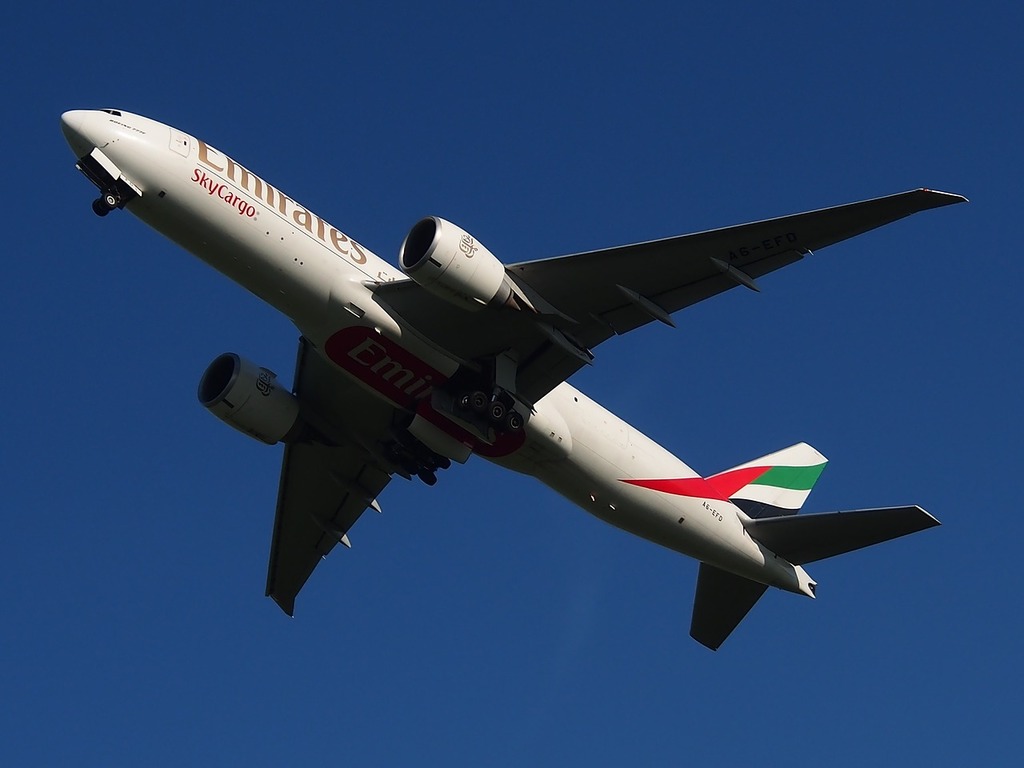
Emirates pilot requirements are the first thing every serious applicant searches for, and in 2026 the competition for a seat at this airline has never been tougher.
Emirates is the world’s largest operator of the Airbus A380. It flies over 260 widebody aircraft to more than 150 destinations from a single base in Dubai. The salary is tax-free. The company provides your home. The career progression is clear. And the brand name on your uniform is recognised in every airport on earth.
The problem is that tens of thousands of pilots apply every year and only a fraction get through. The selection process runs across six stages and can take up to eight months from the day you click apply to the day you receive a contract. It is built specifically to filter out anyone who is not genuinely prepared.
I fly commercially in the Gulf. I know how this region works and I know what the difference looks like between pilots who get the call and pilots who keep waiting. This guide walks you through Emirates pilot requirements and the full hiring process in 2026, including the things most articles leave out.
Understanding Emirates pilot requirements fully before you apply is what separates serious candidates from those who spend months in a process they were never going to pass. So let us get into it.
What Emirates Is Really Looking For
Before getting into the specific Emirates pilot requirements for hours and licenses, it is worth understanding what the airline is actually trying to hire.
Emirates operates an all-widebody fleet out of a single base in Dubai. Every pilot lives in the UAE. Every pilot flies internationally. The crew is one of the most culturally mixed in commercial aviation, with over 120 nationalities sharing cockpits on routes that stretch from New York to Auckland.
That means Emirates is looking for three things above everything else: solid technical ability, strong crew resource management, and genuine adaptability to a multicultural working environment. The airline has made it publicly known that the simulator assessment is scored 70 percent on CRM and 30 percent on raw flying ability.
If you fly beautifully but never communicate with the training captain in the other seat, you will fail. Emirates pilot requirements go well beyond a logbook full of hours. Keep that in mind as you read the rest of this guide.
Emirates Pilot Requirements in 2026: The Full Breakdown
Minimum Flight Hours
The Emirates pilot requirements for a First Officer position start with a minimum of 2,000 hours on multi-crew jet aircraft weighing 20 tonnes or more at maximum takeoff weight. This is strictly jet time in an operating seat.
Piston hours, turboprop hours, simulator hours, and Second Officer or Flight Engineer hours do not count toward this minimum. Emirates is clear on this and applications that misrepresent qualifying hours are rejected at screening.
In practice, successful First Officer applicants typically have 2,500 hours or more. If you are sitting at exactly 2,000 hours, your application will pass the initial screen but you will be competing against candidates with considerably more experience. Build your hours before applying if you can.
For a Direct Entry Captain position, the Emirates pilot requirements rise to a minimum of 3,000 total flight hours with substantial command experience on jet aircraft. Recent command time on a widebody type is a strong advantage and in some cases a practical necessity.
Licenses and Certifications
Beyond flight hours, Emirates pilot requirements include a valid ICAO ATPL. Emirates accepts licenses issued by GCAA, EASA, FAA, CASA, and other ICAO-compliant authorities. If your license is not GCAA-issued, it will be converted after you join the airline.
A current and unrestricted Class 1 Medical Certificate is mandatory. Emirates conducts its own medical examination in Dubai as part of the final assessment stages, so your medical will be independently verified regardless of which authority originally issued it.
ICAO English Language Proficiency at Level 4 or above is required. Level 5 or 6 puts you in a stronger position, particularly during the HireVue video interview stage where your communication skills are being directly assessed.
Age and Other Requirements
There is no published minimum age beyond what your ATPL requires. Emirates does not publish a formal maximum age limit either, but given that the airline requires a training bond commitment and expects long-term service, the practical upper limit is generally around 55 to 60 for First Officer applications.
Your passport must have no restrictions to any destination in the Emirates network. This is a firm part of Emirates pilot requirements. If your passport prevents entry to certain countries the airline serves, your application will not proceed regardless of your flight hours or experience.
A minimum height applies to meet cockpit reach requirements on the A380 and Boeing 777. The generally cited figure is 160cm, though Emirates assess this practically during the Dubai assessment rather than simply measuring on arrival.
The 6-Stage Emirates Selection Process
The Emirates selection process runs in two phases. Phase one is conducted remotely from your home country. Phase two takes place in Dubai over two days. Here is what each stage involves.
Stage 1: Online Application
Applications go through the Emirates Group Careers portal at emiratesgroupcareers.com. There is no annual intake window. Emirates reviews applications on a rolling basis and you can apply at any time.
Prepare your application carefully. Your CV should be in a clean aviation format showing your total hours broken down by jet time, command time, cross-country time, and night time. Your logbook must be certified by a fleet manager or chief pilot. Attach clear copies of your current license and medical certificate.
Emirates pilot requirements start being assessed the moment your CV lands in the system, so precision and presentation matter from day one. A generic CV will be filtered out before a human even reads it.
Stage 2: COMPASS Aptitude Test
If your application passes initial screening, you will be invited to complete the COMPASS test at an authorised test centre near you. This takes approximately two to three hours and eliminates around 40 percent of candidates who reach this stage.
COMPASS stands for Computerized Pilot Aptitude Screening System. It tests numerical reasoning, verbal reasoning, short-term memory, multitasking, spatial orientation, and instrument coordination. The multitasking component is where many candidates struggle. You will be asked to complete two tasks simultaneously under time pressure, closely mirroring the cognitive demands of actual cockpit operations.
Prepare specifically for this test before your date. It is not a measure of your flying ability. It measures how your brain handles workload under pressure, which is exactly what the cockpit requires every single day.
Stage 3: HireVue Video Interview
Candidates who pass COMPASS receive a link to complete a HireVue pre-recorded video interview. You answer three to five questions with three minutes per answer. There is no live interviewer. Your responses are recorded and reviewed later by the Emirates recruitment team.
Common topics include your motivation for joining Emirates specifically, a summary of your aviation career, your approach to living in Dubai, and how you handle working in a multicultural team. The question “why Emirates and not Qatar or Etihad?” appears in almost every candidate account. Prepare a genuine and specific answer, not a scripted one.
Dress in full uniform or formal business attire. Use a neutral background. Treat it exactly as you would a live interview. Candidates who fail this stage are usually those who treat it casually because there is no one visible on the other end of the camera.
Stage 4: MS Teams Panel Interview
If your HireVue is successful, you will be invited to a live panel interview via Microsoft Teams. This typically runs 45 to 60 minutes with an Emirates Captain and an HR representative. Around 50 percent of candidates who reach this stage do not progress beyond it.
The panel covers technical knowledge, competency-based scenarios, and your suitability for the role and the Dubai lifestyle. Expect questions in the “tell me about a time when” format. Have clear structured examples ready covering a difficult crew situation, a time you received challenging feedback, a decision made under pressure, and how you handled disagreement in the cockpit.
On the technical side, be ready for questions about CRM principles, your current aircraft systems, approach briefing procedures, and your understanding of threat and error management. You do not need to know Boeing 777 or A380 systems at this stage. You need to demonstrate that you think like a professional airline pilot.
Stage 5: Dubai Simulator Assessment
Candidates who pass the Teams interview are invited to Dubai for the two-day on-site assessment. Day one begins with the Advanced COMPASS test, a more intensive version of the earlier aptitude screening conducted in person at the Emirates training centre.
The simulator assessment follows. You fly a Boeing 777-300ER or Airbus A380 Level D full-motion simulator with an Emirates training captain in the other seat for approximately 60 to 90 minutes. The profile typically includes circuits, ILS approaches, an engine failure, and a go-around. You are not expected to know Emirates-specific procedures at this stage.
Meeting the basic Emirates pilot requirements gets you into this room. What happens inside it determines whether you leave with a job offer.
Here is the most important thing to understand: the training captain is not primarily watching your stick-and-rudder work. They are watching how you communicate, how you brief, how you call out deviations, how you manage the aircraft when something goes wrong, and whether you can accept and apply feedback during the session.
Say everything out loud. Brief clearly. When something does not go as planned, acknowledge it, correct it, and move on. A pilot who flies imperfect approaches but verbalises everything and improves after corrections will outscore a naturally gifted flyer who handles the aircraft silently.
Stage 6: Group Exercise and Document Check
The second day in Dubai includes a group exercise, usually a problem-solving discussion involving eight to ten candidates. Assessors watch leadership, communication, and teamwork. Contribute clearly and let others speak. Dominating the group is penalised just as much as staying silent.
Your logbook, license, medical certificate, and qualification documents are verified in person. The Emirates medical examination then takes place at the Aviation Medical Centre in Dubai. This is a full Class 1 medical covering vision, hearing, cardiovascular health, and standard aviation medical tests.
How Long Does the Process Take?
Expect the full process from application to contract offer to take between four and eight months. Some candidates report timelines closer to nine months depending on scheduling and application volumes at the time.
Emirates pays for one return Economy Class ticket for you and your legal spouse to attend the Dubai assessment days, upgradable to Business Class subject to seat availability.
Emirates Pilot Salary in 2026
The Emirates package is one of the strongest in global aviation, made significantly more valuable by the UAE’s zero income tax policy. What you earn is what you keep.
[SUGGESTED IMAGE HERE: Emirates Boeing 777 on approach to Dubai – Alt text: Emirates pilot requirements Boeing 777 Dubai International Airport]
| Position | Aircraft | Monthly Base (AED) | Annual Package (USD approx.) |
|---|---|---|---|
| First Officer | Boeing 777 | 31,000 to 45,000 | 200,000 to 245,000 |
| First Officer | Airbus A380 | 31,000 to 45,000 | 200,000 to 245,000 |
| Direct Entry Captain | Boeing 777 | 44,000 to 98,000 | 280,000 to 320,000+ |
| Direct Entry Captain | Airbus A380 | 46,000 to 100,000 | 290,000 to 330,000+ |
All figures are tax-free. The package includes base salary, flying pay, company-provided villa for married pilots or a two-bedroom apartment for singles, transport allowance, annual leave tickets, education allowance for up to three children, and comprehensive health insurance.
For a full comparison of what Gulf airlines are paying pilots right now, read our pilot salary in UAE 2026 guide.
The Emirates Training Bond
When you join Emirates as a pilot, you sign a training bond of USD 42,000. If you leave before the bond period expires, typically 42 months for passenger fleet pilots, you repay a portion on a sliding scale.
Emirates will not pay any existing bond you hold with your current airline. You need to settle that yourself before joining. Factor this into your financial planning before you apply.
Living in Dubai as an Emirates Pilot
The lifestyle question comes up in interviews for a good reason. Emirates wants to know you have thought seriously about relocating, because pilots who struggle with the move tend not to stay.
Dubai is a genuinely excellent base for a pilot career. The international connectivity is unmatched. The city is safe, modern, and built around the needs of a high-income international workforce. The tax-free salary goes a long way. The social scene is active and multicultural.
Emirates pilot requirements do not end at hours and licenses. The airline expects genuine commitment to the Dubai lifestyle and that commitment is assessed throughout every stage of the process.
The things that catch pilots off guard are the summers, where temperatures regularly exceed 45 degrees Celsius, the distance from home for pilots coming from Europe or North America, and the cultural adjustment required when moving from a more homogeneous working environment.
The multicultural crew environment is one of the defining features of flying for Emirates. In a single week you might brief with a South African captain, a Filipino first officer, and a Korean cabin crew manager. That environment is genuinely enriching for most pilots, but it requires real openness and adaptability going in.
The Mistakes That Get Pilots Rejected
Most rejections in the Emirates selection process are not about technical ability. The candidates who get cut are usually making one of these errors.
Treating the remote stages lightly. The HireVue and Teams interview eliminate more than half of all candidates who reach them. Give them the same preparation you would give any in-person interview.
Not preparing for the COMPASS test. It is a specialised aptitude battery, not a general knowledge test. Practice multitasking and spatial reasoning under time pressure well before your test date.
Flying silently in the simulator. The single most common reason candidates fail the simulator stage is not communicating. If you are not saying it out loud, the assessor does not know you are thinking it.
Generic answers to motivational questions. Research the airline’s fleet, route strategy, and culture. Be specific about why Emirates specifically and not a competitor.
Not being honest about Dubai. Recruiters have heard every version of the perfectly scripted relocation answer. What they respect is candidates who have genuinely thought about the move and have a real plan behind it.
How to Apply
Applications go through the official Emirates Group Careers portal. Emirates is currently hiring around 1,000 pilots in 2026 as part of its 1,500-pilot expansion programme supporting A350 deliveries and the incoming Boeing 777X fleet. The timing is as good as it has been in several years.
For a broader look at Gulf aviation opportunities right now, read our guide on Riyadh Air pilot jobs 2026 which covers the newest major carrier entering the market.
Frequently Asked Questions
What are the Emirates pilot requirements for foreign license holders? Emirates accepts ICAO-compliant licenses from FAA, EASA, CASA, GCAA, and most major authorities. Your license converts to GCAA standards after joining. The process is handled by the airline.
Does Emirates sponsor type rating training? Yes. Emirates provides type rating training on the A380 or Boeing 777 through its Flight Training Academy in Dubai. A training bond of USD 42,000 applies for passenger fleet pilots.
Can I commute from outside the UAE? No. Emirates requires all pilots to be based in Dubai. There is no commuting roster option at Emirates.
What happens if I fail the simulator assessment? Emirates will advise you on reapplication eligibility and timeframes. Not all candidates are permitted to reapply after an unsuccessful simulator assessment.
How long is the Emirates contract? The standard Emirates pilot contract is permanent and open-ended with no fixed term. The probation period is six months from your joining date.
How do Emirates pilot requirements compare to other Gulf carriers? Emirates has among the highest minimum hour requirements in the Gulf at 2,000 qualifying jet hours. Etihad accepts from 2,500 hours on certain fleets. flydubai accepts from 2,000 hours on the Boeing 737. For a full comparison read our UAE pilot salary and hiring guide.
Are Emirates pilot requirements likely to change in 2026? Emirates is currently in an active hiring cycle with around 1,000 positions to fill this year. The published Emirates pilot requirements have remained stable, though the competitive bar for successful applicants continues to rise as more experienced pilots apply globally.
Final Thoughts
Emirates pilot requirements are high by design. The airline is not looking for the cheapest option. It is looking for pilots who will represent one of the most recognised brands in global aviation, fly the most demanding long-haul routes in the world, and do it consistently well for years.
The pilots who succeed are not always the most naturally gifted flyers. They are the ones who understood Emirates pilot requirements inside out, prepared for every stage of the process, and walked into the simulator ready to communicate as much as they were ready to fly.
Start your preparation early. Get your hours to a competitive level, prepare specifically for the COMPASS test, and be ready to give honest and detailed answers about why you want to make the move to Dubai.
The left seat of a Boeing 777 on final into Dubai International at dawn is something else entirely. Get after it.
Capt. James Harlow is an A320 Captain holding a GCAA license, based in the UAE with over a decade of commercial aviation experience across Gulf carriers.
