


The aircraft for today is the observation and the liaison aircraft that served the US Army and the US Marine Corps. The name of this aircraft is Cessna O-1 Bird Dog which was the US Army’s very first all-metal and fixed wing aircraft that had been ordered by the US Army following their separation from the Army Air Forces back in 1947. The aircraft was produced in mass numbers and served for US Army for their many warring campaigns as an observational aircraft.
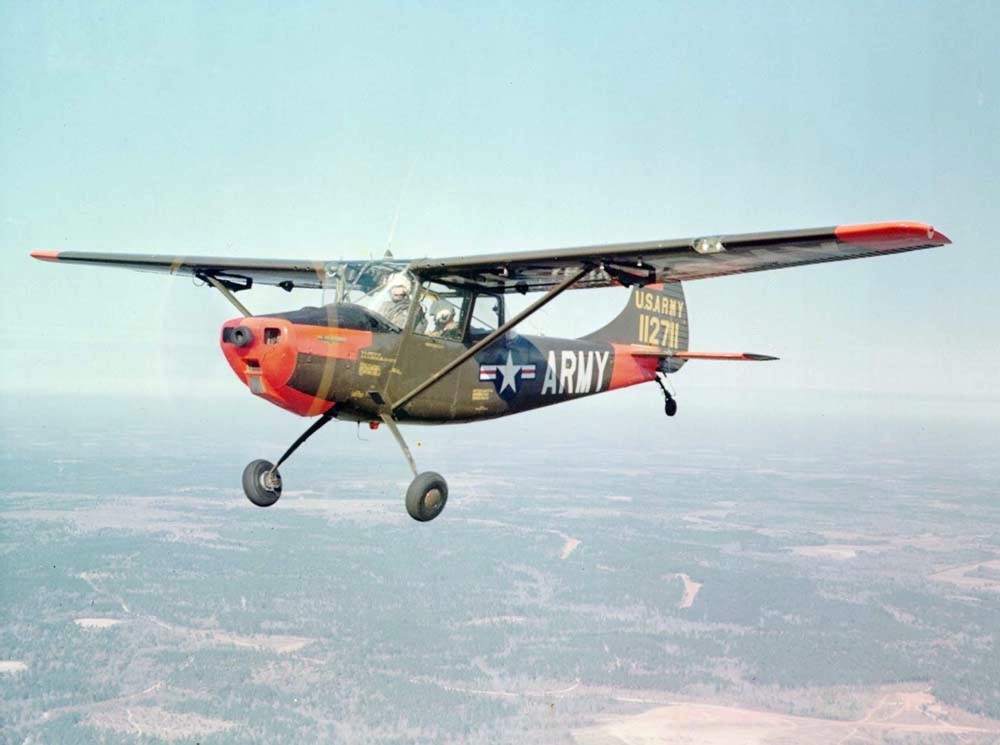
The aircraft also garnered the interest from many other world militaries and was exported to them with few getting license of developing the aircraft locally. The company behind the creation of this aircraft is Cessna.
Origin & Development:-
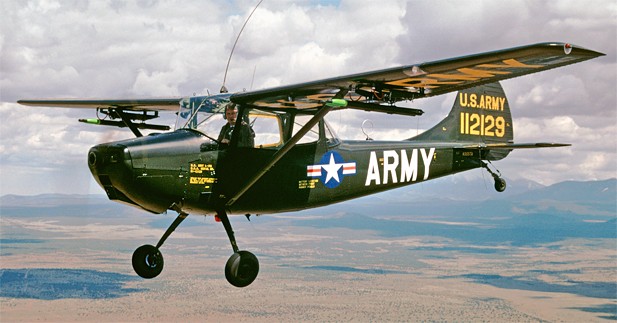
Following the separation of US Army and the Army Air Forces, US Army was in need of an aircraft that could be fitted with artillery munitions as well as could serve the liaison duties. The requirement was put forth by army for an aircraft that was of an all-metal, monoplane and two-seater design. The first company to submit their design was Cessna Aircraft Company which was for Cessna Model 305A which was inspired from the design of Cessna 1170.
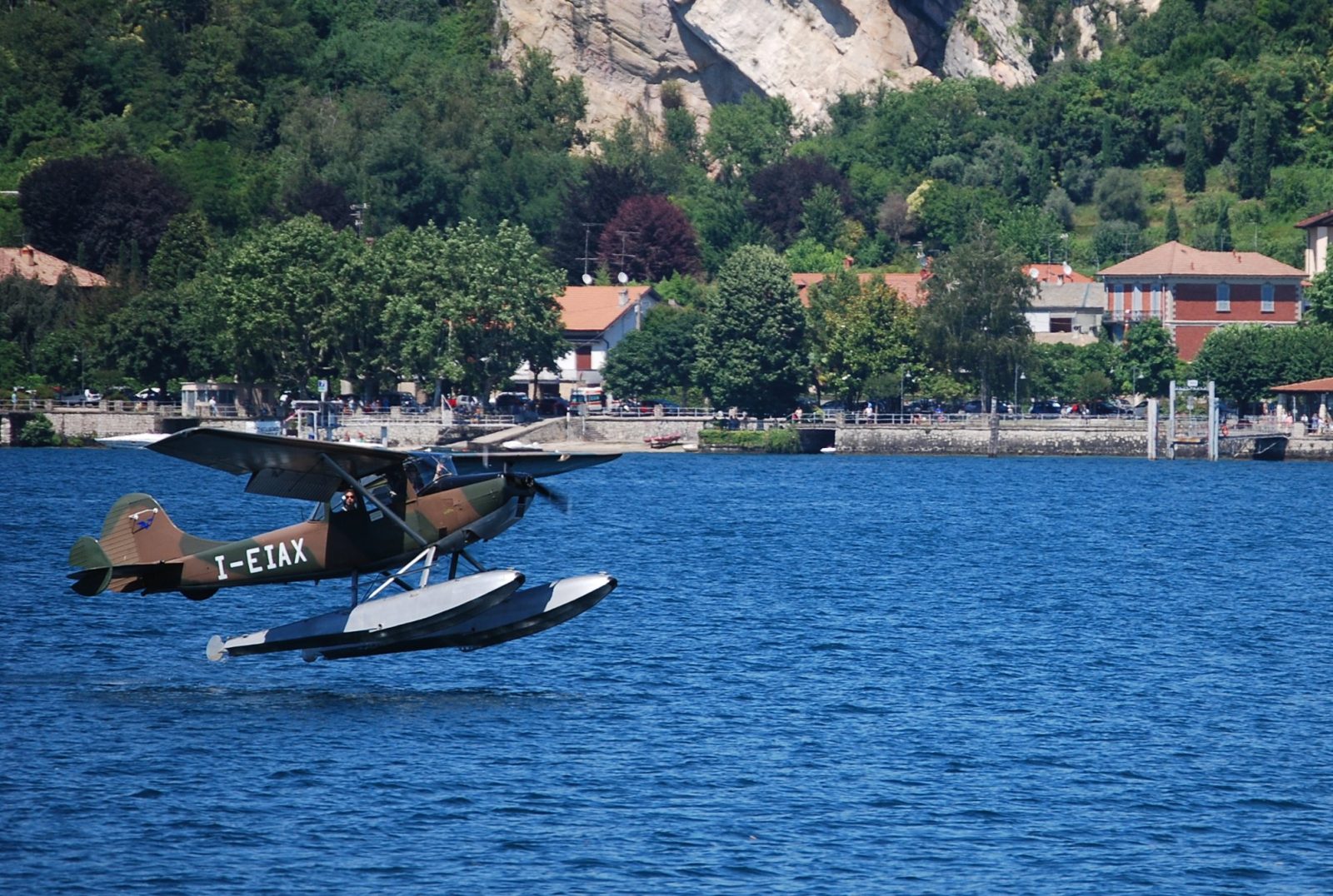
The major difference of Model 350A from Cessna 170 was of the two-seat design that were in tandem configuration along with the windows of side being angled to provide better observational capabilities.
As for other minor differences, it included redesigned fuselage in the tail, provision for view on the rear which was named as Omni-View and panels in wings being transparent over the cockpit for allowing the pilot to look overhead directly.
Powerplant & Performance:-
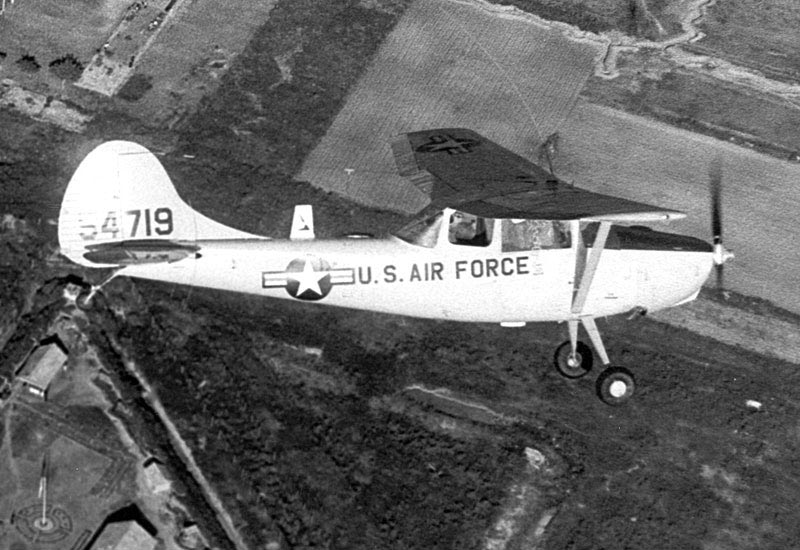
A single one of the Cessna O-1 Bird Dog aircraft was powered by a single Continental O-470-11 engine with 6 pistons. His engine could develop a power of 213 HP that was utilized for driving its 2-balde propeller. The aircraft at its optimum capacity could muster up a speed of about 130 mph max for a ferry range of 530 miles. The aircraft’s maximum service ceiling was about 20500 feet which it could achieve with climbing rate of 1040 ft/min. This much speed allowed for the Cessna O-1 Bird Dog to easily go in and out of the enemy combat zones for serving its observation roles.
First Flight and Entering the Military Service:-
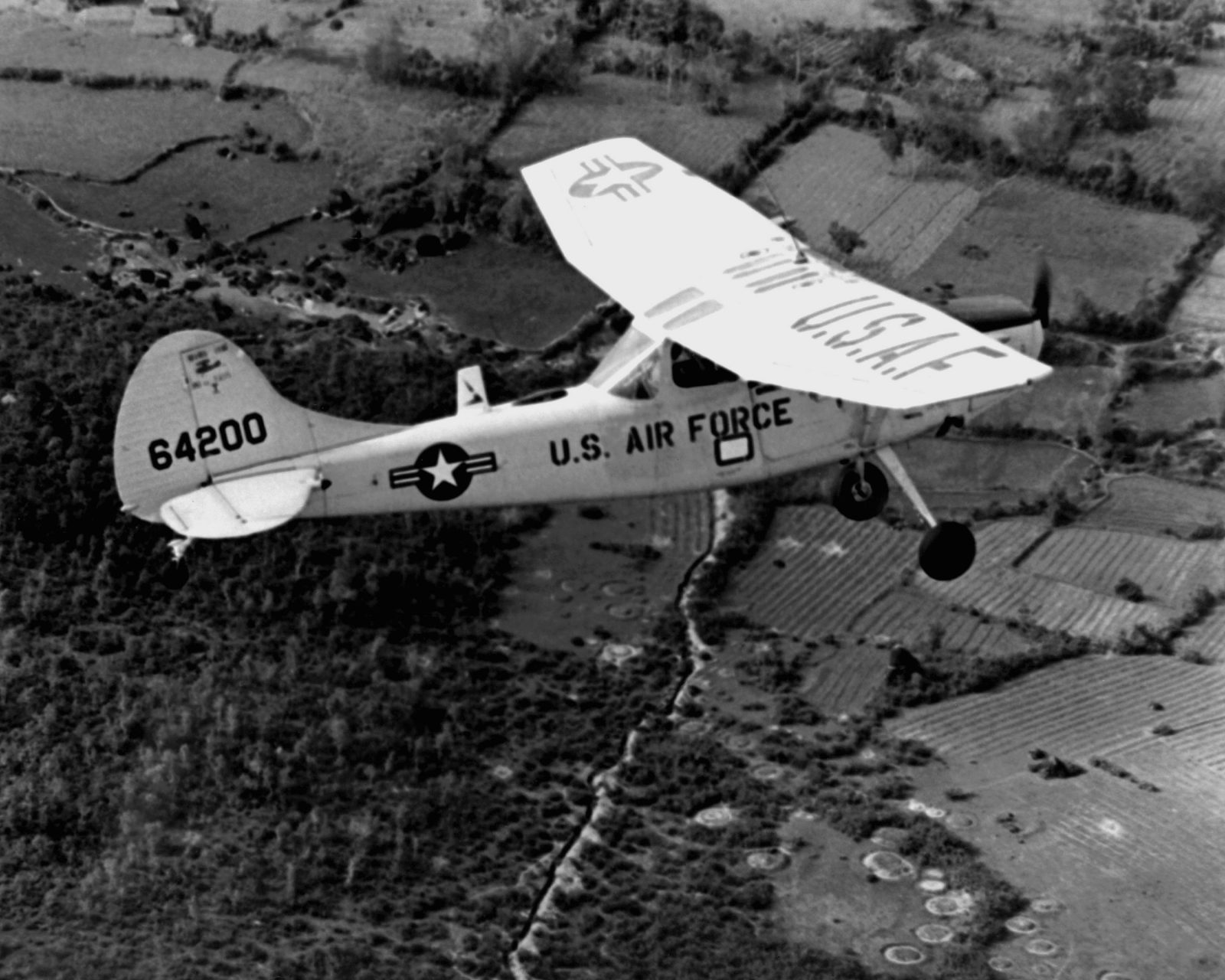
The aircraft was ready by the year 1949 and the very first prototype of the Cessna Model 305A took it to the skies for the very first time back on 14th December 1949 and resulted in Cessna getting the US Army contract. The aircraft was formally designated as Cessna O-1 Bird Dog with its service starting on December 1950.
The name Bird Dog was given to the Cessna O-1 Bird Dog after Cessna employees contested and made reference of the hunting dogs that are sued for identifying a possible game for their masters
Entering the Korean War:-
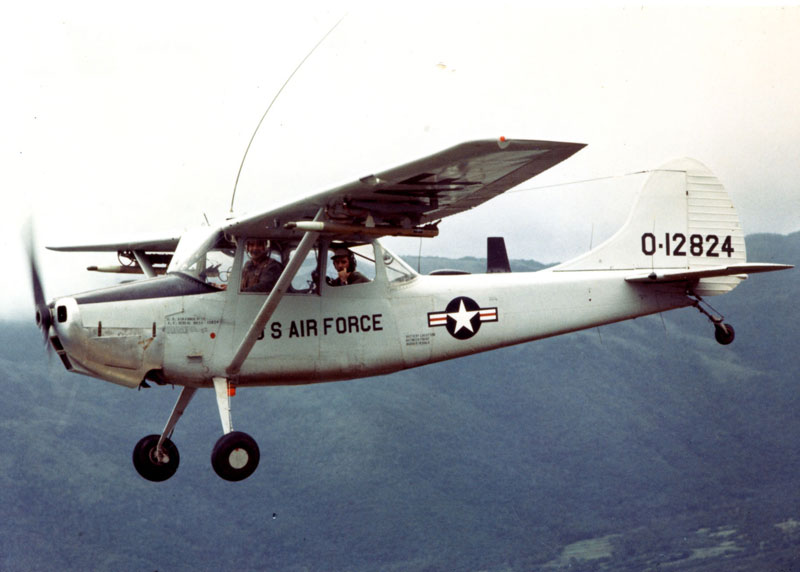
By the time, Cessna O-1 Bird Dog entered in US Army’s service, US was already involved in the Korean War and thus the Cessna O-1 Bird Dog also immediately entered into the fray to serve its liaison and observation roles. The US Army went ahead and gave Cessna an order for developing 3200 of these all-metal observational aircraft that were small in size yet very agile for their roles.
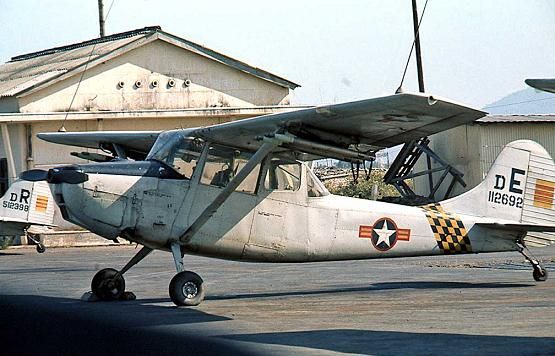
Eventually both the US Army and the US Marine Corps went on to stock these aircraft for their aerial braches where they were used for not only liaison and observation missions but also for MEDEVAC, airborne communication relay and artillery spotting roles.
Service during Vietnam War:-
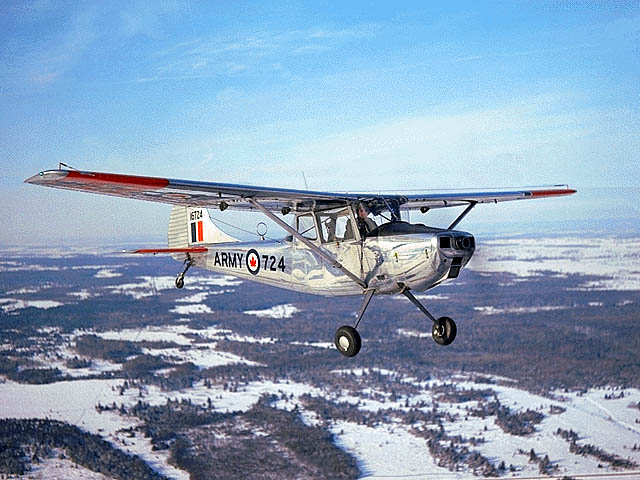
Following the Korean War came the brewing conflict of Vietnam War and the US military once again entered in this conflict and so did the Cessna O-1 Bird Dog for its multirole capacitates. By that time, the United States Air Force also started showing interest in this small sized and agile observation aircraft and thus used it for the FAC (Forward air Control) roles. FAC was normally utilized by the army for providing the direction to deliver the CAS (Close Air Support) to the friendlies on the ground. During this role, the Cessna O-1 Bird Dog forwarded the important information related to the incoming attacking aircraft which would then avoid the casualties of friendlies as it laid waste to enemy forces around them.
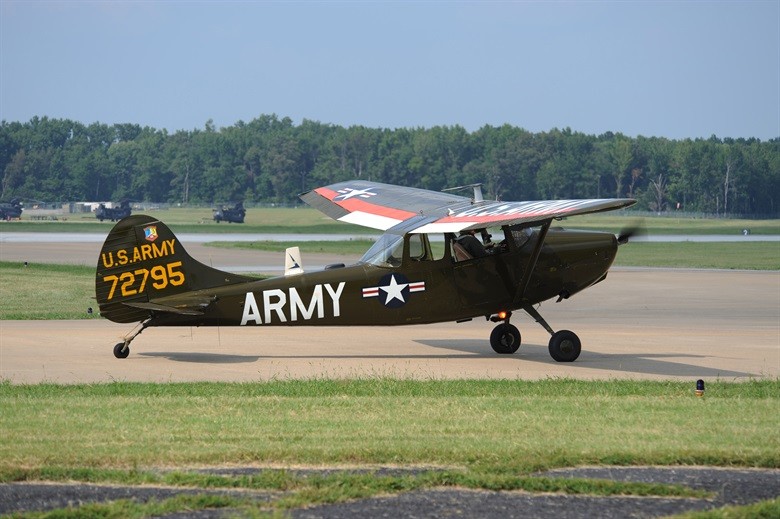
During the Vietnam War, the Cessna O-1 Bird Dog served the roles for communications, scouting, spotting as well as other roles that made the Cessna O-1 Bird Dog to be a necessary accessory of war or US army in the combat zone.
In order to give the Cessna O-1 Bird Dog a little bit of the offensive punch, it was fitted with rocket tubes for air-to-surface attacks under its wings. A total of 500 of these Cessna O-1 Bird Dog aircraft were lost to enemies during the entire Vietnam War. As for the ex-American Bird Dogs, they were passed on to the South Vietnam Air Force. Some of them were even used by the Australian Army too.
Other Operators:-
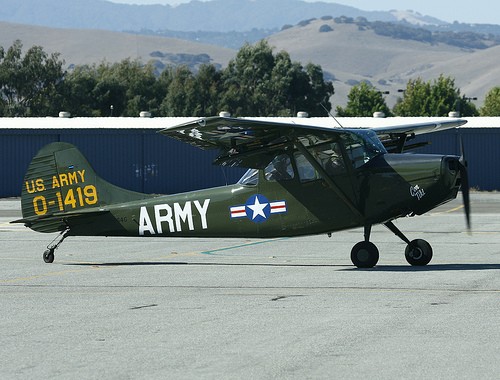
There were numerous operators for the Cessna O-1 Bird Dog with main ones being the following.
- Cambodia
- Canada
- France
- Indonesia
- Italy
- Japan
- Pakistan
- Spain
- Taiwan
- Thailand
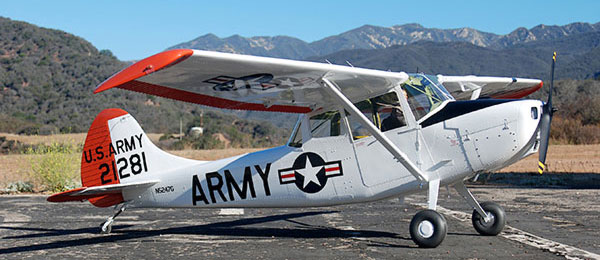
Japanese military was able to stock their air force with numerous of these Cessna O-1 Bird Dog aircraft through the local production license under the brand name of Fuji.
From the year 1950 to 1959, the mass production of the Cessna O-1 Bird Dog was carried out by Cessna and other operators. During this time period, nearly 3413 of these Cessna O-1 Bird Dogs were manufactured.
Replacement and Retirement:-
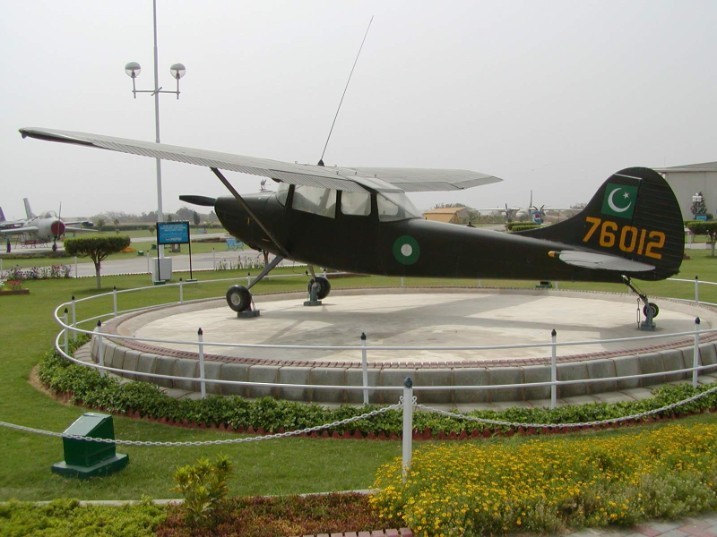
As the world headed into the 1970s, the era for the Cessna O-1 Bird Dog also started to come to an end. The Cessna O-1 Bird Dog started getting replaced by all branches of US military and was formally retired back in 1974.
Despite retirement from army, the Cessna O-1 Bird Dog still went on to serve some civilian government branches and remained fairly popular amongst its users.
Related Content
CONVAIR C-131 / R4Y Samaritan: USAF and US Navy’s VIP Transport Aircraft
Douglas F3D Skyknight: The World’s First Nighttime Jet Fighter
