


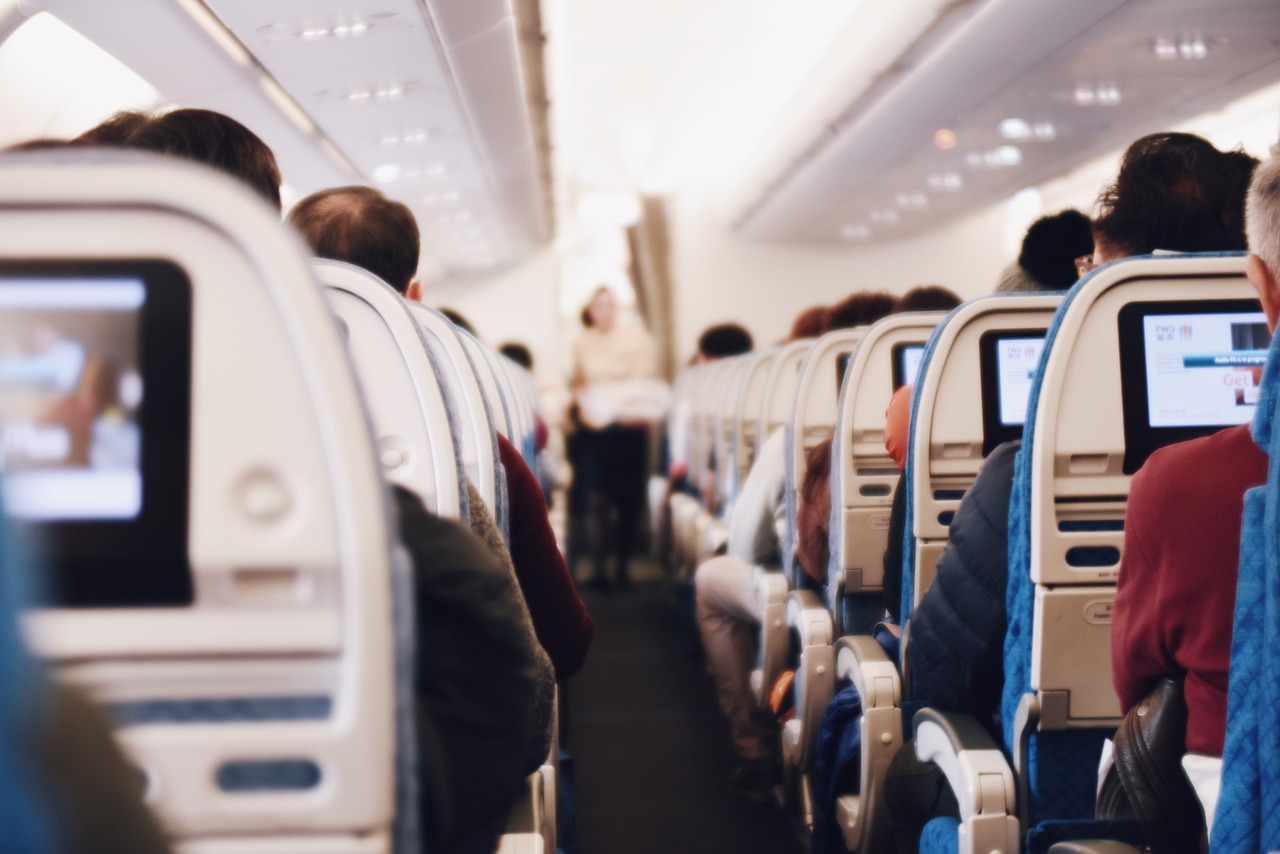
You have heard them on every flight of your life: a soft ding as the seatbelt sign clicks on, a double chime a few minutes after take-off, an odd high-low tone somewhere over the ocean. Most passengers tune them out. Cabin crew never do, because those chimes are a coded language between the flight deck and the cabin, and a couple of them mean something is about to happen.
Here is what the sounds on a plane actually mean, from the harmless ones to the sequence crews train for and hope never to hear, plus the mystery noises underneath the floor that make first-time flyers grip the armrest.
First, a caveat: there is no universal code
Every aircraft type comes with a set of chimes built in, and every airline decides how to use them. Boeing and Airbus cabins sound different, and a triple chime on one carrier can mean “start the meal service” while on another it means “get to your stations now.” The patterns below are the most common conventions in the industry, but if you fly a lot with one airline you will notice its own habits.
The single chime: seatbelt sign, or someone wants a drink
The most familiar sound in the sky. A single chime almost always means one of two things:
- The seatbelt sign has been switched on or off. The chime is generated automatically when a pilot flips the switch, which is why it often comes a beat before the illuminated sign catches your eye.
- A passenger has pressed the call button. The tone is usually slightly different (on many aircraft it is a softer “bong” with a light that comes on above the seat), and it tells the crew which row is asking.
Cabin crew also hear single chimes that passengers do not notice, because they are calls from one galley to another over the interphone, the aircraft’s internal phone system.
The double chime after take-off: 10,000 feet
A few minutes after departure, usually while the aircraft is still climbing steeply, you will hear two chimes in a row. On most airlines this is the pilots telling the cabin crew that the aircraft has passed 10,000 feet.
That altitude matters. Below 10,000 feet the flight deck operates under the “sterile cockpit” rule: pilots do nothing but fly the aircraft and talk to air traffic control, and cabin crew do not call them unless it is a safety matter. The double chime is the signal that the busiest phase is over. Crew can leave their jump seats, start the service, and the pilots are once again reachable. On the way down, the same double chime marks the descent through 10,000 feet, which is your cue that landing is roughly 15 to 20 minutes away.
Some airlines get the same message across with a single long chime, and a few use the seatbelt sign being cycled off and on. Watch the crew: the moment they unbuckle and stand up, the aircraft has almost certainly just passed 10,000 feet.
The high-low chime: the flight deck is calling
A two-tone “hi-lo” sound is the ringtone of the interphone. Usually it is a pilot calling the senior cabin crew member, often for something mundane: a request for coffee, an update on expected turbulence, a heads-up that the landing will be a few minutes late. On some aircraft the same tone is used when one crew station calls another.
It is the most frequently misread sound on board. Nervous flyers assume the high-low means trouble. It almost never does; it means someone picked up a phone.
The triple chime: the one crews stop for
Three chimes in quick succession, on most carriers, mean priority communication. It is the flight deck telling every cabin crew member to pick up the interphone immediately, and it is used when the message cannot wait for a normal call. The most common reason is not dramatic: severe turbulence is coming and the crew need to secure the carts and sit down now. That is why you will sometimes see flight attendants abandon a half-served row and strap in within seconds of a triple chime, while the pilot makes the “cabin crew, take your seats” announcement.
The same triple chime, or on some airlines a repeated series of chimes together with a specific phrase such as “cabin crew, attention” or “all crew to stations,” is also the signal for a genuine emergency briefing. Crew train for it in every recurrent course. What follows is a quick, scripted call in which the captain tells them what is happening, how much time they have, and what to prepare, and the crew then move through the cabin with a calm that is entirely deliberate. If you ever hear a triple chime followed by every flight attendant on board walking purposefully to a phone, that is the one sound they hoped not to hear. It is also, statistically, extraordinarily rare.
The sounds that are not chimes at all
Plenty of noises on a plane are mechanical, and a few of them frighten people every day.
- The barking dog. On an Airbus A320 family aircraft (and the A330), you may hear a rhythmic “woof, woof, woof” from under the floor at the gate or during taxi. It is the Power Transfer Unit, a hydraulic pump that moves pressure between the aircraft’s two hydraulic systems when only one engine is running. It is loud, it sounds alive, and it is completely normal.
- The clunk after take-off. The landing gear folding into the wheel wells and the doors closing over it. The bigger the aircraft, the louder the thud.
- The whirring before landing. The flaps and slats extending along the wing. On the ground you can watch the rear of the wing slide back and down; in the cabin you hear the motors.
- The engine note dropping shortly after take-off. Pilots reduce thrust from take-off power to climb power around 1,000 to 1,500 feet, often for noise-abatement rules near the airport. The aircraft is not losing an engine; it is following the rules.
- The hiss and the pressure in your ears. The cabin is being pressurised to roughly the equivalent of 6,000 to 8,000 feet, which is why your ears pop on the way up and down.
Why the lights go dim and the shades go up
The chimes are only part of the pre-landing ritual. Two other things happen at the same time, and both are safety measures dressed up as routine. Cabin lights are dimmed for take-off and landing at night so that your eyes are already adjusted to the dark if you need to evacuate; it takes several minutes for human eyes to adapt, and nobody has several minutes in an emergency. Window shades are raised for the same reason, and so that both the crew and passengers can see outside, spot a fire or an obstruction, and tell which side of the aircraft to leave from. Take-off and landing are the only phases when the overwhelming majority of accidents happen, which is why the cabin is set up for the worst case during those few minutes and relaxed the moment the double chime sounds.
What to do with all this
Nothing, mostly, except relax a little. The single and double chimes are housekeeping. The high-low is a phone call. The triple chime is the crew being told to sit down, and the fact that they respond instantly is the system working exactly as designed. If you want the pilots’ side of the same story, our piece on what actually happens in the cockpit covers the other end of that interphone, and a pilot answers the questions passengers ask most.
Frequently asked questions
What does a single ding on a plane mean?
Usually that the seatbelt sign has been switched on or off, or that a passenger has pressed the call button. It is the most common and least significant chime on board.
What does the double chime after take-off mean?
On most airlines it tells the cabin crew that the aircraft has climbed through 10,000 feet, the “sterile cockpit” phase is over, and service can begin. The same double chime on descent means landing is about 15 to 20 minutes away.
Is a triple chime an emergency?
It is a priority call from the flight deck. Most often it means turbulence is imminent and the crew must sit down at once. It is also the signal used for a genuine emergency briefing, which is rare.
What is the barking dog noise on an Airbus?
The Power Transfer Unit, a hydraulic pump on the A320 family and A330 that balances pressure between the two hydraulic systems. It sounds alarming and is entirely normal.
Chime conventions vary by airline and aircraft type; the patterns described here are the most widely used in the industry.
The chimes are only half of what you hear on a flight. For the words themselves, from the takeoff callouts to the reason a captain calls their own aircraft heavy, see what pilots are actually saying.
