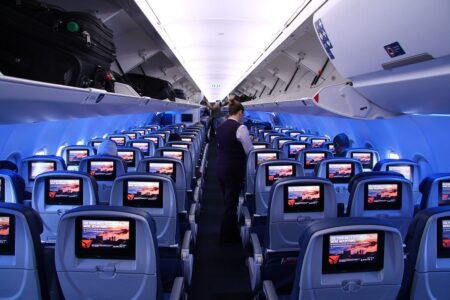






Pilots talk on two completely separate channels. One is the PA, which is aimed at you and is mostly reassurance. The other is the radio, which is aimed at air traffic control and is a compressed technical language with its own dictionary. Almost everything that sounds strange comes from the second one leaking into the first.

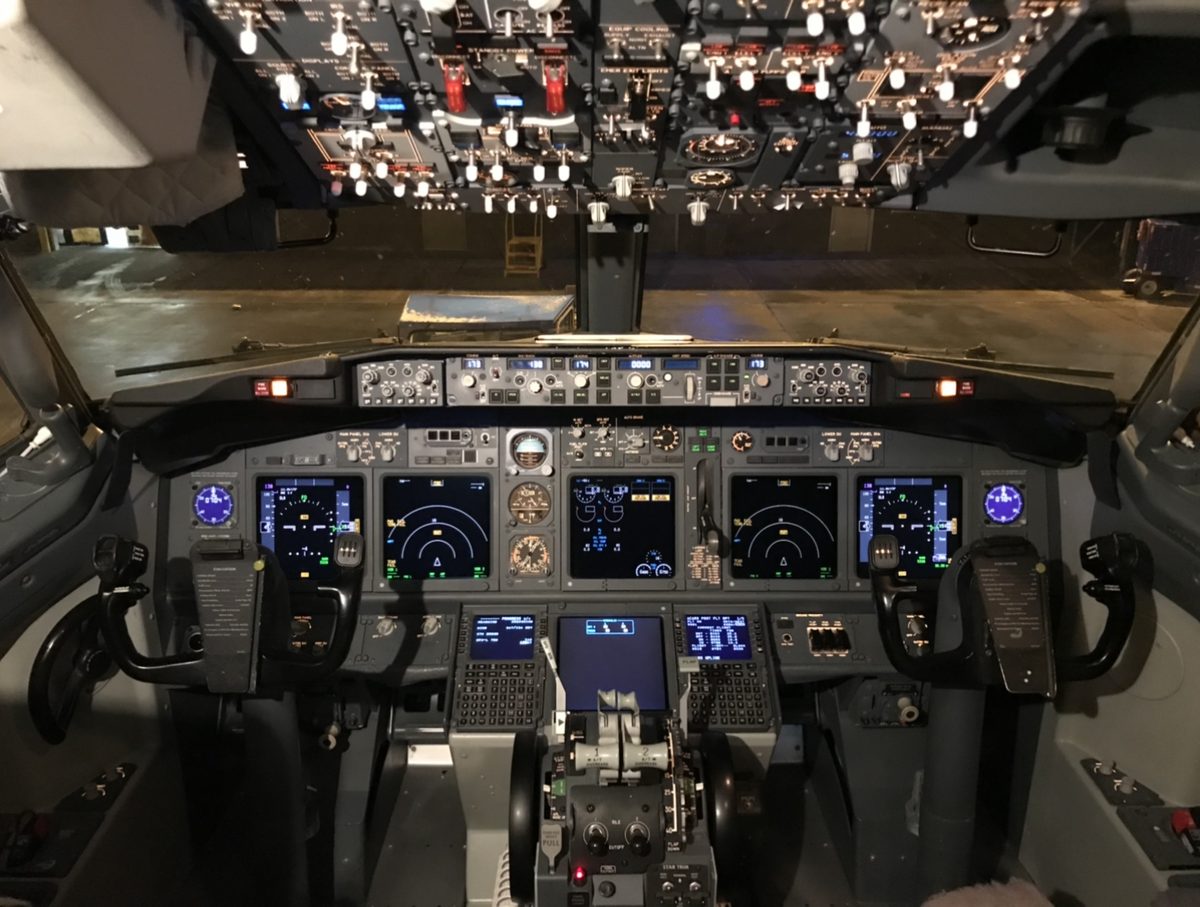
Most articles about pilot phrases are written by people guessing. This one is built from the two documents the words actually come from: the FAA Pilot/Controller Glossary, which defines every term controllers and pilots are allowed to use, and the Aeronautical Information Manual, which sets out what gets said in an emergency. Where the popular version and the official version disagree, we say so.
The PA and the radio are not the same job
The announcements you hear in the cabin are discretionary. No rule says a captain has to tell you the cruising altitude or the weather in Chicago. That habit exists because silence from the flight deck makes people anxious, and a voice explaining a bump turns turbulence from a threat into an inconvenience.

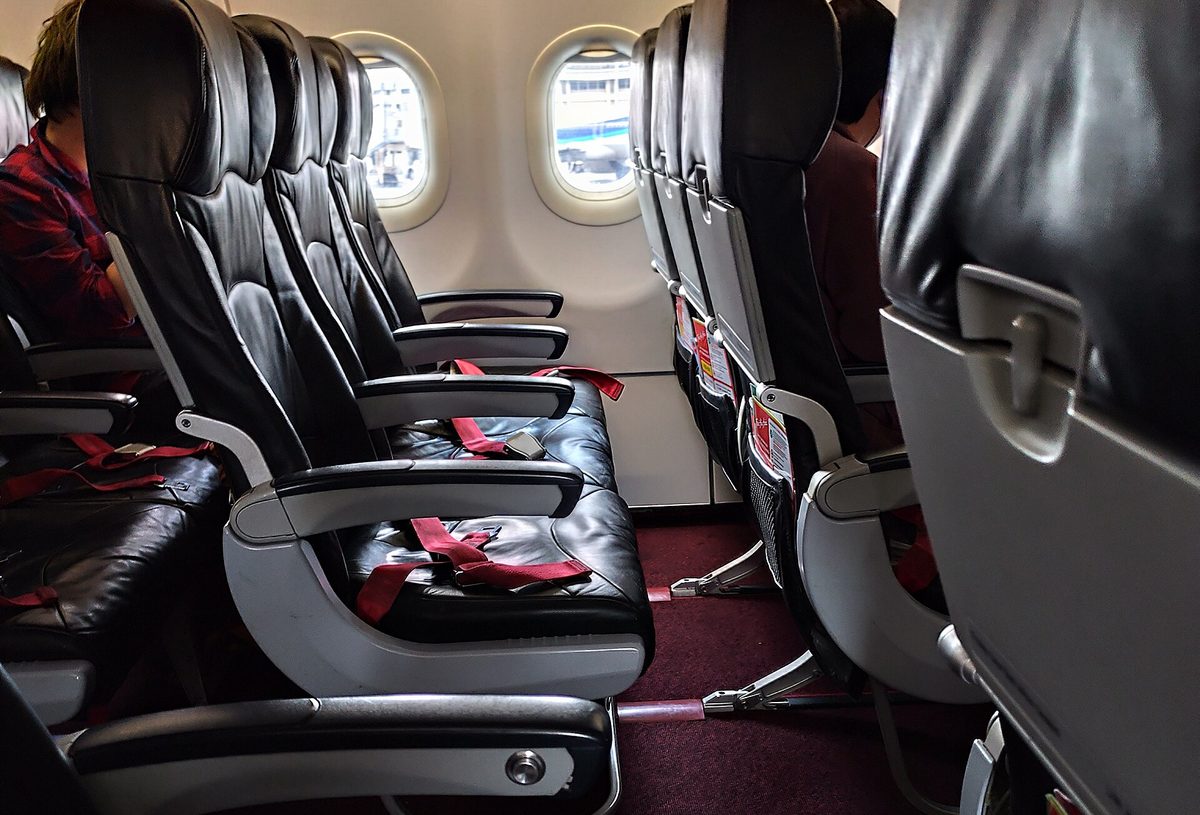
The radio is the opposite. Every word is chosen from a fixed vocabulary, in a fixed order, because a frequency at a busy airport might carry forty aircraft and one controller. Plain English costs seconds that nobody has. That is why pilots sound clipped and slightly robotic, and it is also why the same handful of phrases turn up on every flight you have ever taken.
What pilots say before takeoff
There are two scripts running at once, and they overlap by about ninety seconds.
In the cabin you get some version of “cabin crew, prepare for departure” or “cabin crew, seats for takeoff”. That is not decoration. It is an instruction, and it is the cue for the crew to stop what they are doing, strap in and start their silent review of what they would do if the takeoff went wrong.

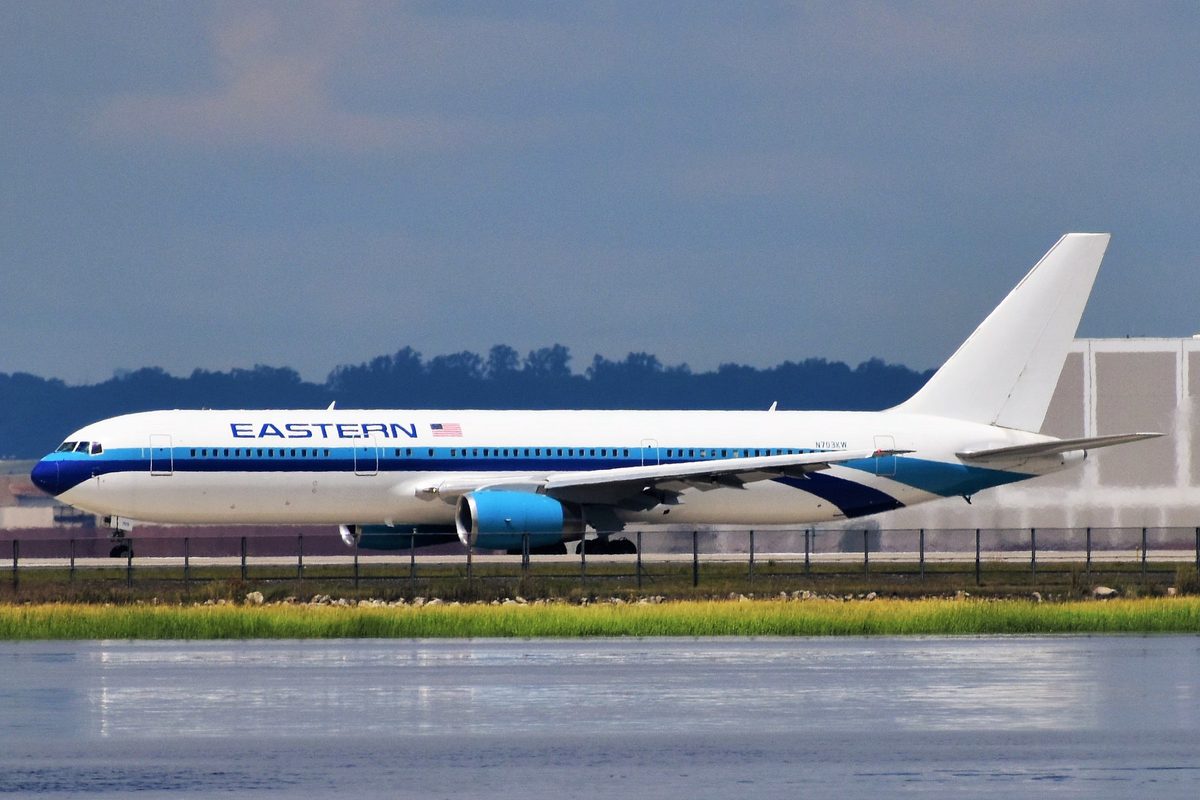
On the radio, the sequence runs roughly like this. Ground control issues a taxi clearance naming the route by taxiway. The pilots read it back word for word, because a readback is the only way the controller can confirm you heard the same thing they said. At the runway the tower either clears you for takeoff or tells you to line up and wait. Then, during the roll itself, the pilot monitoring calls three things: “eighty knots” to cross check the airspeed indicators, “V1” and “rotate”.
V1 is the one worth knowing. It is the speed past which the takeoff will continue no matter what breaks, because there is no longer enough runway to stop. After V1 the captain’s hand comes off the thrust levers. That is a deliberate physical signal that the decision has already been made.
What pilots say when they land
Landing announcements are shorter and more scripted than takeoff ones, and they exist mostly to get the cabin secure. “Cabin crew, prepare for landing” is the same kind of order as its departure twin.
The radio side is busier. Approach control hands you to the tower, the tower clears you to land, and after touchdown ground control gives you a route to the gate. In between, you will hear pilots read back a runway assignment, a wind check and sometimes a wake turbulence caution. The caution is not politeness. It is a legal separation requirement, and it brings us to the strangest sounding word in aviation.
Why a pilot calls their own aircraft heavy
“Speedbird nine heavy” is not bragging and it is not a comment on the passengers. Heavy is a wake turbulence category, and the FAA defines it precisely: an aircraft capable of takeoff weights of 300,000 pounds or more, whether or not it happens to be that heavy on the day.
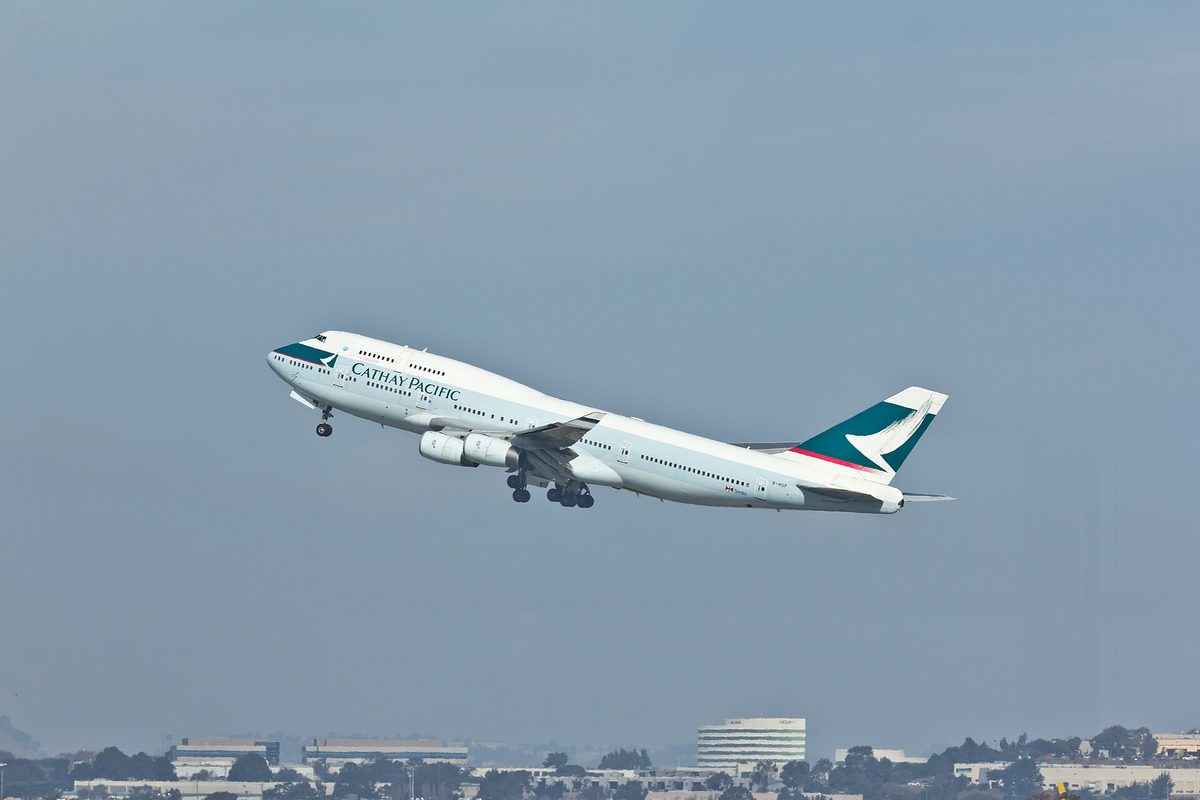
The categories below it are large, for anything above 41,000 pounds and under 300,000, and small for 41,000 pounds or less. Above heavy there is exactly one entry: super, which the FAA assigns to the Airbus A380-800.
Saying the word does something useful. A big aircraft leaves a pair of spinning vortices behind it that can roll a smaller aeroplane onto its back, so the controller has to leave a gap. Announcing your category on first contact means everyone on the frequency, not just the controller, knows to give you room.
Roger, wilco and affirmative do not mean what most people think
This is where the popular version goes wrong most often. All three are defined, and they are not interchangeable.
- Roger means “I have received all of your last transmission”. The glossary adds an explicit warning: it should not be used to answer a question requiring a yes or a no answer. Roger is not agreement. It is a receipt.
- Wilco means “I have received your message, understand it, and will comply with it”. That is the one that actually promises action.
- Affirmative means yes. Negative means “no”, or “permission not granted”, or “that is not correct”, depending on what was asked.
- Acknowledge is a request, not an answer. It means “let me know that you have received and understood this message”.
So a pilot who says “roger” to “are you able to accept runway two seven” has technically told the controller nothing at all. In practice controllers will ask again, which is exactly why the distinction is written into the glossary.
Squawk, and the four digits that can say everything
When a controller says “squawk four six three one”, they are telling the pilot to set that code on the transponder so the aircraft shows up on radar as a labelled target rather than an anonymous blip. The FAA defines squawk as the instruction to activate the transponder and ADS-B Out with altitude reporting enabled.

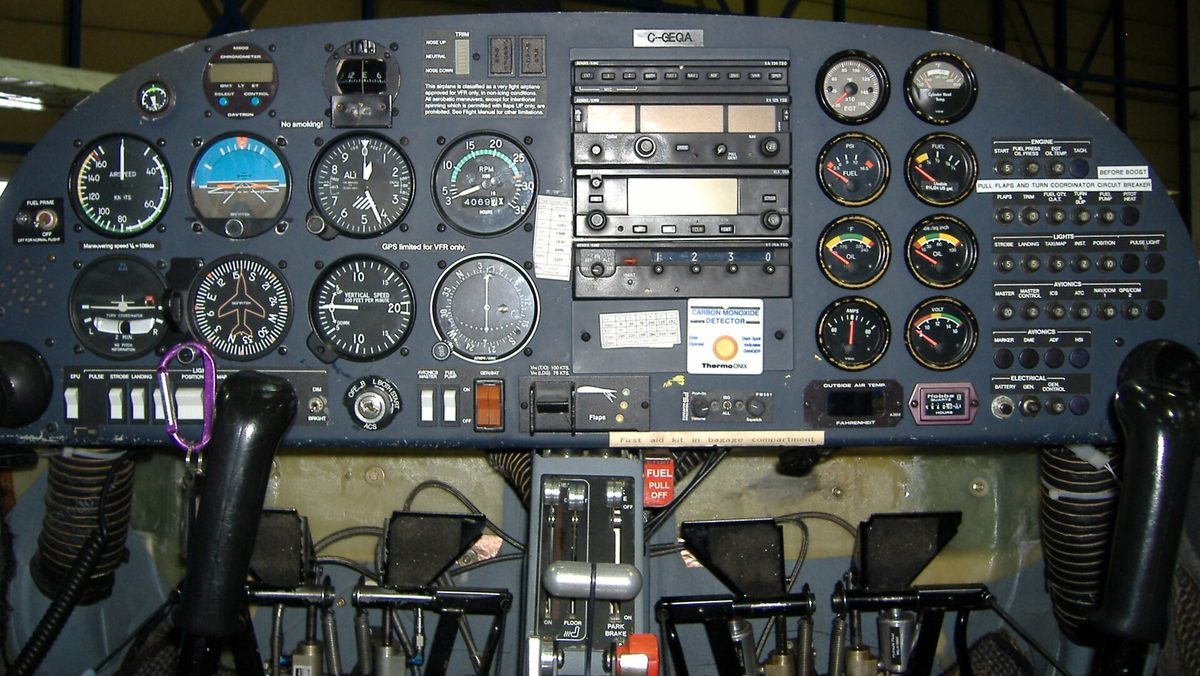
Three codes are reserved worldwide and every controller knows them on sight. 7500 means hijack. 7600 means radio failure. 7700 means general emergency. A crew who cannot talk can still say a great deal by turning four knobs, which is the entire point of reserving them.
Mayday, pan-pan, and the gap between them
Both are real and they are not the same level. Mayday is the international radiotelephony distress signal, and when it is repeated three times it indicates imminent and grave danger with immediate assistance requested. Pan-pan is the urgency signal, repeated three times, indicating uncertainty or alert, followed by the nature of the urgency.
The practical difference is whether anyone is in immediate danger. An engine failure on a twin that is still flying comfortably might be a pan-pan. A fire is a mayday. Both give the crew priority, and neither is something a pilot says lightly, because both generate a written report.
Souls on board, and the phrase the FAA never uses
You have probably read that controllers ask for “souls on board” because it counts the living rather than the manifest. The usage is genuine on the radio. What is not true is that it is official terminology.

Search the FAA’s distress and urgency guidance and the word souls does not appear anywhere. The published message format asks for aircraft identification and type, nature of the distress, present position and heading, altitude, fuel remaining in minutes, and “number of people on board”. The rescue services need a headcount to know when to stop looking. Souls is simply the phrase crews reached for, and it stuck.
What pilots say to each other
Inside the flight deck the language changes again. Below 10,000 feet almost everything that is not directly about flying the aeroplane is forbidden, under what is usually called the sterile cockpit rule. Above that, the callouts are still standardised: altitude checks, speed checks, configuration changes, each one spoken aloud so the other pilot can catch an error before it becomes a problem.

There is no ritual good luck phrase, whatever the films suggest. The closest thing to one is a brief takeoff briefing before the roll, where one pilot says out loud what they will do if an engine quits at various points. It is not superstition. It is rehearsal.
If you want the fuller picture of what happens on the other side of that door, we have a piece on nine things that go on in the cockpit, and another on the single number that governs an airline pilot’s whole career.
Frequently asked questions
What do pilots say before takeoff to passengers?
Usually a short welcome with the flight time and route, then “cabin crew, prepare for departure” or “cabin crew, seats for takeoff”. The second one is an instruction to the crew rather than information for you, and it means the aircraft is about to line up.
What do pilots say to passengers when landing?
A descent announcement with local time, weather and connection information, followed by “cabin crew, prepare for landing”. After touchdown most crews add a thank you and a reminder to stay seated until the seatbelt sign is off.
Why do pilots say souls on board?
It is radio shorthand for the total number of people on the aircraft, used so rescue services know how many to search for. It is common usage but it is not official FAA terminology. The published emergency message format asks for the “number of people on board”.
Does roger mean yes?
No. Roger means the transmission was received. The FAA glossary states directly that it should not be used to answer a question requiring a yes or no. The correct words are affirmative and negative.
What do pilots say instead of mayday?
Pan-pan, repeated three times, for an urgent situation where nobody is in immediate danger. Mayday is reserved for imminent and grave danger requiring immediate assistance.
What does heavy mean after an airline callsign?
It is a wake turbulence category for aircraft capable of takeoff weights of 300,000 pounds or more. It warns other traffic and the controller to allow extra separation behind the aircraft.
Sources
Definitions of heavy, roger, wilco, affirmative, negative, acknowledge, squawk, mayday and pan-pan are quoted from the FAA Pilot/Controller Glossary. The emergency message format and the absence of the word souls come from the Aeronautical Information Manual, chapter 6, section 3. Both are US publications, so phrasing differs slightly in ICAO states, most visibly in affirm against affirmative.
Related reading on CrewDaily: what the dings on a plane actually mean, what a black box really records, and the safest seat on a plane according to crash data.