


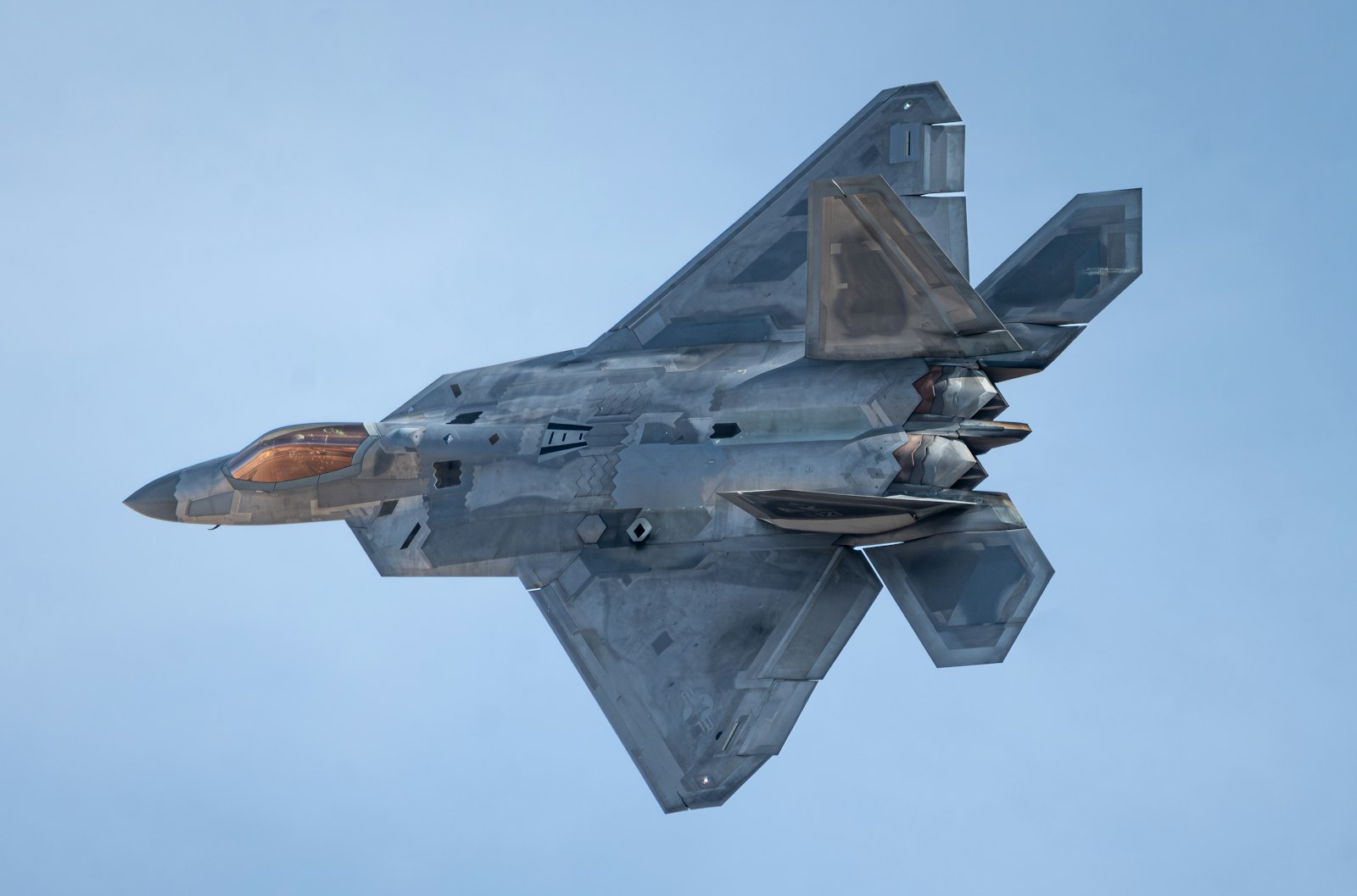
Stealth is the most misunderstood word in military aviation. It does not mean invisible. No combat aircraft is invisible to radar, and none of the people who build them has ever claimed otherwise. What a stealth aircraft does is far more specific, and once you understand the physics behind it the whole fifth generation argument makes much more sense.
Radar cross section, and why the numbers sound absurd
Radar works by shouting and listening for the echo. How loud that echo comes back is the aircraft’s radar cross section, written as RCS and measured in square metres. It is not the size of the aeroplane. It is the size of a perfectly reflective metal sphere that would bounce back the same amount of energy.
That distinction is the whole trick. A fighter can be eighteen metres long and still return an echo the size of a marble, because shape decides where the energy goes. Published RCS figures for operational types are estimates, and the real numbers are classified, but the comparison everyone uses is a fair one: a conventional fighter behaves like a large object on a radar screen, a fifth generation one behaves like a very small one.
The fourth root rule, which is the part people get wrong
Here is where intuition fails. Cutting radar cross section by a factor of ten thousand does not make an aircraft ten thousand times harder to see. Detection range scales with the fourth root of RCS.
Work it through. The fourth root of 10,000 is 10. So a ten thousandfold reduction in radar cross section cuts detection range by a factor of ten. A radar that saw a conventional fighter at 200 kilometres sees that stealth aircraft at 20.
Twenty kilometres is not invisibility. It is time. At those closing speeds it is the difference between being engaged first and engaging first, and that is all stealth has ever been for.
Shape does most of the work
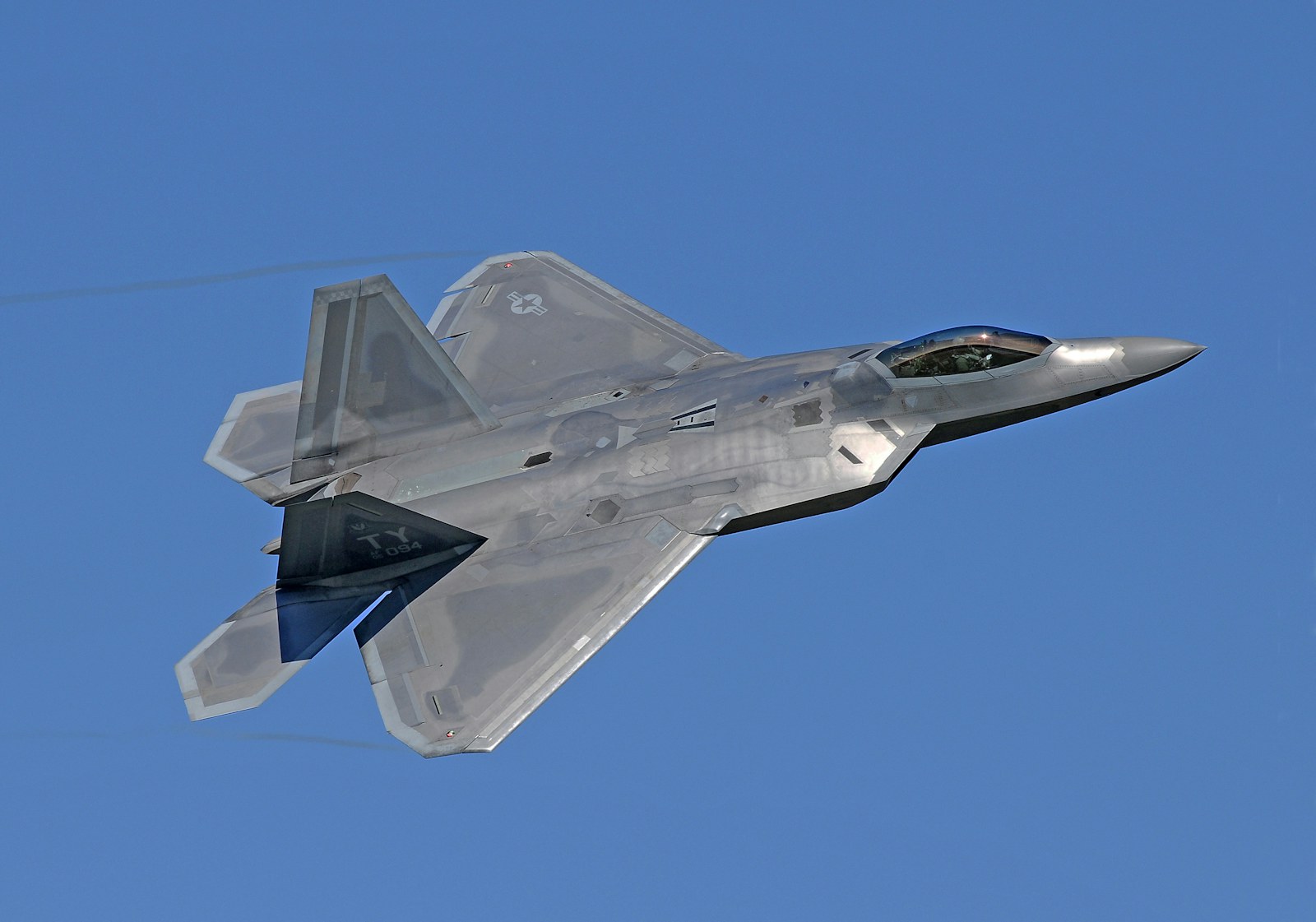
Radar absorbent material gets the attention, but shaping is the larger contribution. Three ideas do most of it.
Send the energy somewhere else. A flat panel angled away from the radar reflects the beam off into empty sky rather than back to the receiver. The faceted look of early stealth designs is this idea taken to its crudest extreme.
Align every edge. Look at a fifth generation fighter from above and you will see the same handful of angles repeated: wing leading edges, trailing edges, intake lips, even the lines of panels and doors. Edges scatter energy in a narrow spike. Line all the edges up and you get a few predictable spikes in a few directions instead of returns from every angle at once.
Hide the parts that shout. Engine faces are superb reflectors, so intakes are curved to put the compressor out of line of sight. Right angles form corner reflectors that return energy straight back to the source, so they are designed out.
Why external stores ruin it
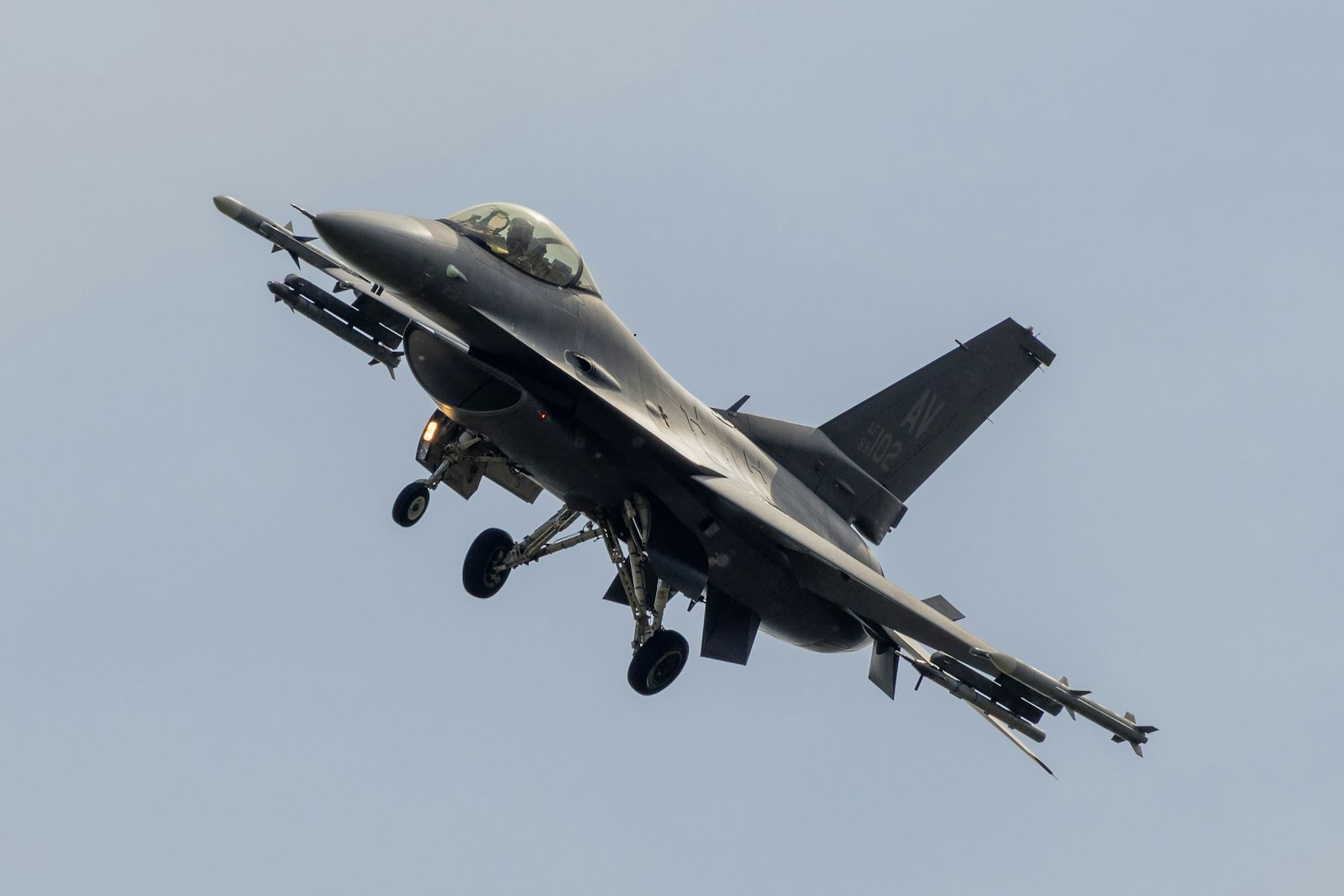
All of that careful shaping is undone the moment you bolt things to the outside. A missile on a pylon is a cylinder with a nose cone and fins, which is close to an ideal radar reflector. A drop tank is worse. The pylon itself adds corners.
This is why fifth generation fighters carry weapons internally, and why the same aircraft can be flown in two completely different configurations. Carrying external stores on pylons, a stealth fighter is simply a fighter. The low observable configuration exists for the day it matters.
Stealth is not only about radar
Radar is the loudest sensor, not the only one. A credible low observable design also manages infrared signature, by shielding and mixing exhaust, and electromagnetic emissions, because an aircraft that radiates with its own radar announces itself regardless of how small its echo is. Emissions discipline is a tactic rather than a technology, and it is part of the package.
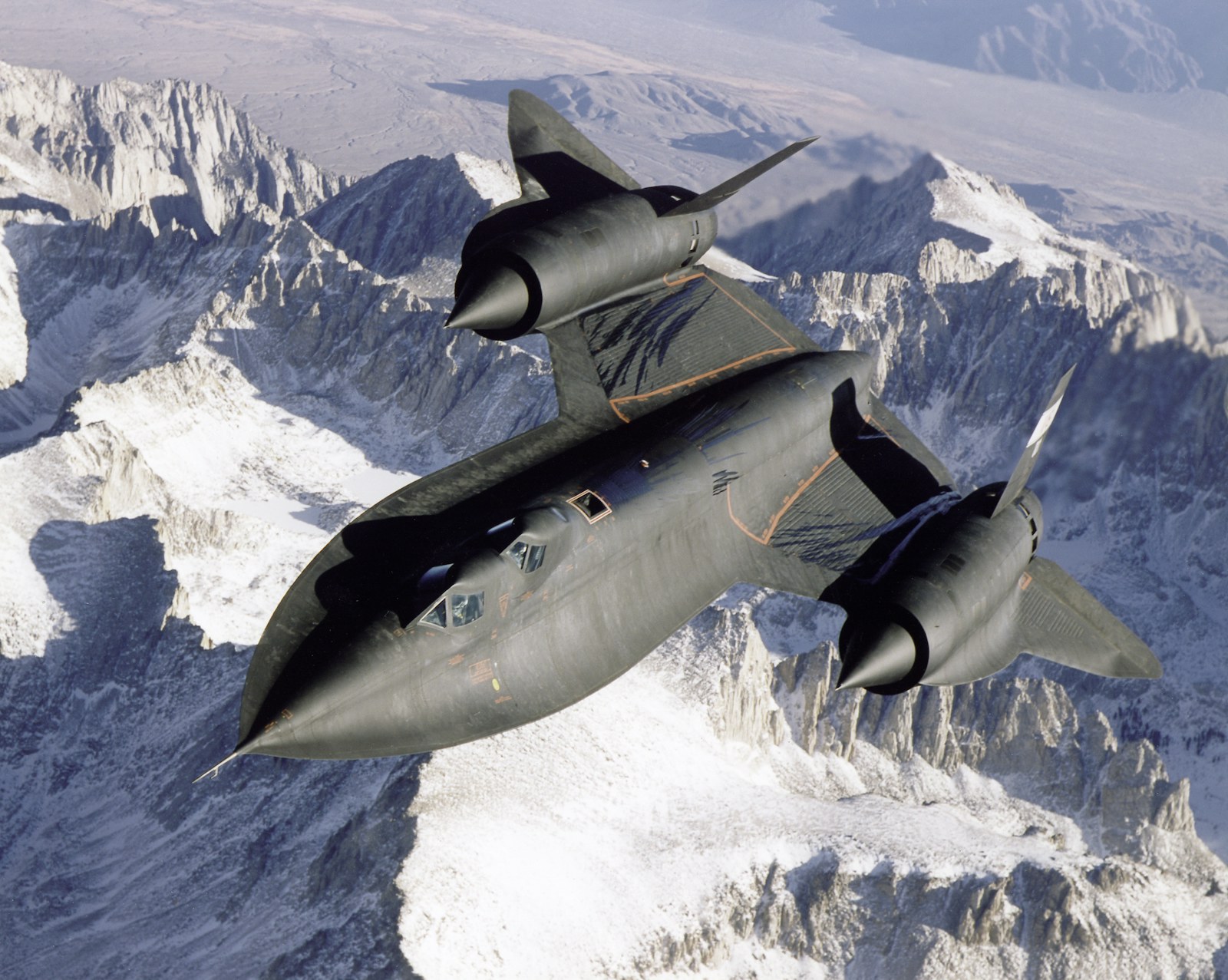
None of this is new. The SR-71 used canted surfaces and radar absorbent structure in the 1960s, and chose to solve the problem mainly with altitude and speed instead. What changed is that computing power made it possible to shape an aircraft for low observability and still have it fly well, which the early faceted designs did not.
What low frequency radar can and cannot do
You will read that long wavelength radars defeat stealth. Partly true, and the limitation matters more than the claim. Low frequency radars can often detect that something is out there, because shaping optimised against centimetre wavelengths works less well against metre wavelengths. What they generally cannot do is produce a track precise enough to guide a weapon.
Detection and targeting are different problems. Knowing roughly where an aircraft is does not let you shoot it.
So what actually makes a fighter fifth generation?
Stealth is the headline but it is one of four things, and the other three decide as much.
- All aspect low observability, meaning small radar return from the sides and rear as well as head on, not just a clean frontal number.
- Sensor fusion, where radar, infrared search and track, and electronic warning are combined into one picture rather than presented as separate displays for the pilot to reconcile under load.
- Networking, so a flight shares one picture and can pass targeting data between aircraft without anyone radiating.
- Supercruise and high altitude performance on many designs, meaning sustained supersonic flight without afterburner, which changes the fuel arithmetic completely.
Sensor fusion is arguably the bigger leap. Stealth buys a first look. Fusion and networking are what let a crew use it.
Frequently asked questions
Can radar detect stealth aircraft at all?
Yes. Stealth reduces detection range rather than eliminating detection. Because range scales with the fourth root of radar cross section, even a very large reduction in RCS produces a proportionally much smaller reduction in range, which is why the aim is to be seen late rather than never.
Does carrying missiles make a stealth fighter visible?
Carrying them externally, yes. Pylons, missile bodies and drop tanks are efficient reflectors and undo the shaping. Fifth generation designs carry weapons in internal bays for that reason.
Is stealth the same as being invisible?
No, and nobody in the field claims it is. The correct term is low observable. The goal is to compress the distance at which an opponent can detect and then track you.
Why do fifth generation fighters all look similar?
Because the physics constrains the answer. Edge alignment, buried engine faces and the absence of right angles push very different design teams towards similar planforms.
The short version
Stealth is not a cloak. It is a deliberate reduction in how far away an enemy radar can find you, bought with shape, paid for with internal carriage and maintenance, and worth it because in air combat seeing first and shooting first is most of the fight. Our ranking of the top 10 fighter jets leans heavily on this, and the two aircraft the argument usually comes down to are compared in F-22 Raptor against F-35 Lightning II.
