


The aircraft for today is the one that is not in the active-duty of any country’s air force as it was cancelled shortly after its creation. The name of this aircraft is Northrop F-20 Tigershark which is also known by its designation as F-5G. The Northrop F-20 Tigershark is a light fighter that was developed by the famed aircraft manufacturer named Northrop. Their development for this aircraft started back in 1975 as an improvement on the design of the pre-existing F-5E Tiger II. The main improvements ere made in the engine section to provide it with more power as well as to have a modern avionics suite with a powerful radar system.
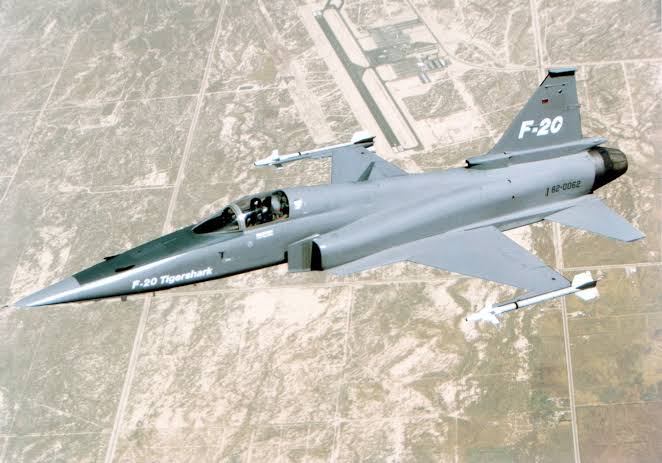
In comparison to the F-5E, the Northrop F-20 Tigershark was undoubtedly far speedier and was also able to achieve better air-to-air visibility range along with having all types of air-to-ground armament modes. These features of the Northrop F-20 Tigershark allowed it to become a possible competitor for the General Dynamics’ F-16 Fighting Falcon along with being cheap in cost of purchase and operation.
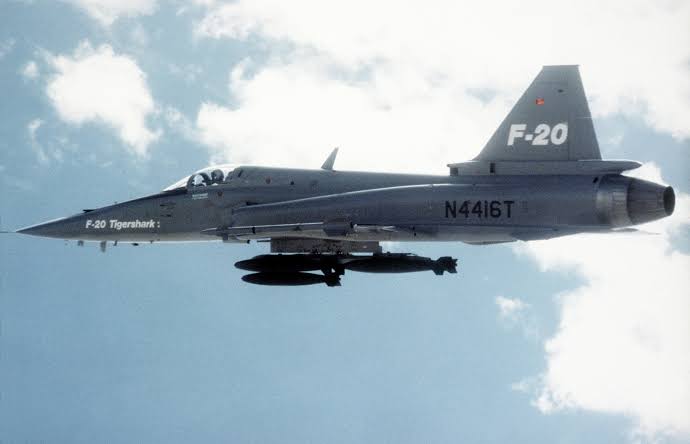
Only 3 prototypes for the Northrop F-20 Tigershark were created with the 4th one being only partially completed when the program was abandoned by Northrop and USAF in 1986.
For our readers, we bring some of the amazing facts about the Northrop F-20 Tigershark; an aircraft that never saw the combat action.
Background:-
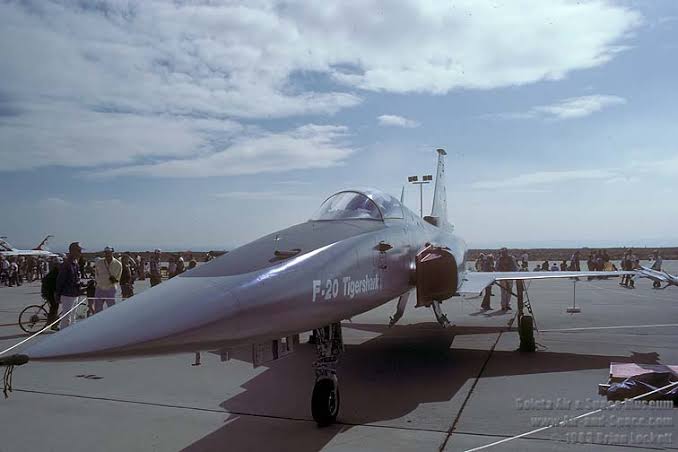
The Northrop F-20 Tigershark was developed out of the F-5G Tiger II aircraft and then evolved to have its own unique design. The aircraft was to only cheap to purchase and also operate but it was also more capable than the MiG-21 Fishbed aircraft.
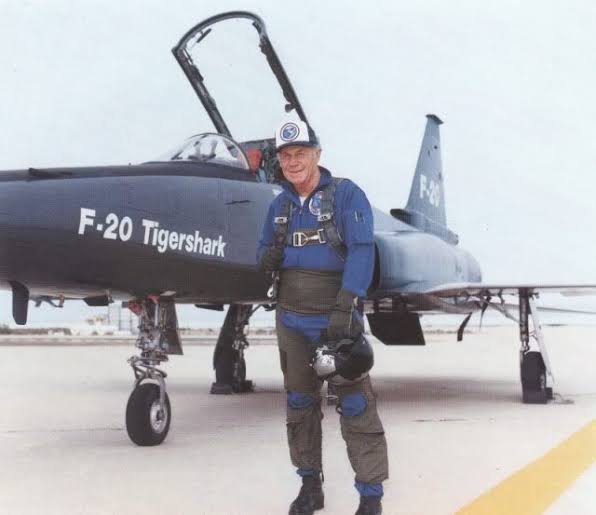
The Northrop F-20 Tigershark would have enabled the US to sell this aircraft to its allied nations without worry of exposing the aircraft’s advanced technologies to US’s enemies. But the aircraft arrived when the US was undergoing into the new administration of President Ronald Regan and the F-16 Fighting Falcon also appeared at that time to be a cheap light fighter aircraft solution.
First Flight:-
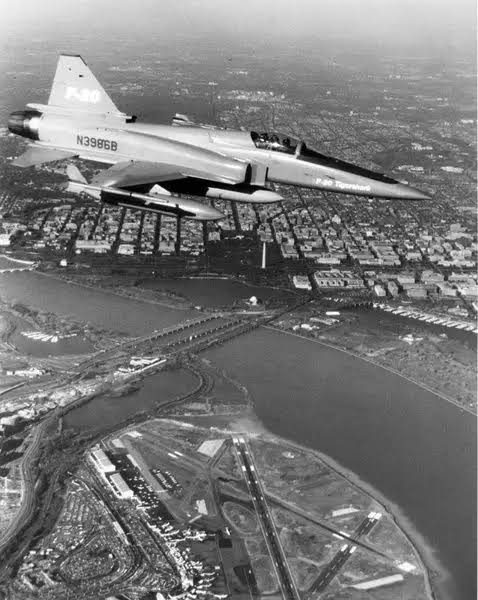
The very first prototype for the Northrop F-20 Tigershark took it to the skies back on 30th August 1982. That time it was only designated as the F-20 whereas the Tigershark deviation was awarded back in 1983.
The most expensive privately funded Fighter aircraft project in history yet:-
In comparison to the previous F-5 fighter, the Northrop F-20 Tigershark offered better speed, better radar system and the ability to deploy all kinds of air-to-air and air-to-surface ammunitions in a precise manner.
The Northrop F-20 Tigershark was started by Northrop as a privately funded project for a fighter jet for a total cost of nearly 1.2 billion dollars back in 1975 but all of that was wasted after no country ever showed interest to buy one.
Controls and Radar:-
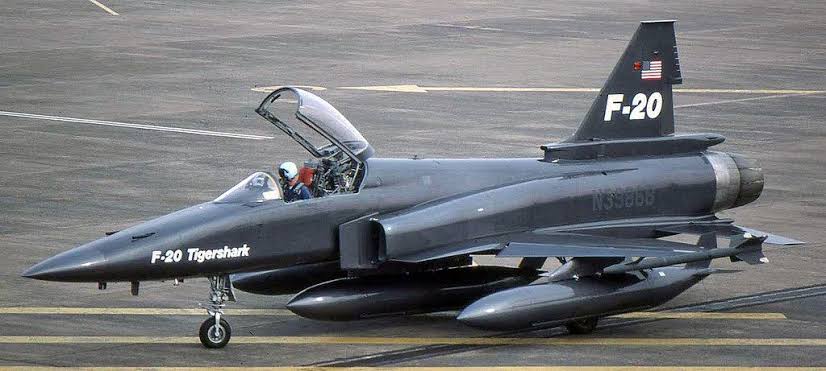
The cockpit of the Northrop F-20 Tigershark provided the pilot with a well-organized panel for instruments as well as the following.
- HUD (Heads-Up Display)
- 2 MFDs (Multi-Function Displays)
The controls were of HOTAS (Hands On-Throttle and Stick) configuration which allowed both hands of the pilot to be on the control systems all the while the instrument panel being in easy reach. The front visibility of the Northrop F-20 Tigershark was an exceptional one but the rear was blocked due to the fuselage spine.
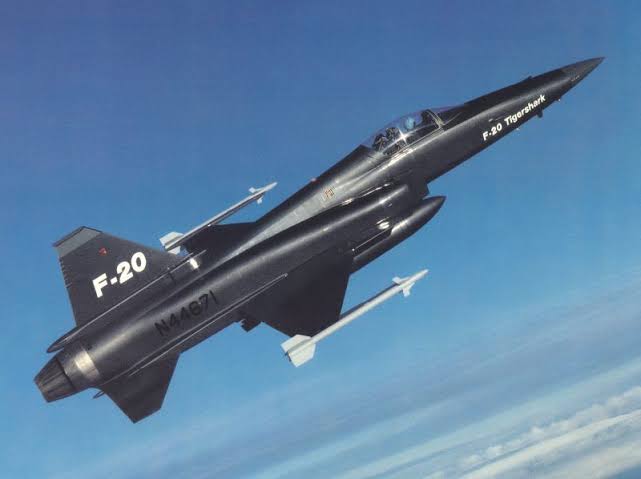
The avionics includes General Electric’s multi-mode X-band pulse Doppler radar system of the AN/APG-67 series. This radar system was then rebranded as the Lockheed Martin after the sale of General Electric to Lockheed Martin. This very same radar system as also sold by General Electric to Taiwan and South Korea for their fighters AIDC f-CK-1 Ching Kuo and the T-50 Golden Eagle respectively.
Mimicking the design of F-5:-
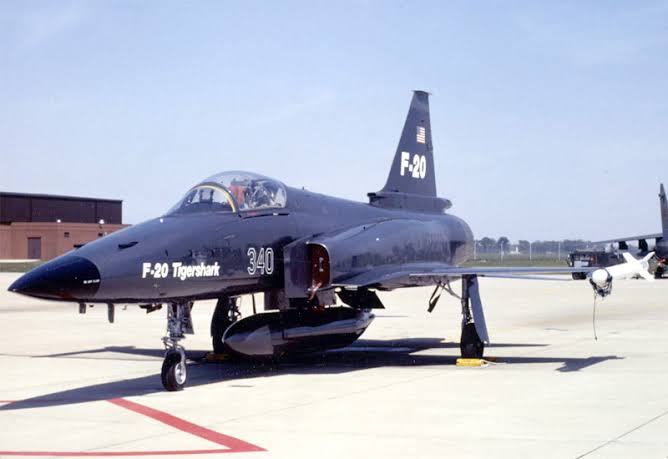
The outward appendance of the Northrop F-20 Tigershark reminded the onlookers about the F-5‘s design as both of them resembled by quite much. The sharp nose cone allowed for the placement of the radar system to allow for missile armament engagement with the BVR (Beyond Visual Range). The cockpit was designed to sit aft to the nose cone.
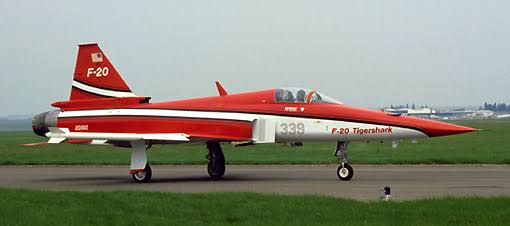
As for the single-engine to power the aircraft, it was fitted deep in the aft section of the fuselage with 2 intakes being made on the side of the cockpit. The tail section was a single one in the vertical direction along with 2 horizontal planes. The wings of the Northrop F-20 Tigershark were clipped to allow them to be fitted with the Sidewinder air-to-air short-range missiles as the standard armament configuration.
Operational mishaps:-
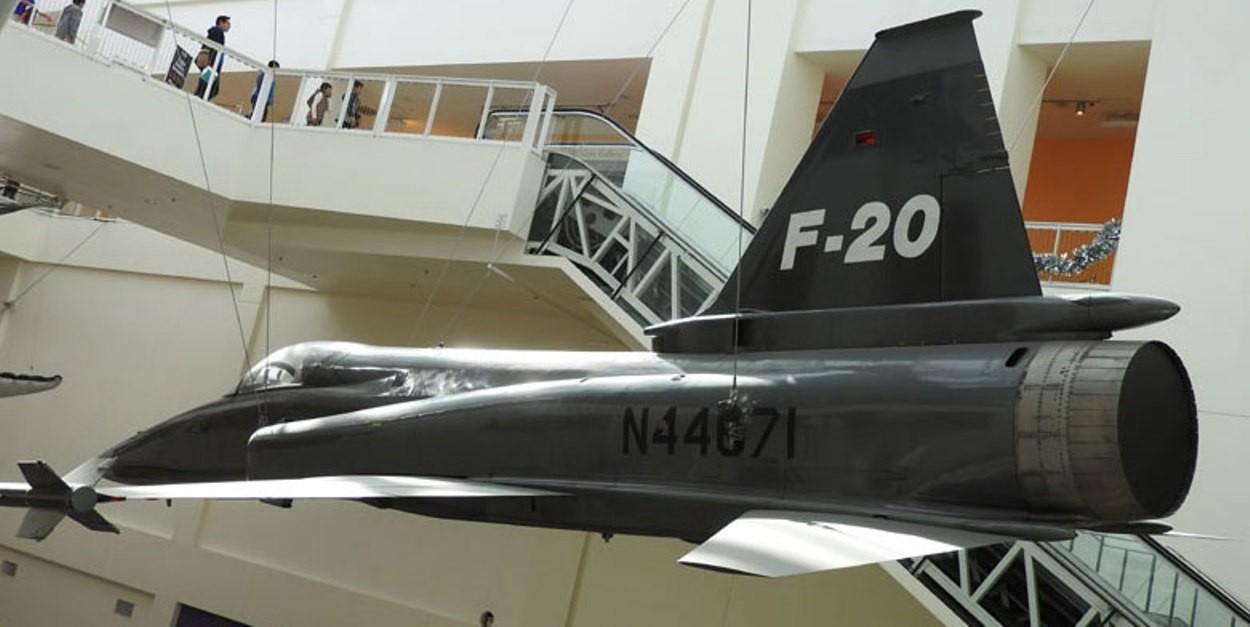
Only 3 of these Northrop F-20 Tigershark fighters were created s prototype with the fourth one being completed partially. 2 of these Northrop F-20 Tigershark fighters got destroyed during their testing and also took with them, the lives of the 2 pilots. The first aircraft designated as SN82-0062 was destroyed in a crash at the Suwon Air Base in South Korea back on 10th October 1984. As for the second one, designated as SN 88-0063, it crashed on 14th May 1985 at the CFB Goose Bay, Canada.
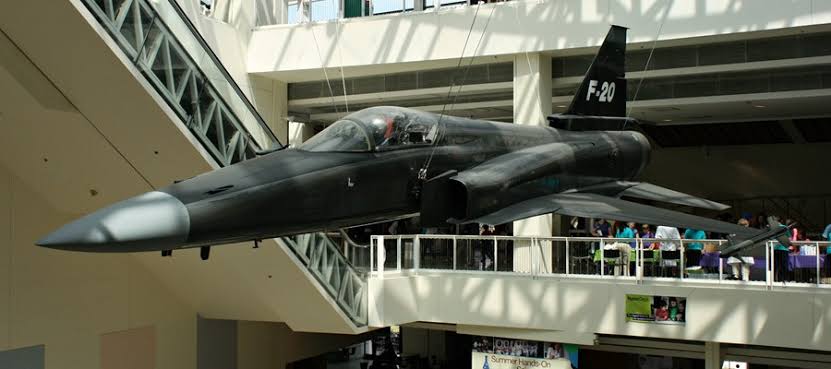
The only remaining Northrop F-20 Tigershark prototype was sent to be held in a suspended display at the California Science Center located in Los Angeles, California.
Powerplant and pother specs:-
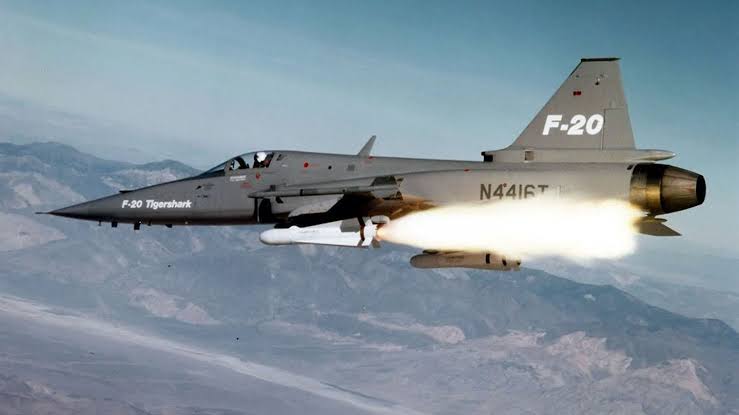
The power to drive this massive 47-inched length aircraft was derived from a single turbofan engine of the General Electric’s F404-GE-100 series. This engine created a thrust of maximum of 17000 lbs which allowed for the aircraft to have a top speed of nearly Mach 2+ for a combat range of 345 miles at a ceiling of 55000 feet. The rate of climbing for the F-20 was about 52800 feet.
Armaments:-
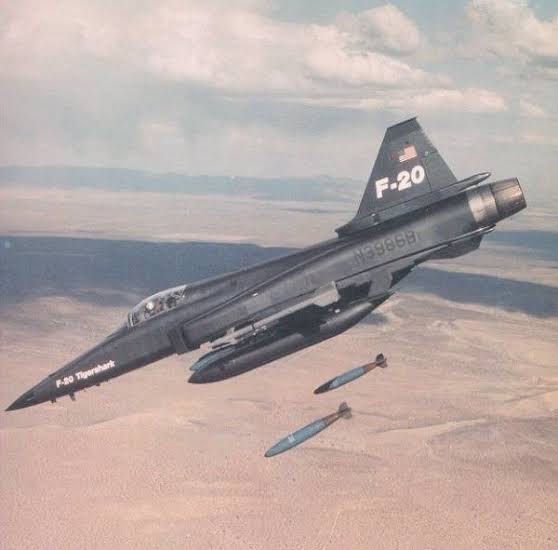
The standard armament fitting for the Northrop F-20 Tigershark included the following.
- Double 20 mm Pontiac M39A2 cannon fitted in the nose internally.
- 2 of the AIM-9 sidewinder missiles fitted on the wingtips.
The aircraft had the maximum payload capacity of carrying 9000 lbs externally. This load-carrying capacity was used to equip the aircraft with following optional armaments.
- CRV7 Rocket Pods: 2
- LAU-10 127 mm Rocket Pods: 2
- Matra SNEB 68 mm rocket pods: 2
- 30 mm Gun Pods: 2
- AIM-7 Sparrow air to air missiles for short-range confrontation: 2
- Mk 82 iron bombs
- CBU-24 Cluster bombs
- CBU-49 Cluster bombs
- CBU-52 Cluster bombs
- CBU-58 Cluster bombs
- Fuel drop tanks
Project Cancellation:-
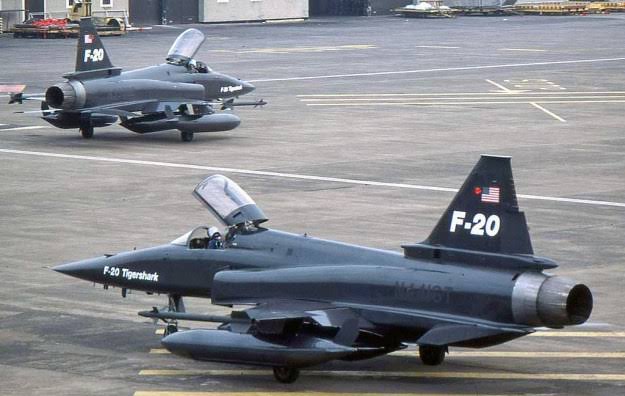
After six years of its creation, there were simply no buyers for the F-20 and that led to the cancellation of this privately funded fighter aircraft project. Northrop could not protest against the cancellation as they would have lost the US favor for the stealth bomber project of Northrop Grumman B-2 Spirit. There were negotiations between Northrop and Moroccan Air Force for these 20 of these F-20s but that order also was cancelled.
Related Content
Amazing facts about the AIDC F-CK-1 Ching-Kuo; The Taiwanese IDF (Indigenous Defense Fighter)
Interesting Facts about the CANT Z.506 Airone aka Heron; World War II Reconnaissance Aircraft
