


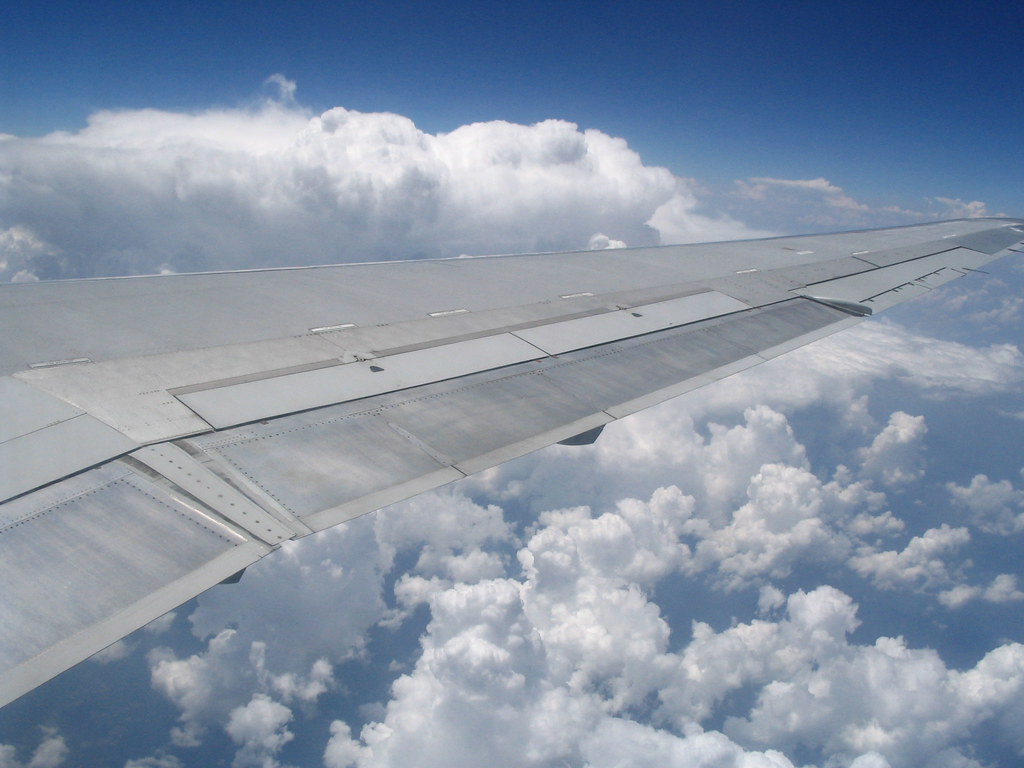
Planes dump fuel to get light enough to meet a climb requirement, not a landing weight limit. If an aircraft has to come back soon after takeoff, it may be too heavy to climb away safely on one engine if the landing goes wrong. Jettisoning fuel restores that margin. It is rare, deliberate, and done high up.
That distinction matters, because the usual explanation you will read is that planes dump fuel because they are heavier than their maximum landing weight. Maximum landing weight is real and it is part of the picture, but it is not what the certification rule is actually about. The rule is about whether the aircraft can still go around.
Why a Heavy Plane Cannot Simply Land
An airliner takes off heavier than it is allowed to land. On a long flight that sorts itself out, because the aeroplane burns off the difference on the way. The problem is the flight that turns around twenty minutes after departure, with almost all of its fuel still in the wings.
The crew then has three options, and the first thing worth saying is that all three are considered safe. SkyBrary’s summary of overweight landings lays them out: hold and burn the fuel off, jettison it, or land over the maximum landing weight and accept the consequences. Which one the captain picks depends on how urgent the problem is.
Holding costs time, and time is exactly what you do not have with a fire or a sick passenger. Landing overweight is quick, but it means a mandatory engineering inspection afterwards, required regardless of how smooth the touchdown was, and it raises the risk of a runway excursion. Dumping sits between the two. It takes minutes rather than an hour, and it puts the aircraft back inside its normal limits before it ever touches the runway.
The Rule That Decides Which Aircraft Can Dump at All
Here is the part most explanations skip. Whether an airliner has a fuel jettison system is not a design preference. It is settled by a performance test during certification, written down in 14 CFR 25.1001.
The regulation says a jettison system must be installed on every aeroplane unless it can be shown that the aircraft meets the climb requirements of sections 25.119 and 25.121(d) at maximum takeoff weight, less the fuel needed for a fifteen minute flight made up of a takeoff, a go around, and a landing back at the airport it just left.
Unpack that and it says something quite specific. Take the aeroplane at its heaviest. Subtract only the fuel it would burn in a quarter of an hour of circling back round. Now ask whether it can still climb away at the required gradient, including with one engine out on the approach climb. If yes, it does not need a jettison system, because it can always come back and go around again. If no, it must have one.
So fuel dumping is not there to protect the landing gear. It is there to protect the go around.
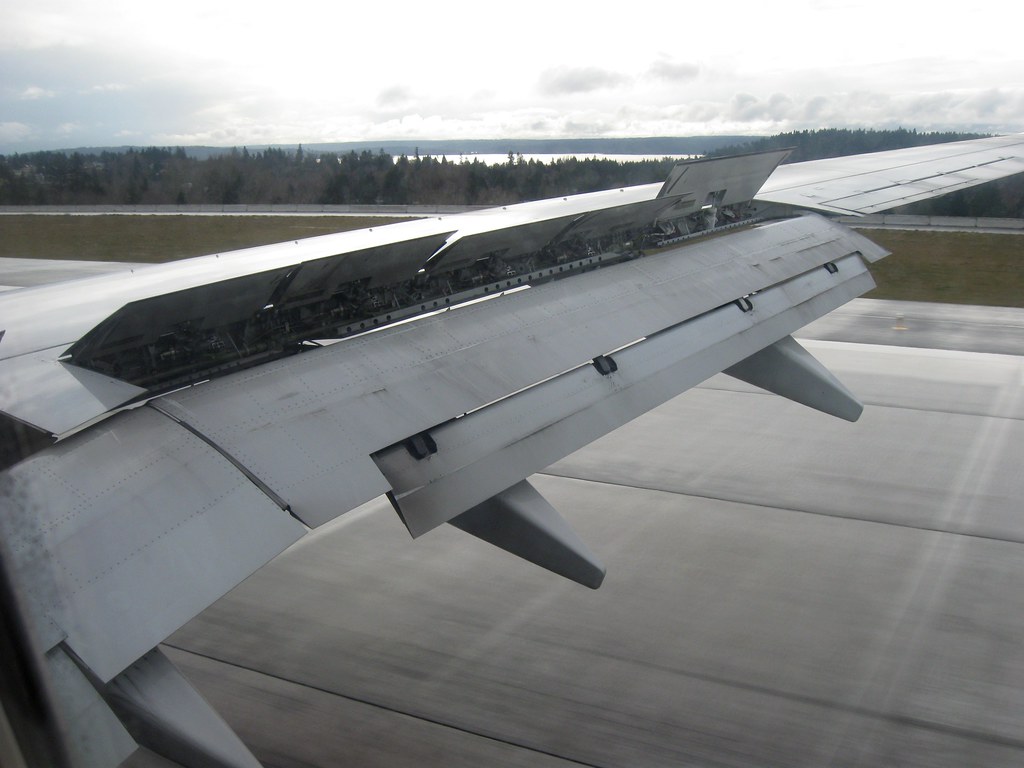
Which Airliners Have the System
The honest answer is that it depends on the type’s own certification, and we are not going to publish a tidy list of types.
The principle follows from the rule above. Aircraft that carry an enormous amount of fuel relative to their structure, which in practice means long range widebodies, tend to fail that climb test at full load and therefore carry a jettison system. Shorter range narrowbodies generally pass it, which is why their crews deal with a heavy return by burning fuel off or landing overweight instead.
We checked what is written online about specific types and found the lists contradict each other, including on the same aircraft family, with most of them tracing back to forum posts rather than to certification data. Publishing one would mean passing on somebody’s guess. If you need the answer for a particular type, the aircraft’s own flight manual settles it and nothing else does.
Where the Fuel Goes, and Why You Will Probably Never See It
Fuel leaves through nozzles at the trailing edge of each wing, out near the tip, deliberately placed so the spray clears the aeroplane entirely. That is also a certification requirement. The same regulation demands a flight test showing the system is free from fire hazard, that the fuel discharges clear of any part of the aircraft, that fuel and fumes do not get back inside, and that dumping does not upset the controllability of the aeroplane.
Done at altitude, kerosene leaving a nozzle at a few hundred knots breaks into a fine mist and largely evaporates before it reaches the ground. That is the reason controllers route the operation high and away from people where they can. It is not always possible. SkyBrary notes plainly that jettisoning allows a quick landing but may affect other aircraft or people below, which is precisely the judgement the crew and the controller are making together.
The Crew Cannot Dump the Tanks Dry
One more thing in the rule that answers a question people reasonably worry about. A turbine powered aeroplane must have means to prevent jettisoning the fuel in its takeoff and landing tanks below the level that allows a climb from sea level to ten thousand feet followed by forty five minutes of cruise at the speed for maximum range.
In other words, the system is built so that the fuel a crew would need to reach an alternate airport cannot be dumped by the normal control at all. The aeroplane keeps a floor underneath it by design.
How Often Does This Actually Happen?
Rarely. Dumping is an abnormal procedure tied to an early return, and an early return is itself unusual. It is not part of a normal arrival, it does not happen on every flight, and no aeroplane dumps fuel to save money or to tidy up before landing. If you have watched a flight take off and come back an hour later, you have more likely watched a crew spend that hour deliberately burning the weight off in a hold.
If you want the wider picture of what crews are actually trained to decide in these moments, our piece on what ditching certification really requires covers the same kind of trade off, and what actually happens when lightning hits a plane is a good example of an in flight event that sounds like an emergency and usually is not one.
Frequently Asked Questions
Do planes dump fuel before landing?
Not normally. A routine arrival involves no dumping at all, because the aeroplane has already burned off the weight in cruise. Dumping only comes up when a flight has to return or divert long before it was meant to.
Do planes dump fuel over residential areas?
Controllers try to route the operation high and away from populated ground, and that is the normal practice. It is a preference rather than a guarantee, because the reason for dumping is usually an emergency and the aircraft’s position when it starts is not always negotiable.
What happens to the fuel that planes dump?
At altitude it atomises into a fine mist and mostly evaporates before reaching the surface. This is why altitude matters to the procedure, and why the certification tests focus on the spray clearing the aircraft itself.
Do planes dump toilet waste in the air?
No. This is a separate question that gets tangled up with fuel dumping, and the answer is that lavatory waste is held in a sealed tank and pumped out by a ground vehicle after landing. Nothing is released deliberately in flight.
Why do only some planes dump fuel?
Because the requirement is set by a climb performance test at certification rather than by aircraft size. An aeroplane that can meet the climb gradients at takeoff weight minus fifteen minutes of fuel does not need a jettison system, and so is not fitted with one.
Can a plane dump all of its fuel?
No. For turbine aircraft the system must be designed so the fuel in the takeoff and landing tanks cannot be jettisoned below what is needed to climb to ten thousand feet and then cruise for forty five minutes at maximum range speed.
Sources
- 14 CFR 25.1001, Fuel jettisoning system, for the certification requirement, the fifteen minute figure, the flight test conditions and the reserve that cannot be dumped.
- SkyBrary, Overweight Landing, for the three options available to a crew and the inspection required after an overweight landing.
More from Crew Daily on how the aeroplane itself is built around these decisions: what a black box actually records and why pilots prefer to land manually.
Featured image: airliner wing at cruise altitude, photo by D Coetzee, CC0, via Openverse.
