


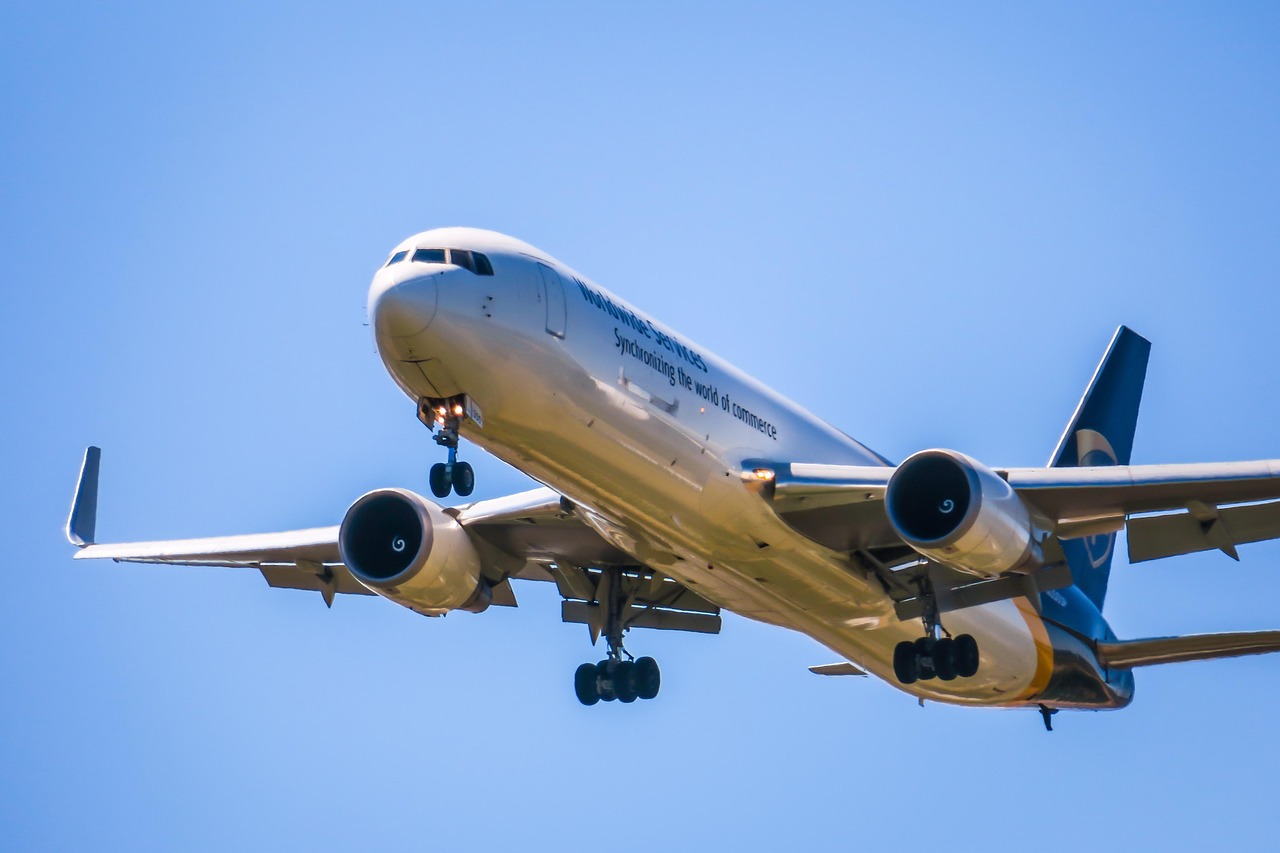
Ten days after a Boeing 767 freighter ran off the end of Runway 30 at Miami International Airport and killed five people on the ground, the picture of what happened in the cockpit is becoming clearer, and the commercial fallout has begun. Amazon has paused its flying with 21 Air, the carrier that operated the aircraft on its behalf, while the National Transportation Safety Board’s first release of flight-recorder data points to an approach that was fast from the start and a landing in which neither the speed brakes nor the thrust reversers were ever deployed.
For pilots, the NTSB timeline reads less like a mystery and more like a case study in the two decisions that define every landing: whether to continue an unstable approach, and whether to commit to a stop once the wheels are on the ground.
What happened on September 6
Flight 7598 was a scheduled cargo run from Luis Muñoz Marín International Airport in San Juan, Puerto Rico, to Miami. The aircraft, N1997A, was a 32-year-old Boeing 767-300ER freighter operated by 21 Air for Amazon Air. Weather at Miami at the time included light thunderstorms and gusting winds.
At about 1:53 p.m. local time the 767 touched down on Runway 30, overran the paved surface by roughly 1,300 feet, struck a Ford Econoline van carrying seven employees of an aircraft cleaning contractor, went through the airport perimeter fence, and hit a Toyota Corolla Cross on Northwest 67th Avenue before coming to rest in a fenced parking lot. Five people in the van were killed. Five others were injured, including both pilots, who survived.
The FAA issued an immediate ground stop at Miami. By the time the airport partially reopened around 5 p.m., more than 160 flights had been cancelled and close to 325 delayed, with some traffic diverted to Orlando.
The NTSB flight-data timeline
The NTSB recovered both the cockpit voice recorder and the flight data recorder intact and read them out within days. Its September 9 investigative update lays out the final 30 seconds of recorded data. Times are counted back from the end of the recording:
- T-30 seconds, 158 knots groundspeed: the nose gear and right main gear touch down. The left main is still airborne.
- T-23 seconds, 146 knots: wheel brakes are applied.
- T-19 seconds, 134 knots: the left main gear finally touches down.
- T-15 seconds, 120 knots: a pilot calls for a go-around. Brakes are released and the throttles are advanced to go-around thrust.
- T-11 seconds, 117 knots: the throttles are pulled back to idle and the brakes are reapplied.
- T-0, 65 knots: the recording ends as the aircraft leaves the paved surface.
Two findings stand out. First, the recorders show no indication that the speed brakes or the thrust reversers were deployed at any point during the landing roll. On a 767, the ground spoilers are what put the aircraft’s weight onto the wheels and make the brakes effective; without them, and without reverse thrust, a heavy freighter landing fast on a wet runway is relying on wheel brakes alone.
Second, the crew changed their mind twice inside fifteen seconds. Fifteen seconds after touchdown, at 120 knots, they attempted a go-around. Four seconds later they abandoned it and went back to braking. Whatever runway had been available for either option was gone by the time the second decision was made.
What the cockpit voice recorder shows
The NTSB says the CVR captured more than two hours of audio. In the approach phase, one pilot cautioned that the aircraft was too fast, and speed concerns were raised more than once. The autopilot was disconnected roughly a minute and twenty seconds before the end of the recording, and multiple terrain-awareness warning callouts sounded during the approach. According to the NTSB summary, the go-around call came shortly before the end of the recording, and there were “no consistent acknowledgements from the other pilot.”
That last detail is the one that will occupy the human-factors group. A stabilised-approach policy only works if the pilot monitoring’s callouts produce a response, and a go-around only works if both pilots execute the same plan at the same moment.
The crew and the aircraft
The captain, 55, was a former U.S. military helicopter pilot who received his 767 type rating in May 2026, about four months before the accident. The first officer received his 767 type rating in April 2025. Both were injured and both survived; the NTSB has said it intends to interview them as the investigation continues.
N1997A was delivered new to Belgian carrier Sobelair in 1994 and converted to a freighter by Israel Aerospace Industries in 2016. It had been flying for Amazon since 21 Air began operating for the retailer in late 2024. The aircraft is a total loss.
Amazon pauses 21 Air, and the lawsuits begin
On September 14, Amazon confirmed it had paused its operations with 21 Air. DHL, which also uses the carrier, declined to say whether it would follow. Boeing, 21 Air and Amazon have all said they are cooperating with investigators.
Legal action came quickly. On September 9, Morgan & Morgan filed suit in Miami-Dade court on behalf of the family of Yoel Rodriguez Naranjo, one of the cleaning-crew employees killed in the van. The complaint names Amazon.com Inc., 21 Air LLC and others, and alleges that the use of a 32-year-old aircraft, pilot error and insufficient training contributed to the crash.
It is the third serious accident involving a Boeing 767 flying for Amazon. The most notable, Atlas Air Flight 3591 in February 2019, was the first fatal 767 freighter crash and also departed from Miami.
Why this matters for every line pilot
The final report is many months away, and the NTSB has been careful to say it is examining everything from mechanical factors to weather to crew performance. But the recorded data already illustrates three points that airline training departments repeat for a reason:
- An unstable approach is a go-around, not a landing to be salvaged. The aircraft was fast on final, the crew knew it, and it touched down at 158 knots with one main gear still in the air. Every stabilised-approach gate exists to force the decision before the runway makes it for you.
- Once you are down, you are committed. A rejected landing after touchdown on a heavy widebody, without spoilers deployed and with thousands of feet of runway already behind you, offers very little margin. The 767 flight manual, like most, treats a go-around after reverse thrust or heavy braking as a manoeuvre to avoid, and the four-second reversal in Miami shows why.
- Configuration is a two-pilot job. Speed brakes on a 767 are normally armed before landing and deploy automatically at touchdown; reversers are selected by the flying pilot. The recorders show neither happened. Whether that was an arming omission, a distraction during a rushed approach or something mechanical is exactly what the investigation will determine, but the “spoilers up, reversers green” callout is not a formality.
Cargo flying is often described as the quiet end of the industry, with no passengers and long night sectors. The Miami accident is a reminder that the aircraft, the runway and the physics are identical to those on any passenger flight, and that the people at risk are not always the ones on board.
For a broader look at how flight crews manage abnormal situations, see our piece on what actually happens in the cockpit, and for the other major disruption to hit aviation this month, our coverage of the UK air traffic control outage.
Frequently asked questions
Was anyone on the aircraft killed?
No. Both pilots were injured but survived. All five fatalities were employees of an aircraft cleaning contractor travelling in a van that the 767 struck after leaving the runway.
Has the NTSB determined a cause?
No. The board has released factual recorder data but has not issued a probable-cause finding. A preliminary report is typically published within about 30 days of an accident, with the final report following months or years later.
Why does it matter that the speed brakes were not deployed?
Ground spoilers destroy lift and push the aircraft’s weight onto the wheels, which is what lets the brakes work effectively. Without them, and without reverse thrust, stopping distance on a wet runway increases dramatically.
Is Amazon Air grounded?
No. Amazon has paused flying with one contractor, 21 Air. Its other carriers, including Atlas Air, ABX Air, ATI and Sun Country, continue to operate.
Sources: NTSB investigative update of September 9, 2026; NTSB media briefings; Amazon statement of September 14, 2026; CBS News; Flying Magazine. Featured image: stock photograph of a Boeing 767-300, not the accident aircraft.
