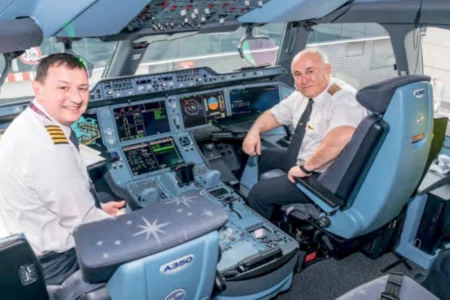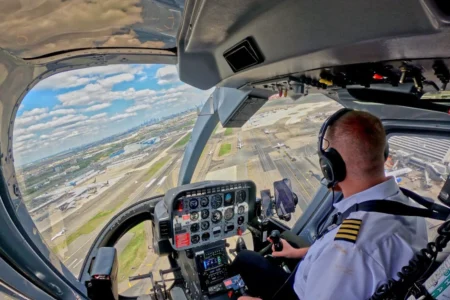
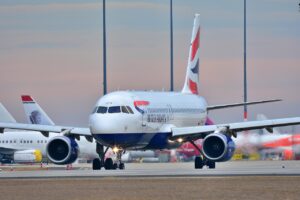





What happens in the cockpit during a commercial flight is one of aviation’s most misunderstood topics. Every time I walk through the cabin on my way to the flight deck, I catch passengers looking at that closed door wondering the same thing.
Most people have a version of events built from films, news stories, and the occasional nervous thought at 35,000 feet. Some of it is accurate. Most of it is not.
As an A320 Captain who has spent thousands of hours behind that door, here is what is actually happening during your flight, from the moment the wheels leave the ground to the moment they touch back down.
What Happens in the Cockpit Right After Takeoff
1. The Autopilot Comes On Almost Immediately
Here is something that surprises most people. The autopilot on a modern airliner like the A320 can be engaged as early as 100 feet above the ground, or approximately five seconds after the wheels leave the runway.
That is not laziness. It is precision. Modern flight management systems fly more consistently accurate profiles than any human can maintain manually, particularly in the critical early climb phase. Engaging the autopilot early allows both pilots to focus on monitoring, communication, and managing aircraft systems rather than hand-flying through a congested departure route.
What passengers imagine, a pilot heroically hand-flying the aircraft into the sky for several minutes before handing over to the computer, is not how modern airline operations work. The automation is a tool, and professional pilots use it exactly as it is designed to be used.
2. That Moment When the Engines Go Quiet Is Deliberate
Almost every passenger notices it. The aircraft climbs steeply, the engines are roaring, and then somewhere around 1,000 feet the noise reduces noticeably, and the climb seems to level off momentarily, but What happens in the cockpit
This is called the thrust reduction altitude, and it is entirely intentional.
At this point the thrust levers are retarded from takeoff power to a lower climb setting. Running engines at full takeoff thrust for longer than necessary accelerates wear significantly and burns more fuel than required. The aircraft does not need full takeoff power once safely established in the climb. The reduced setting is sufficient and considerably kinder to the engines over a long service life.
It is not a problem. It is the system working exactly as designed.
What Happens in the Cockpit During Cruise
3. Cruise Is Not Sitting and Waiting
The most persistent misconception about flying is that cruise is essentially a rest period where pilots sit back and wait for the descent. This is not accurate.
During cruise, a properly run flight deck involves continuous monitoring and preparation. In practice this includes: so What happens in the cockpit
Monitoring fuel burn against the flight plan at regular intervals. Any unexpected fuel burn requires analysis and potentially a diversion decision. Reviewing escape routes for each segment of the route in case of engine failure or depressurisation. These routes account for terrain, weather, and alternate airports and change as the flight progresses. Briefing and preparing for an emergency descent if required, including oxygen profile calculations and terrain clearance. Monitoring and handover at each ATC boundary as the aircraft crosses between air traffic control regions. Reviewing destination weather and alternate options as the flight develops.
By the time cruise is over, the crew has reviewed several contingency scenarios, updated the flight plan for wind changes, and fully briefed the approach. The aircraft may look quiet from the outside. The flight deck is not.
4. Turbulence Has a Specific Speed We Fly Precisely
When turbulence is encountered, one of the immediate actions is to adjust to turbulence penetration speed. On the A320 this is typically 275 knots below a certain altitude, or Mach 0.76 at higher cruise levels. The precise speed depends on the severity and type of turbulence and the aircraft’s current weight and altitude.
Flying above turbulence penetration speed risks structural stress on the airframe. Flying below it in severe turbulence risks losing control authority. The speed exists for a reason and it is flown precisely.
What passengers experience as a frightening, uncontrolled event is, from the flight deck, a managed procedure. The aircraft is designed to handle turbulence that vastly exceeds anything encountered in normal operations. When pilots look calm during turbulence, it is not bravado. It is because the situation is genuinely within normal operating parameters.
5. On Long Flights, Pilots Take Controlled Rest
On longer flights, crews operate under augmented or double crew arrangements. Depending on total duty time and flight duration, one pilot at a time may take a controlled rest period of up to 45 minutes in the flight deck seat while the other maintains a full watch.
This is not napping on the job. It is a regulated, carefully managed fatigue mitigation procedure. Aviation authorities including the GCAA and EASA have specific rules governing when rest is permitted, how long it lasts, and the handover procedure required before and after.
A well-rested pilot managing the final approach is a safer pilot than an exhausted one. That is the entire point of the regulation.
What Happens in the Cockpit During Landing
6. Most Landings Are Done Manually
Despite what many passengers assume, approximately 99% of airline landings are performed manually by the pilots. The autopilot is typically disconnected somewhere between 1,000 and 500 feet on the approach, and the actual touchdown is hand-flown.
Pilots practise manual landings constantly because automation dependency is a genuine risk in modern aviation. Staying sharp matters.
However, when conditions demand it, modern aircraft like the A320 can land in near-zero visibility with the autopilot connected all the way to the ground. With a qualified crew and a certified airport, a Category III autoland allows the aircraft to touch down with a decision height of zero feet and runway visual range approaching zero. The aircraft lands itself with more precision than any human could achieve in those conditions.
Most of the time pilots land manually. When visibility is genuinely severe, the automation can do something remarkable.
PA Announcements, Emergencies and the Calls Passengers Notice
7. PA Announcements Follow a Required Structure
Pilots are required to make passenger announcements at specific phases of flight, before major manoeuvres, during significant weather, and when safety equipment may need to be used.
Research has shown that passengers who are informed about what is happening during a flight report significantly lower anxiety than those who receive no information. The announcements are not just regulatory compliance. They are a genuine tool for passenger wellbeing.
When you hear the seatbelt sign come on with no announcement, it is usually because the turbulence is minor and the crew does not want to cause unnecessary concern. When you receive a full announcement, it is because the crew has assessed that information will help you more than silence.
8. Some Calls Are More Significant Than Others
Most in-flight sounds are routine. A few warrant more attention.
A call of “purser to the cockpit” means the senior cabin crew member is being summoned to the flight deck. This happens for many reasons: a routine update, a passenger medical situation, or a security concern. It does not automatically mean something is wrong.
The brace command and oxygen mask deployment indicate a genuine emergency. Both are trained for extensively and both exist because modern aircraft give crews time to manage emergencies properly. The overwhelming majority of declared aviation emergencies are resolved safely. The procedures work.
9. If a Pilot Becomes Incapacitated, There Is a Clear Procedure
This question comes up often, and the answer is reassuring.
What happens in the cockpit, If a pilot becomes unwell during flight, the other pilot immediately assumes full control of the aircraft. The cabin crew are called to assess the affected pilot. If they are conscious and coherent, they remain in the seat and assist as able. If unconscious, they are secured in the seat and cannot interfere with the controls.
The remaining pilot declares an emergency, obtains priority handling from air traffic control, and prepares for an immediate diversion to the nearest suitable airport. If a qualified pilot from another airline happens to be travelling as a passenger, which occurs regularly on busy routes, they can be invited to the flight deck to assist.
The important point: modern aircraft like the A320 are fully capable of being flown safely by a single pilot. The entire procedure, from incapacitation to landing, is trained for regularly in the simulator. It is a known scenario with a known solution.
The Honest Summary
What happens in the cockpit during a commercial flight is a methodical, procedure-driven sequence of events. There are checklists, briefings, contingency plans, and continuous monitoring throughout your journey. When things go wrong, and occasionally they do, there are trained responses, redundant systems, and two qualified professionals whose entire focus is getting the aircraft and everyone on it to the destination safely.
The door is closed not to hide anything. It is closed because the people behind it are working.
Capt. James Harlow is an A320 Captain based in the UAE. He writes about pilot careers, aircraft operations and Gulf aviation at Crew Daily.
Further Reading on Crew Daily
- Gulf Airline Pilot Life: 7 Honest Truths Nobody Tells You — the real picture of what Gulf aviation is like for a working pilot
- Pilot Salary in UAE 2026 — what Gulf carriers actually pay, tax-free
- Pilot Salary: Air Force vs Commercial Aviation — for pilots weighing up career paths
- Emirates Pilots Requirements