






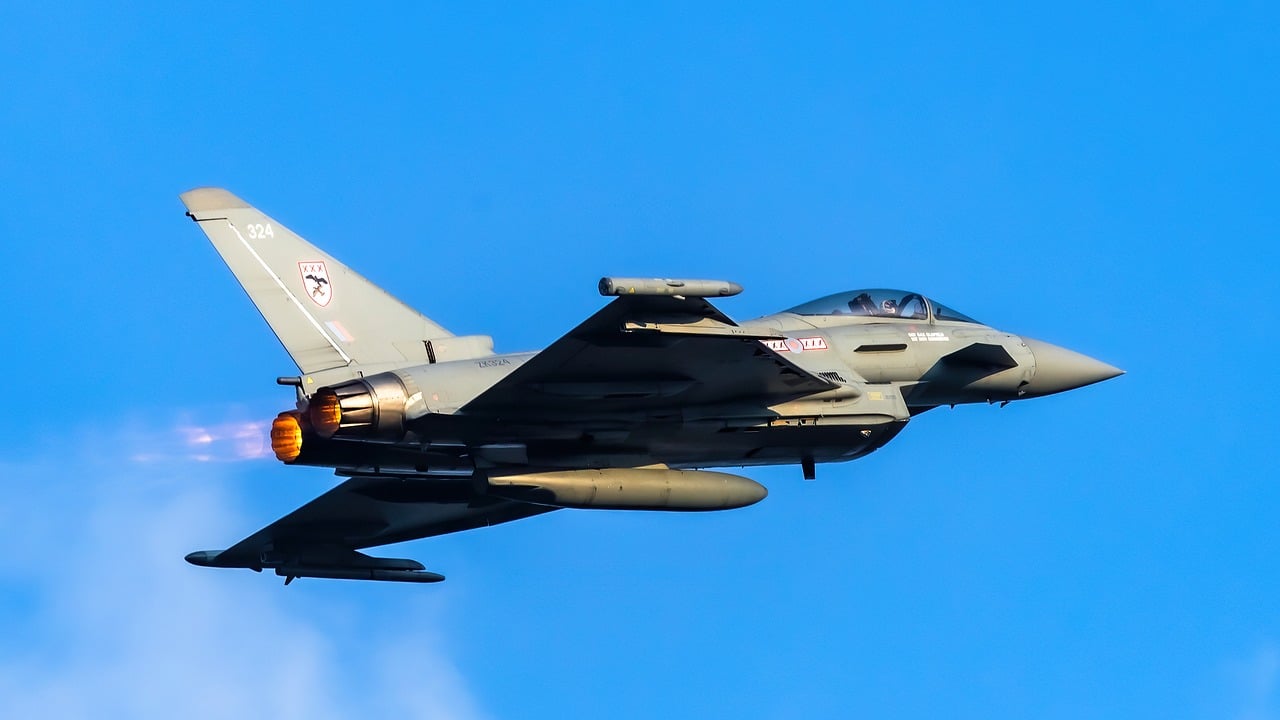
Just after midnight on September 15, 2026, two Italian Air Force Eurofighter Typhoons flying NATO’s Baltic Air Policing mission shot down a drone over Lithuanian territory near the village of Pratkūnai, roughly 100 kilometers west of Vilnius. It was the first time a drone has ever been shot down in Lithuanian airspace, and it happened less than 48 hours after NATO jets scrambled for a false alarm that turned out to be a flock of birds.

What Happened Over Pratkūnai
The drone entered Lithuanian airspace from the direction of Belarus and stayed airborne for about 30 minutes before the two Typhoons, flying out of Šiauliai Air Base, intercepted and destroyed it. Lithuanian Air Force Commander Antanas Matutis said the recovered wreckage indicated the drone was likely carrying explosives, not just cameras or surveillance equipment. NATO’s Combined Air Operations Centre in Uedem, Germany coordinated the intercept in real time.
Investigators have not yet confirmed who operated the drone or its exact mission. What is confirmed is that this was the first drone Lithuania has ever shot down over its own territory, a milestone in a year that has tested the alliance’s eastern air defenses more than any since the Baltic states joined NATO.
Two Days Earlier, It Was Birds
The real shootdown followed an unrelated false alarm by just 48 hours. On September 13, a radar contact near Vilnius triggered the same NATO alert chain, closing Vilnius Airport for 38 minutes before controllers confirmed the “threat” was a flock of birds. Same procedure, same scramble order, completely different object, an uncomfortable reminder of how difficult it now is for air defense crews to tell a genuine incursion from noise in the system, and how much civil aviation absorbs the disruption either way.
Not an Isolated Incident
The Pratkūnai shootdown was not a one-off. One day earlier, Polish forces recovered a suspected Russian “Gerbera” decoy drone from the Baltic Sea near Jarosławiec. Poland’s Defense Minister Władysław Kosiniak-Kamysz said a preliminary inspection indicated it was a Russian military drone, a low-cost type built less to strike anything than to draw NATO air defenses into reacting and burning through interceptors and attention.
Both incidents sit on top of a pattern that started in September 2025, when roughly 20 Russian drones crossed into Polish airspace in a single night, an incursion serious enough that Warsaw invoked Article 4 of NATO’s founding treaty, the clause that triggers formal alliance consultation when a member’s security is threatened. A year later, the drones have moved from Poland’s airspace to Lithuania’s, and this time one was carrying a payload instead of a camera.
Why This Matters Beyond the Baltics
NATO Secretary-General Mark Rutte said Russia is “growing increasingly reckless” as its war in Ukraine continues, a statement made only a day before the Lithuania shootdown while warning that strikes near NATO territory would increase the alliance’s support for Kyiv. For pilots and aviation professionals, the immediate, practical impact is airspace risk: sudden closures like Vilnius’s 38-minute shutdown ripple through schedules well beyond the airport itself, and Baltic Air Policing crews are now operating with a lower threshold for what gets intercepted rather than watched. Our guide to NATO’s Steadfast Noon exercise covers how these rotating multinational deployments work and which airspace corridors get restricted when tensions rise.
Frequently Asked Questions
Has a drone ever been shot down in Lithuanian airspace before?
No. The September 15, 2026 intercept near Pratkūnai was the first time Lithuania’s air defenses have shot down a drone over its own territory.
What is NATO’s Baltic Air Policing mission?
It is NATO’s rotating fighter deployment that patrols and defends the airspace of the Baltic states, which do not operate their own fighter jets. Aircraft and crews from alliance members, in this case Italy’s Eurofighter Typhoons, rotate through bases like Šiauliai in Lithuania on standing air-defense alert.
Was the drone armed?
Lithuanian Air Force Commander Antanas Matutis said the recovered wreckage likely showed the drone was carrying explosives, though full confirmation of its payload and operator was still pending at time of writing.
How is this connected to the Poland drone incidents?
Poland recovered a separate suspected Russian decoy drone from the Baltic Sea one day before the Lithuania shootdown, and roughly 20 Russian drones crossed Polish airspace in September 2025. Officials see all three as part of the same pattern of drone activity testing NATO’s eastern air defenses.
Final Thoughts
A bird flock and an explosive-carrying drone triggered the exact same NATO response within 48 hours of each other, which is precisely the problem. As Baltic airspace incursions shift from cameras to payloads, the margin for telling the two apart in real time keeps shrinking, and it is fighter crews and air traffic controllers who absorb that uncertainty first.