






The clip is only a few seconds long, and it has been everywhere this week: a Boeing 737 shuddering so hard on climb-out that the ceiling panels above the aisle fold down onto the passengers, who are screaming. It looks like the aircraft is coming apart. It was not. Here is what actually happened on that flight, why a 30-year-old jet was carrying passengers in the first place, and what the falling ceiling does and does not tell you about how safe you were on board.
What happened
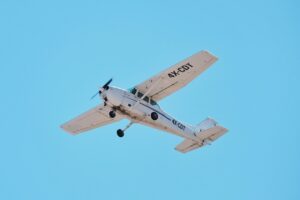
The aircraft was a Boeing 737 Classic operated by Sepehran Airlines, an Iranian carrier, on a domestic flight from Mashhad to Kermanshah in mid-September 2026 (Iranian outlets reported it on 14 September; other sources give the 13th or 15th). The aircraft is reported to be EP-FSU, a 737-300 that first flew in July 1996, though Iran’s regulator has not confirmed the registration.
During the take-off roll, the tread of one of the landing-gear tyres separated. Officials were specific on this point: the tyre did not burst, but its outer layer came off. At the same time the crew reported a problem with an engine. Once airborne, the aircraft began vibrating violently. The pilots declared an emergency and returned to Mashhad, landing within minutes of departure. Nobody was hurt. The passengers eventually reached Kermanshah on a replacement aircraft, after what local reports describe as four attempts and two aircraft changes, on a flight that had already been delayed twice that day for technical problems.
Iran’s Civil Aviation Organization has opened an investigation. Its early statement said investigators had not yet established a definitive link between the tyre damage and the vibration, which is a careful way of saying the obvious explanation has not been ruled in or out.
Why the ceiling fell down, and why that is less alarming than it looks
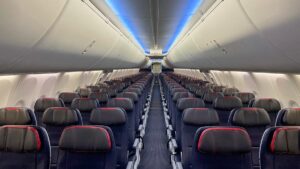
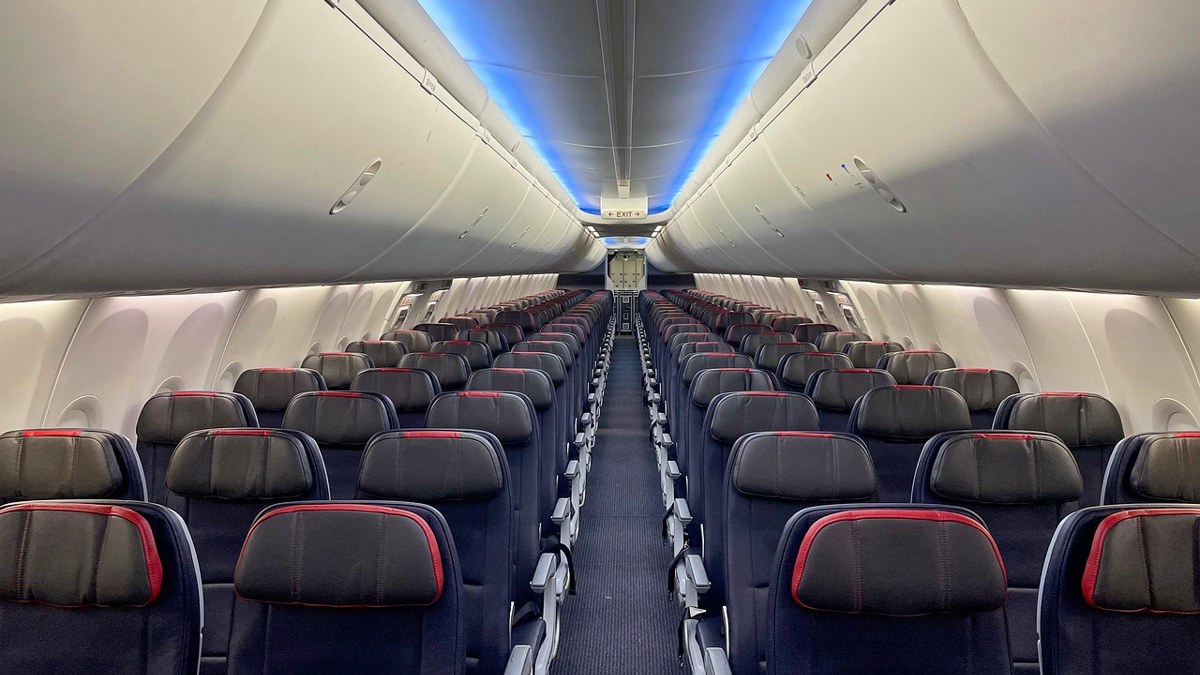
The panels you see dropping in the video are cabin lining: lightweight trim held in place with clips and fasteners, with the aircraft’s air ducts, wiring and oxygen boxes behind them. They are not structural. They keep the cabin looking tidy and the insulation out of sight, and they are designed to be removed by a mechanic in minutes. Shake an airframe hard enough, especially an old one whose fasteners have been clipped and unclipped for three decades, and the lining lets go long before anything that holds the aircraft together does.
That is exactly what the vibration did. A tyre that has shed its tread, or a damaged tyre running in the wheel well against a gear that has just retracted, produces a heavy, rhythmic shaking that runs through the whole fuselage. Add an engine that is not running smoothly and the cabin becomes a very unpleasant place. It did not, however, lose pressure: the aircraft never reached cruise altitude, and the fuselage itself was intact throughout.
So the honest reading of the video is not “the plane was breaking apart.” It is “the plane was vibrating badly, the interior trim came loose, and the crew did what crews are trained to do: return and land.” That is unnerving to sit through and reasonable to be angry about, but it is a very different thing from a structural failure.
The real story: a 30-year-old 737 that cannot buy parts
Aircraft age, on its own, is not a safety problem. Plenty of airlines fly 25- and 30-year-old jets safely because the maintenance programme and the supply of certified parts are what keep an aircraft airworthy, not the date on its birth certificate. The problem for Iranian carriers is that they have neither.
Sepehran’s fleet is twelve Boeing 737-300s and -500s with an average age of more than 30 years. Iran has been under aviation sanctions in one form or another for decades, which means Boeing cannot sell it aircraft and, more importantly, nobody can legally sell it Boeing-certified spare parts. Airlines keep their fleets flying with accumulated stock, locally repaired components, parts stripped from grounded aircraft and whatever can be bought through intermediaries. Tyres, brakes and engine components are precisely the consumables that suffer first under that regime.
The timing here is pointed. Eight days before this flight, on 8 September 2026, the US Treasury designated 27 Iranian airlines, Sepehran among them, under Executive Order 13902, and suspended several Iran-related aviation authorisations at the same time. Safety-related parts requests are now handled case by case. Whatever one thinks of the politics, the practical effect is that the pipeline of legitimate parts for aircraft like EP-FSU got narrower, not wider, the week before its tyre came apart.
This was also not Sepehran’s first incident of the month. On 25 August 2026, flight IS4310 from Tehran Mehrabad to Mashhad, operated by a 737-500 built in 1992 with 127 people on board, veered off the runway after what had been a normal landing and its nose gear collapsed. Nobody was injured then either.
What a passenger should take from this
- Falling cabin panels are trim, not structure. They are frightening and they should not happen, but they are not a sign the fuselage is failing.
- The crew’s response was correct. A tyre failure on take-off combined with an engine indication is a return-and-land situation, and that is what they did, quickly.
- Age is not the risk. Parts and maintenance are. If you are flying inside Iran, or on any carrier that cannot access manufacturer-certified parts, that is the factor worth knowing about, far more than the year the aircraft was built.
- Two incidents in three weeks at one small airline is a pattern worth watching. A tyre tread and a nose-gear collapse are both landing-gear events on aircraft past 30 years old. Investigators will be looking at exactly that.
If the noises and shaking on your own flights make you nervous, our explainer on what the chimes and sounds on a plane actually mean covers the normal ones, and for a look at how crews handle the abnormal ones, see what actually happens in the cockpit.
Frequently asked questions
Was anyone hurt on the Sepehran Airlines flight?
No. The aircraft returned to Mashhad within minutes of take-off and landed safely. Passengers continued to Kermanshah later on a different aircraft.
Did the plane lose a wheel?
According to officials, the tread of one main-gear tyre separated during take-off; the tyre did not burst and the wheel stayed attached. An engine problem was reported at the same time.
Why do Iranian airlines fly such old aircraft?
Sanctions prevent them from buying new Western aircraft or manufacturer-certified spare parts, so they keep ageing Boeing and Airbus fleets flying with stockpiled, locally repaired or second-hand components.
Is a 30-year-old airliner unsafe?
Not by itself. Age is managed through inspection programmes and certified parts. The risk rises when an operator cannot access those parts, which is the situation Iranian carriers are in.
Sources: Iran Civil Aviation Organization statements as reported by Iranian media; Simple Flying; Newsweek; Al Jazeera; US Treasury OFAC designation of 8 September 2026. Some details, including the exact date and registration, differ between reports and have not been officially confirmed.


