


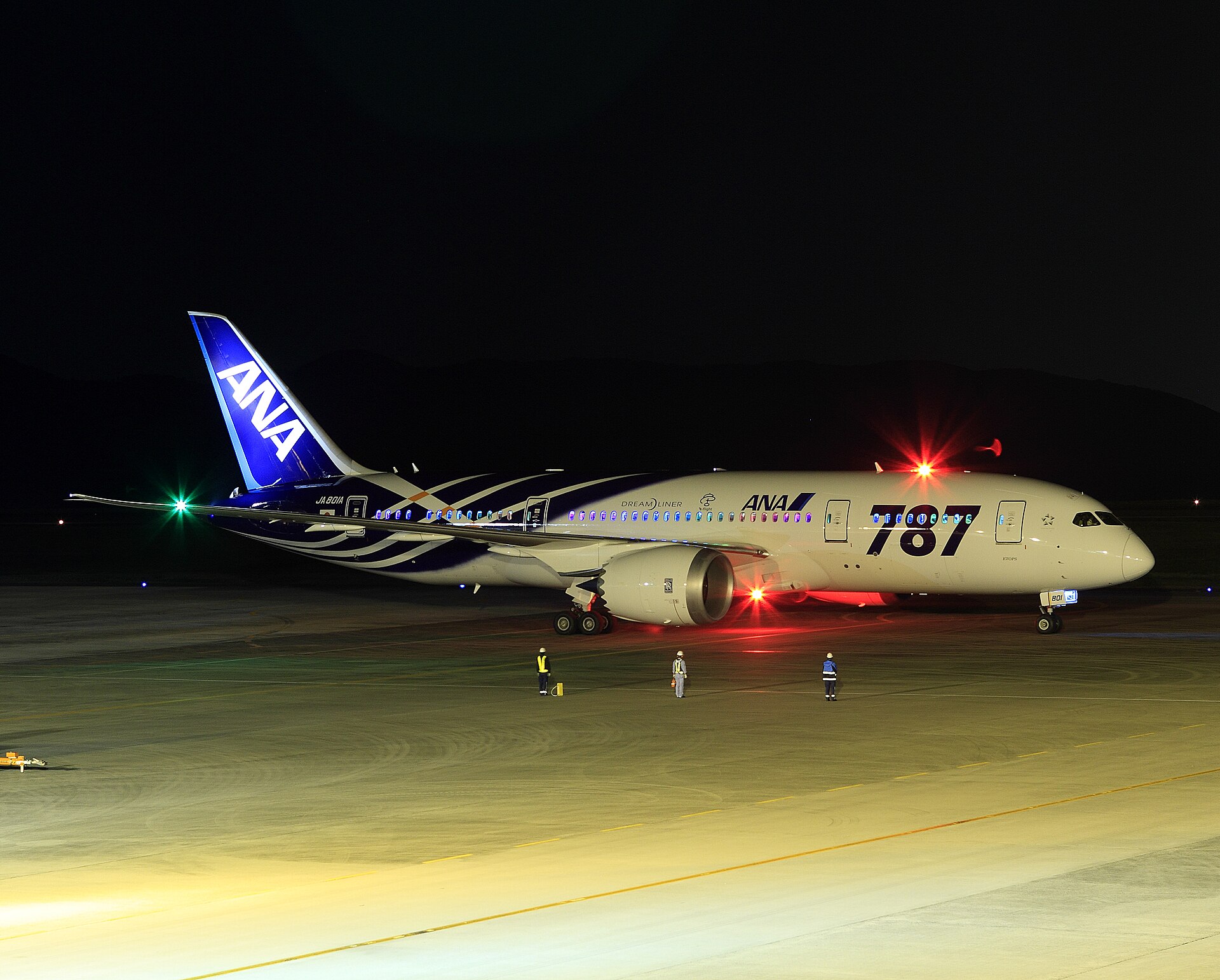
Stand at the end of a runway at dusk, or look out of a cabin window on a night taxi, and the aircraft nearby is covered in lights. One wing glows red, the other green. Something white flashes hard enough to leave a spot in your vision. A slower red pulse comes and goes somewhere on the belly. It all looks like one decorative scheme switched on at sunset.
The short answer: it is three separate systems, and each one is doing a different job. The steady red and green are position lights, and they tell you which way the aircraft is pointing. The hard white flashes are anticollision strobes, and they exist to be seen from a long way off. The slow red pulse is the rotating beacon, and on the ground it usually means the engines are running.
Once you can tell them apart, an airfield at night stops being decoration and starts being readable. This is what each light is, what the rules actually require of it, and what you can work out from the ground.
Three systems that get mistaken for one
Almost every confusion about aircraft lighting comes from treating it as a single installation. It is not. An airliner carries three groups of exterior lights with completely different purposes, and they are governed by different parts of the rules.
| System | What you see | What it is for |
|---|---|---|
| Position lights | Steady red on the left wing, steady green on the right, steady white at the back | Showing your orientation, so another pilot can tell which way you are going |
| Anticollision lights | Hard white flashes at the wingtips and tail, and a slower red pulse above and below the fuselage | Being noticed at all, at distance, day or night |
| Landing, taxi and logo lights | Very bright forward facing white beams, plus lit tail fins on some airlines | Seeing the ground, and being conspicuous near an airport |
Only the first two are about identity. The third group is lighting in the ordinary sense: a landing light is a headlight, and it is pointed where the aircraft is going rather than at anyone looking on.
The names matter less than people expect. Position lights and navigation lights are the same thing, and both terms are used in the regulations and by crews. Anticollision light is the formal term for a group that in practice means two different fittings: the white strobes and the red rotating beacon. The FAA’s own Aeronautical Information Manual says an anticollision light system can use rotating beacons, strobe lights, or both, coloured either red or white, and that many aircraft have both.
Red on the left, green on the right, white behind
This is the oldest convention in the article and it is borrowed directly from ships. Red is always the left wing and green is always the right wing, from the pilot’s point of view sitting in the seat, which is the same as the aircraft’s own left and right.
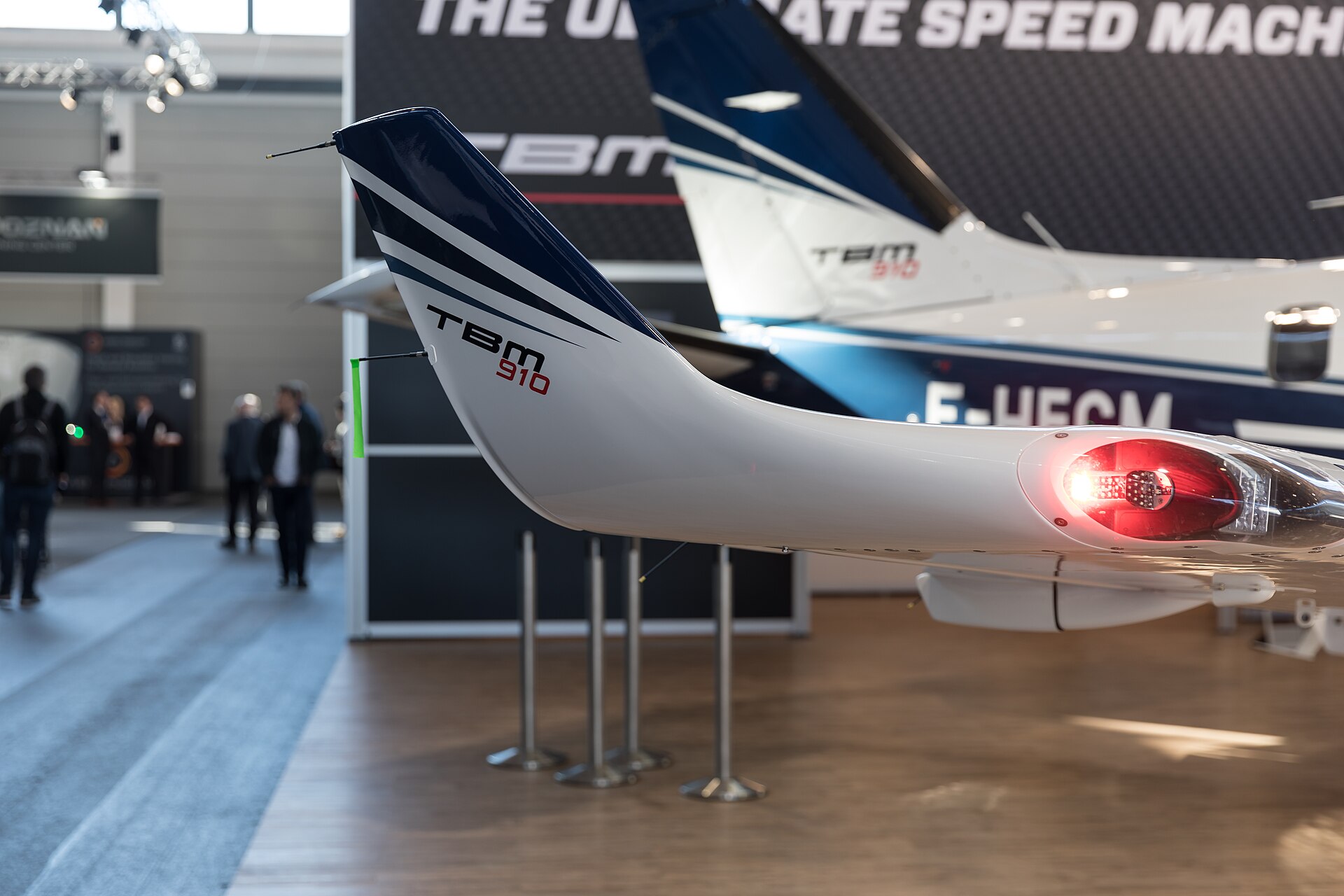
For large aeroplanes the rule is 14 CFR 25.1385. Forward position lights must be a red and a green light, spaced laterally as far apart as practicable and installed forward on the aircraft, with the red on the left side and the green on the right. The rear position light must be white, mounted as far aft as practicable, on the tail or on each wing tip.
The number that makes it readable: 110 degrees
Colour alone would not tell you much. What makes the system work is that each light has a required arc, and the arcs are set so that from any direction you see a specific combination and no other.
14 CFR 25.1391 sets minimum intensities by angle from dead ahead. The forward red and green lights must each produce at least 40 candles over the first 10 degrees, 30 candles from 10 to 20 degrees, and 5 candles all the way out to 110 degrees. The rear white light covers from 110 to 180 degrees at a minimum of 20 candles.
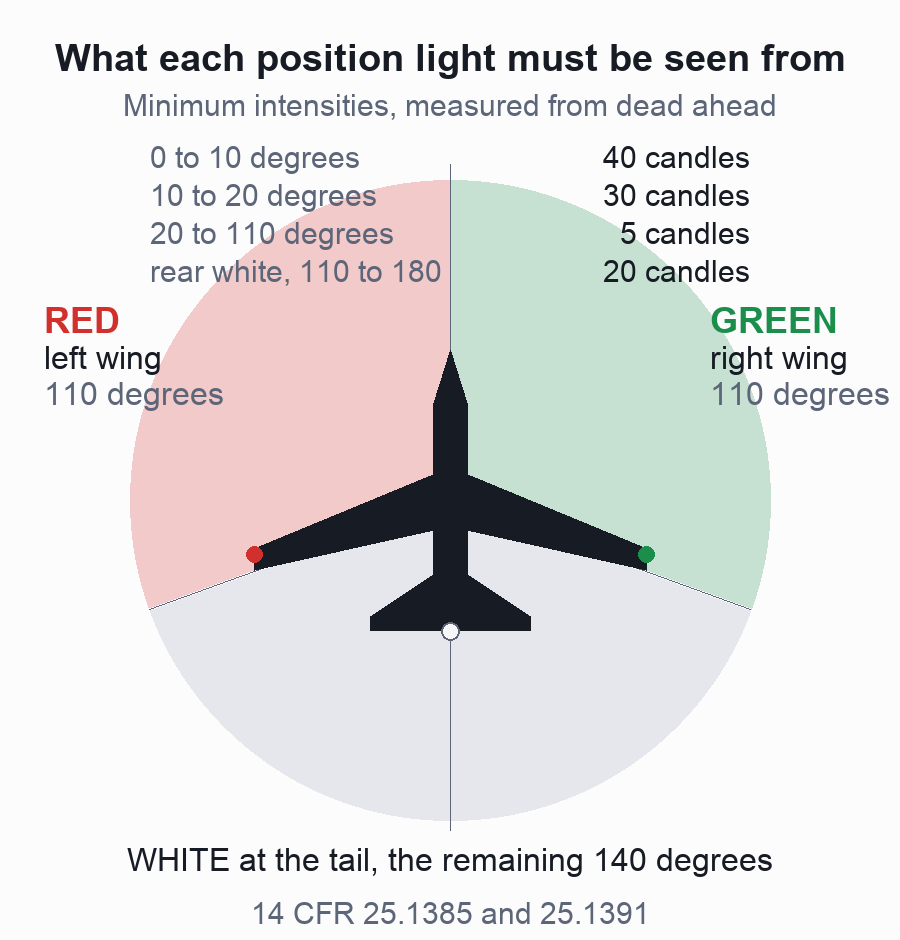
Add those up and the whole 360 degrees around the aircraft is covered, with no gap and no ambiguity. That is the point of the number. From anywhere in front of the wingline you see colour. From anywhere behind it you see white.
Why the green looks the same on every airline
Aviation red, aviation green and aviation white are not paint names. 14 CFR 25.1397 defines each one as a set of chromaticity coordinates from the International Commission on Illumination, with inequalities the light has to satisfy. Aviation green, for example, is pinned by three separate limits on where its coordinates may fall.
The practical effect is that an airline cannot have a house shade of green on the wingtip the way it can on the tail. The colour is specified to a tolerance, which is exactly why the system is trustworthy at a distance where you can no longer make out whose aircraft it is.
The white ones that flash, and how fast they may do it
Strobes are the lights that make you look. They are not there to show orientation, they are there to break through a cluttered background, and the certification rules treat them very differently from position lights.
14 CFR 25.1401 requires the anticollision light system to cover at least 75 degrees above and 75 degrees below the horizontal plane of the aircraft, so it is visible to someone well above or well below. The intensity requirement is where the gap with position lights opens up. An anticollision light must produce at least 400 candles within 5 degrees of the horizontal, falling to 240, then 80, then 40, then 20 candles as the angle increases.
Compare that with the 40 candle minimum for a forward position light and the arithmetic is blunt: the strobe is specified at ten times the brightness. That is why, watching an aircraft come toward you from miles out, the flash arrives long before you can see any colour at all.
Between 40 and 100 times a minute
The flash rate is not left to the manufacturer’s taste. The rule fixes a band, and it is the detail most explanations of aircraft lighting leave out.
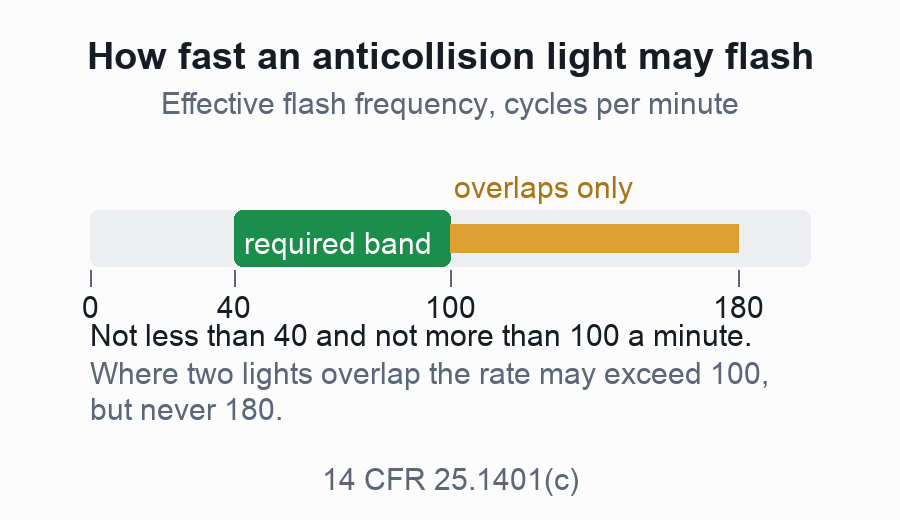
The arrangement of the system, meaning the number of light sources, the beam width, the speed of rotation and so on, must give an effective flash frequency of not less than 40 and not more than 100 cycles per minute. Where two light sources overlap, the rate seen in the overlap may exceed 100, but it may never exceed 180.
Next time you watch an aircraft on approach, count the flashes for ten seconds and multiply by six. The answer will land inside that band, and it is one of the few things in aviation you can verify from a garden.
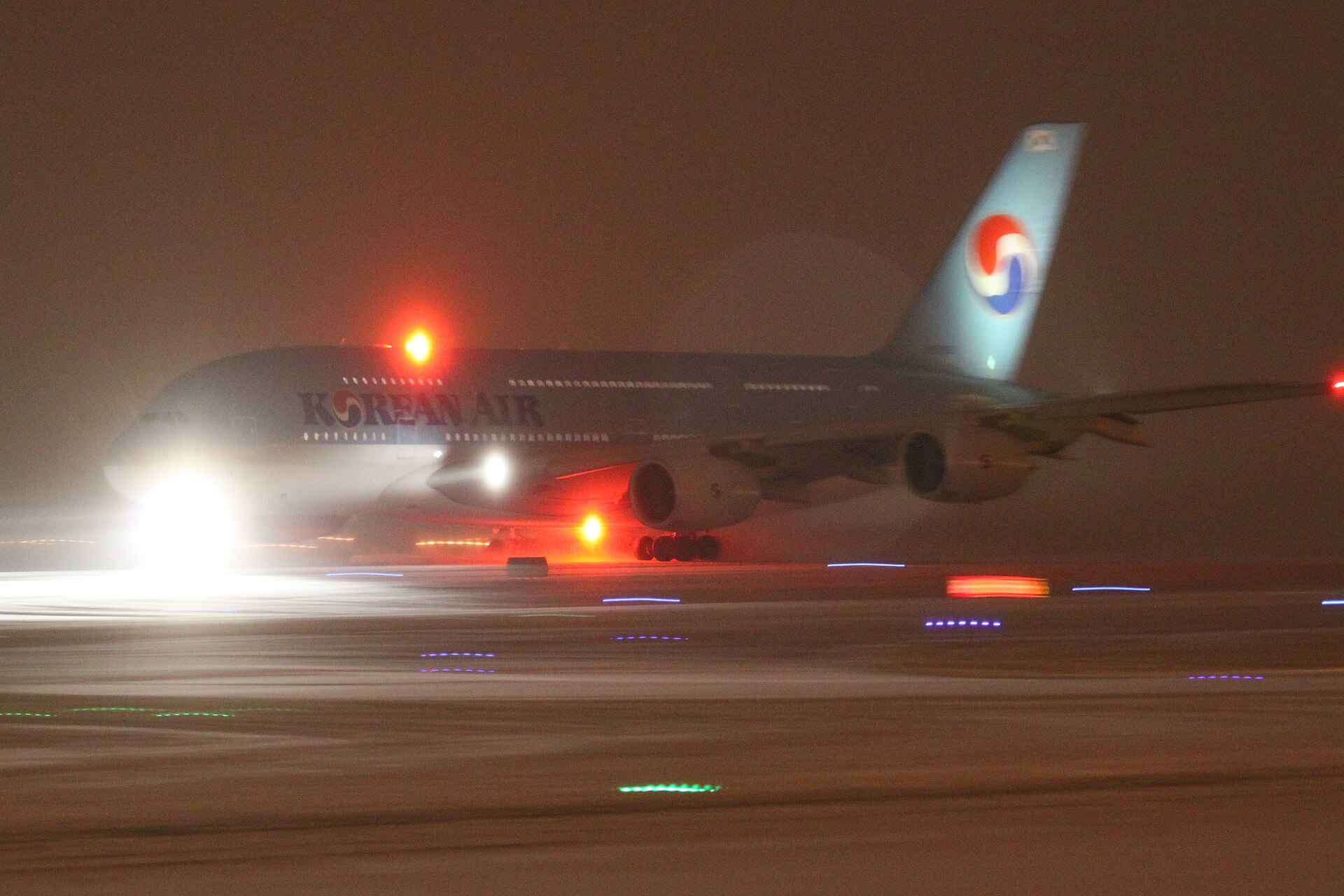
Strobes are not simply left on. The AIM advises that supplementary strobe lights should be turned off on the ground when they adversely affect ground personnel or other pilots, and in flight when cloud reflection becomes a problem. Anyone who has sat in a cabin while the strobes bounce back off thick cloud will understand the second half of that sentence immediately.
The slow red pulse, and why it comes on at the gate
The rotating beacon is the other half of the anticollision system, and it behaves nothing like the strobes. It is red, it is slower, and it is usually mounted on the top and bottom of the fuselage rather than out at the wingtips.
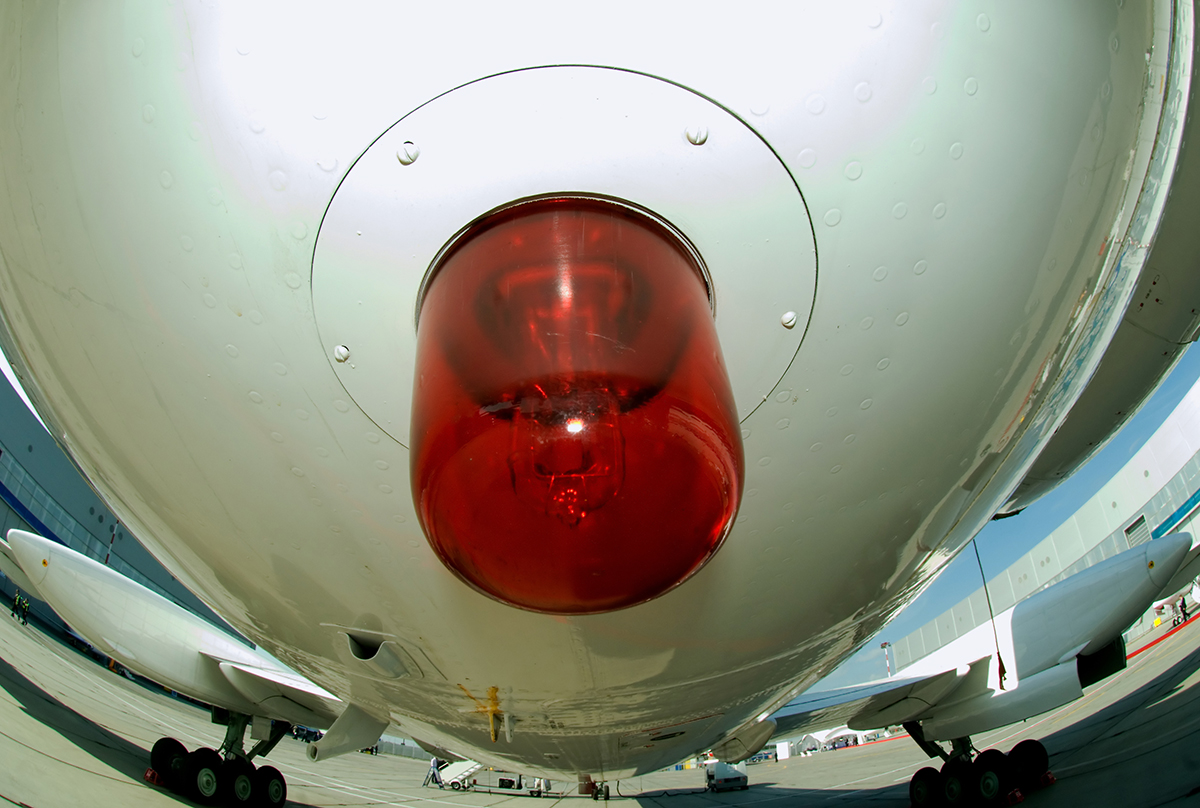
Its most useful job happens before the aircraft has moved an inch. The FAA recommends that air carriers and commercial operators turn on their rotating beacons any time their aircraft engines are in operation, as a way of warning ground crew about jet blast and propeller wash. That is why the beacon coming on at the gate is the cue for everyone around the aircraft to stop treating it as a parked object.
There is an honest caveat attached, and the FAA writes it into the same passage. The programme is voluntary, so the advice is to exercise caution and not rely solely on the rotating beacon as an indication that the engines are running. It is a strong convention rather than a guarantee, and ground crews are trained accordingly.
The taxi light does something similar for intent. The AIM suggests turning it on when the aircraft is moving or about to move, and off when stopped or yielding to other ground traffic, which turns an ordinary lamp into a signal other crews can read across a dark apron.
Does every aircraft have them, and are they always on
Position lights are required at night for everyone. Under 14 CFR 91.209, nobody may operate an aircraft between sunset and sunrise without lighted position lights, and the same rule covers parking or moving near a night flight operations area. Alaska gets its own definition of the period, based on a prominent unlighted object being invisible at three statute miles or the sun sitting more than six degrees below the horizon. That rule is also the backdrop to what pilots are actually looking at after dark, which is a different question from what they are showing to everyone else.
Anticollision lights work the other way round. The requirement is not tied to darkness at all. If an aircraft is equipped with an anticollision light system, that system must be lit, day and night, with one exception written into the rule: the lights need not be lit when the pilot in command determines that, because of operating conditions, turning them off would be in the interest of safety.
So the honest answer to whether every aircraft has flashing lights is no. Every transport category airliner does, because the certification rules demand it. Older and smaller aircraft may have no anticollision system at all, and the AIM says so plainly when it reminds pilots that not all aircraft are equipped with lights and some pilots may not have their lights turned on. Lights are a help, never a substitute for looking.
They also fail like any other bulb. Exterior lights are one of the items a crew checks on the walkaround, alongside everything else on the daily maintenance check, and a dead position light is a defect that has to be dealt with rather than ignored.
What you can actually tell from the ground
Here is the whole system put to work. You are outside at night, there is an aircraft in the distance, and you want to know what it is doing.
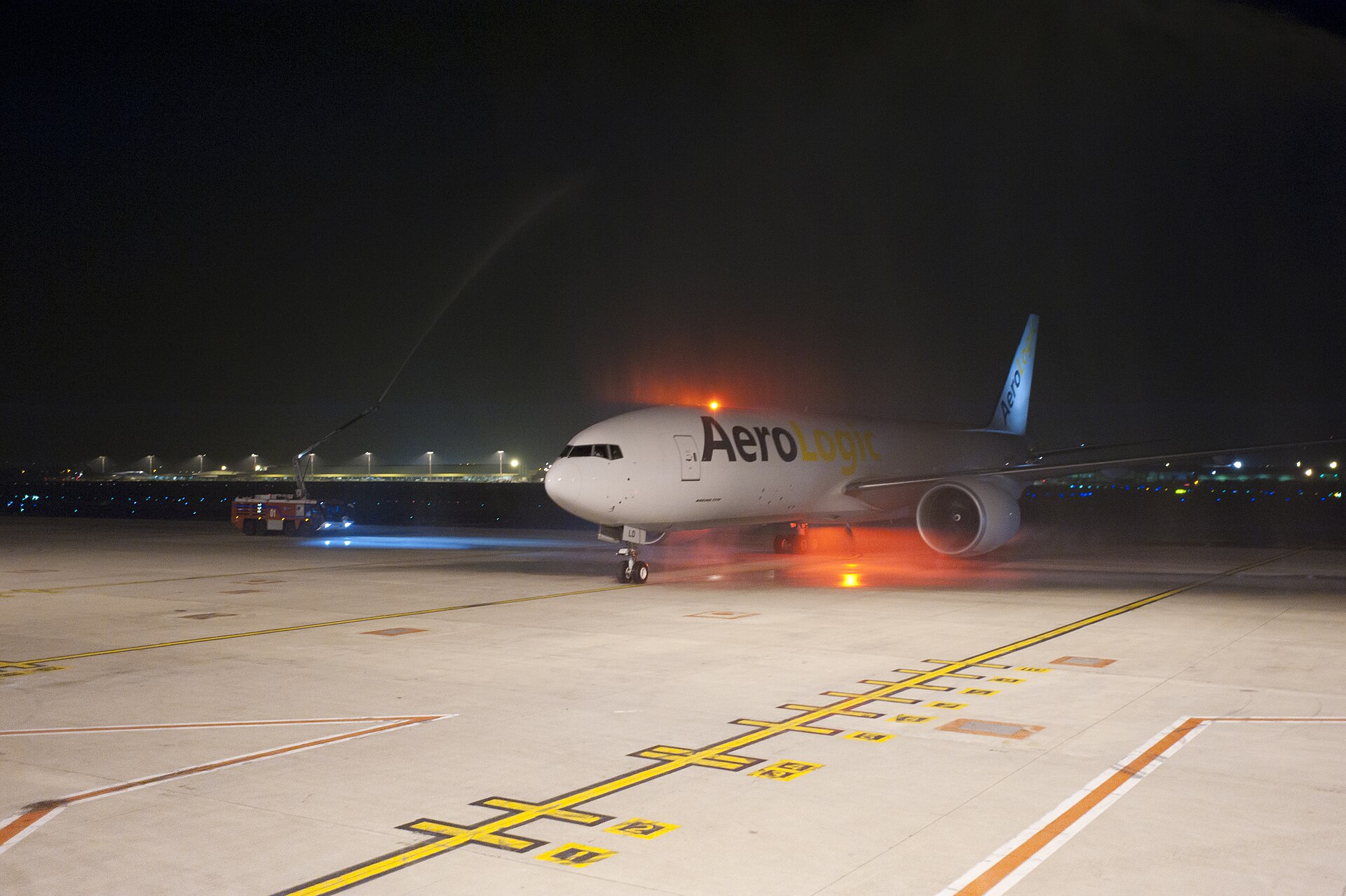
Red and green together, no white tail light. You are inside the forward arc of both lights, so the aircraft is pointing somewhere close to you. If the two colours are also moving apart, it is getting nearer.
Red only. You are off its left side, within that 110 degree arc. It is crossing from your right to your left.
Green only. The mirror image. You are off its right side and it is crossing from your left to your right.
White only, with the strobes still firing. You are behind the wingline, more than 110 degrees off the nose. It is going away from you.
One more clue is worth knowing. Under the FAA’s voluntary Operation Lights On programme, pilots are encouraged to switch landing lights on for takeoff and when operating below 10,000 feet, especially within 10 miles of an airport and in areas where birds are likely. A very bright, steady, forward pointing white light that is clearly not flashing usually means an aircraft on approach or just after departure, close in and low.
The caution that belongs with all of this is the one the AIM itself gives. Turning on lights helps the see and avoid principle, but pilots are told not to become complacent about keeping a sharp lookout, because the lights may be absent or off. The pattern tells you a great deal. It never tells you everything.
Frequently asked questions
Why do planes have flashing lights?
To be noticed. The flashing white lights are anticollision strobes, certified to be at least ten times brighter than a position light near the horizontal, so they are visible long before anything else on the aircraft is. They are required to be lit day and night whenever the aircraft is equipped with them.
Why is one wing light red and the other green?
So that anyone looking can tell which way the aircraft is pointing. Red is always the left wing and green is always the right, under 14 CFR 25.1385, and the convention is inherited from ships. Seeing red alone means you are off its left side.
What are the lights on a plane called?
The steady coloured ones are position lights, also called navigation lights. The flashing white ones and the red rotating one are both anticollision lights. The bright forward facing beams are landing and taxi lights, and the lamps that illuminate a tail fin are logo lights.
What is the red light on top of a plane?
The rotating beacon, part of the anticollision system. It is usually fitted above and below the fuselage, and on the ground it is the standard signal that the engines are running or about to be started.
Do all planes have flashing lights?
No. All transport category airliners do, because 14 CFR 25.1401 requires an anticollision light system. Smaller and older aircraft may not be equipped with one, which is why the FAA reminds pilots that not every aircraft is lit.
How fast do aircraft strobes flash?
Between 40 and 100 cycles per minute. That band is set by 14 CFR 25.1401(c). Where two light sources overlap, the rate seen in the overlap may go above 100 but never above 180.
Are aircraft lights only on at night?
Position lights are required from sunset to sunrise. Anticollision lights are not tied to darkness at all: if the aircraft has them, they must be lit in daylight too, unless the pilot in command turns them off in the interest of safety.
Which side of a plane is red?
The left, from the point of view of someone sitting in the cockpit facing forward. If you are looking at the nose of an aircraft head on, its red light will appear on your right.
Why are the lights on a plane so bright?
Because the minimum intensities are written into the certification rules. A forward position light must give at least 40 candles straight ahead, and an anticollision light at least 400 candles near the horizontal. They are specified for a pilot several miles away, not for an observer underneath them.
Can pilots turn the strobes off?
Yes, in defined circumstances. The regulation allows anticollision lights to be switched off when the pilot in command judges that it is safer, and the AIM advises turning supplementary strobes off on the ground when they dazzle ground crew, and in flight when they reflect badly off cloud.
Sources
- 14 CFR 25.1385, position light system installation.
- 14 CFR 25.1391, minimum intensities in the horizontal plane of forward and rear position lights.
- 14 CFR 25.1397, colour specifications.
- 14 CFR 25.1401, anticollision light system.
- 14 CFR 91.209, aircraft lights.
- FAA Aeronautical Information Manual, chapter 4 section 3, use of aircraft lights.
