






You step onto a private jet expecting luxury. The seats are comfortable. The cabin is quiet. But what about the food?
Private jet meals are nothing like commercial airline trays. You won’t find dry chicken or mystery pasta here. Instead, you get restaurant-quality dishes prepared by professional chefs.
Let me walk you through exactly what you can expect to eat on a private jet.
The Food Quality Difference
Commercial airlines serve pre-packaged meals to hundreds of passengers. Private jets serve custom-ordered dishes to small groups.
Your meal starts before you even board. The charter company sends you menu options days in advance. You choose exactly what you want. No compromises. No settling for option A or B.
Professional catering companies prepare your meals fresh. They use high-quality ingredients. Think fresh seafood. Premium cuts of meat. Organic produce. Real butter and cream.
The jet doesn’t have a full kitchen. But the crew has specialized equipment to heat and finish your food. They plate everything beautifully right before serving. Most passengers never realize their meal wasn’t cooked from scratch in the air.
What You Actually Eat (By Flight Length)
The food you get depends on how long you’re flying. Short trips get light meals. Long flights get multiple courses.
Short Flights (1-2 Hours)
Light jets handle quick trips between cities. You’re not in the air long enough for a full meal.
Crews typically serve drinks throughout the flight. Coffee. Tea. Soft drinks. Water.
The snack tray arrives mid-flight. Here’s what you might see:
Common short-flight options:
- Fresh fruit platters with berries and melon
- Cheese boards with crackers and grapes
- Mixed nuts (roasted, salted, or candied)
- Gourmet sandwiches on artisan bread
- Fresh salads with grilled chicken or shrimp
- Cookies or brownies for dessert
Some passengers request hot meals even on short flights. Crews can serve pasta dishes, grilled chicken, or steak if you want something more substantial.
Medium Flights (3-6 Hours)
Midsize jets fly coast-to-coast or across regions. You have time for a proper meal.
Most passengers get two courses plus drinks. The first course arrives after takeoff. The main meal comes later.
Typical midsize jet menu:
First course options:
- Smoked salmon on toasted bagels
- Shrimp cocktail with horseradish sauce
- Sushi rolls (California, spicy tuna, salmon)
- Soup (tomato bisque, French onion, butternut squash)
- Caesar salad with anchovies and parmesan
Main course choices:
- Filet mignon with roasted vegetables
- Grilled salmon with lemon butter
- Lamb chops with mint sauce
- Chicken breast with mushroom risotto
- Vegetarian pasta primavera
Dessert selections:
- Chocolate lava cake
- Tiramisu
- Crème brûlée
- Fresh fruit tart
- Assorted macarons
Wine and cocktails flow throughout the flight. Premium brands. Top-shelf liquor. Whatever you request.
Long Flights (7-12 Hours)
Heavy jets handle transcontinental and international routes. You’re in the air long enough for multiple meals.
The dining experience becomes more elaborate. Think multi-course tasting menus. Shareable appetizers. Wine pairings.
Long-range flight dining:
Welcome service:
- Champagne or sparkling wine
- Fresh-baked bread with herb butter
- Amuse-bouche (chef’s small bite)
Appetizer course:
- Caviar with blinis and crème fraîche
- Foie gras on toasted brioche
- Lobster bisque
- Oysters on the half shell
- Tuna tartare with avocado
Main course:
- Wagyu beef with truffle mashed potatoes
- Butter-poached lobster tail
- Duck confit with cherry reduction
- Sea bass with Mediterranean vegetables
- Truffle risotto with wild mushrooms
Dessert course:
- Chocolate soufflé with gold leaf
- Champagne sorbet
- Artisan cheese plate
- Custom pastries from local patisseries
- Fresh berries with whipped cream
Meals can be served family-style for everyone to share. Or individually plated for each passenger. Your choice.
Ultra-Long Flights (12+ Hours)
The biggest jets fly anywhere in the world. Dubai to Los Angeles. New York to Hong Kong. These flights require serious meal planning.
Chefs create elaborate tasting menus. Five to seven courses. Each dish pairs with specific wines or cocktails.
Ultra-long-range dining experience:
You might start with breakfast after takeoff. Continental options or full cooked breakfast.
Breakfast choices:
- Eggs benedict with smoked salmon
- French toast with berry compote
- Omelet made to order
- Fresh pastries and croissants
- Yogurt parfait with granola
- Fresh-squeezed orange juice
Mid-flight, the crew serves lunch or dinner. Multiple courses. Restaurant-quality presentation.
Lunch/dinner progression:
- Seafood tower (shrimp, crab, oysters)
- Soup or salad course
- Palate cleanser (lemon sorbet)
- Main protein (beef, fish, poultry, or game)
- Vegetable sides
- Starch (potatoes, rice, or pasta)
- Dessert tasting plate
- Coffee or tea service
Before landing, you get a light meal. Sandwiches. Salads. Something fresh to prepare you for arrival.
The beverage service never stops. Champagne. Rare wines. Top-shelf spirits. Whatever you want.
Popular Menu Items in 2025
Food trends change every year. Private jet passengers follow the same culinary movements as fine dining restaurants.
Here’s what people are ordering most in 2025:
Fresh Seafood Dominates
Lobster tail is the number one requested item. Passengers love butter-poached or grilled preparations.
Sushi has become standard on many flights. California rolls. Spicy tuna. Salmon nigiri. Fresh wasabi and pickled ginger.
Caviar remains popular for celebrations. Beluga. Osetra. Served with traditional accompaniments.
Premium Beef Cuts
Wagyu beef outsells everything else. The marbling creates incredible flavor. Passengers request it medium-rare with simple seasoning.
Filet mignon stays classic. Tender. Easy to eat in flight. Pairs well with red wine.
Short ribs work well for reheating. The slow-cooked meat stays moist and flavorful.
Comfort Food Gets Fancy
Elevated versions of simple dishes are trending. Tomato soup with grilled cheese made from artisan bread and aged cheddar.
Mac and cheese appears on many menus. But with truffle oil. Lobster chunks. Panko topping.
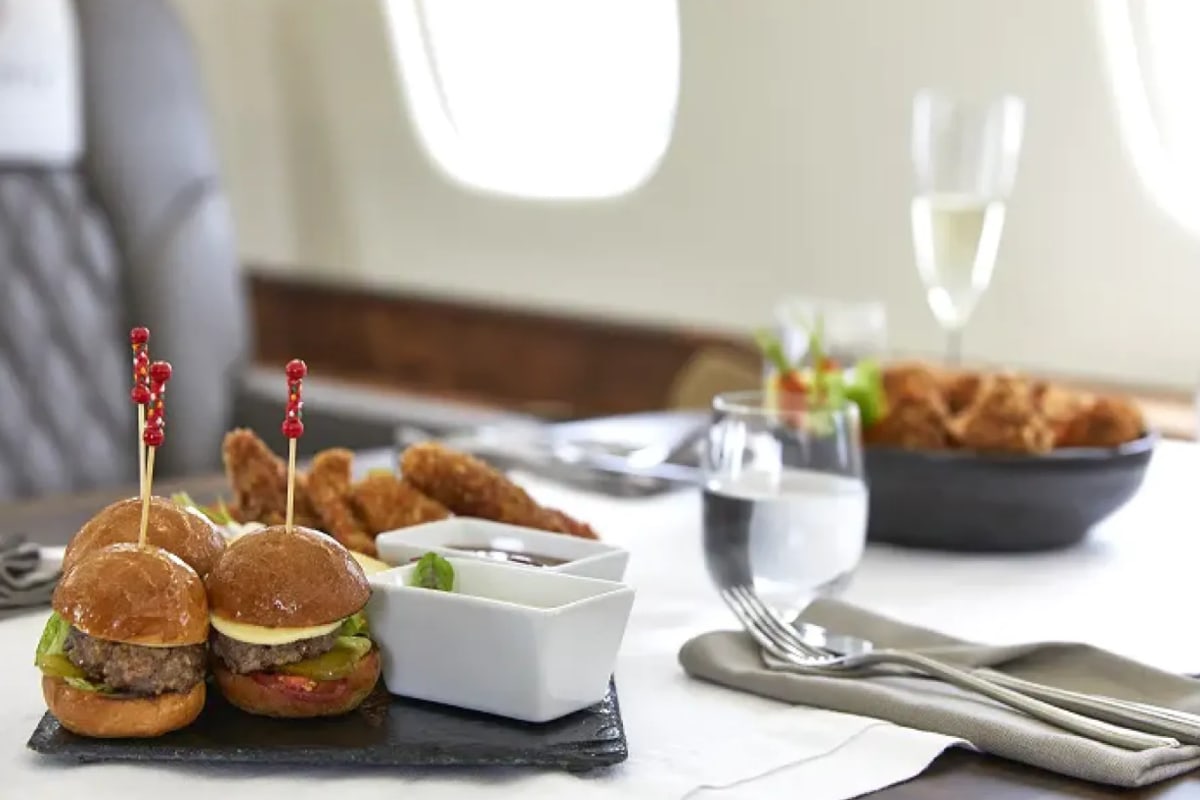
Burgers show up on shorter flights. Wagyu beef patties. Brioche buns. Gourmet toppings.
Plant-Based Options Expand
Vegan requests have doubled in the past two years. Chefs create elaborate plant-based meals.
Popular vegan dishes include:
- Cauliflower steaks with chimichurri
- Jackfruit tacos with cashew cream
- Buddha bowls with quinoa and roasted vegetables
- Plant-based sushi with avocado and cucumber
- Vegan chocolate mousse made with aquafaba
Many passengers request sourcing information. They want to know where ingredients come from. Organic certification matters.
International Flavors
Japanese and Korean influences dominate 2025 menus. Ramen bowls. Bibimbap. Korean BBQ.
Mediterranean dishes remain popular. Greek salads. Spanish tapas. Italian risotto.
Middle Eastern mezze platters work well for sharing. Hummus. Baba ganoush. Falafel. Fresh pita.
Dietary Restrictions and Customization
About 15% of Americans follow special diets. Private jets accommodate every restriction.
Common Dietary Needs
Allergies: Crews avoid peanuts, shellfish, gluten, or dairy based on your requirements. They check every ingredient. Cross-contamination is prevented.
Religious requirements: Kosher meals come from certified kitchens. Halal options meet Islamic dietary laws. Hindu vegetarian menus exclude certain ingredients.
Medical diets: Low-sodium for heart health. Diabetic-friendly with controlled carbs. Renal diet for kidney issues. Chefs adjust recipes to meet medical needs.
Lifestyle choices: Vegan menus exclude all animal products. Keto plans focus on high fat and low carbs. Paleo diets avoid processed foods and grains.
How to Request Special Meals
Tell your charter company when you book. They send menu options that fit your diet. You review and approve everything before the flight.
The catering company prepares meals in dedicated areas. They use separate equipment. Your food never touches allergens.
Ingredients are labeled. You know exactly what you’re eating. No surprises. No guessing.
Beverage Service
Drinks matter as much as food on private jets. You get whatever you want. Whenever you want it.
Non-Alcoholic Options
Bottled water comes from premium brands. Fiji. Evian. San Pellegrino sparkling.
Fresh juices are squeezed to order. Orange. Grapefruit. Green vegetable blends.
Coffee comes from high-end roasters. Espresso drinks made with proper machines. Lattes. Cappuccinos. Macchiatos.
Tea selections include dozens of varieties. Black. Green. Herbal. Served with honey and lemon.
Soft drinks cover major brands plus specialty sodas.
Alcoholic Selections
Champagne flows freely. Dom Pérignon. Krug. Vintage bottles cost hundreds per glass on the ground.
Wine lists rival fine restaurants. Bordeaux. Burgundy. California Cabernet. Sommeliers can help with pairings.
Spirits include top-shelf everything. Single malt Scotch aged 18+ years. Small-batch bourbon. Premium vodka and gin.
Craft cocktails are made fresh. Old Fashioneds with hand-cut ice. Perfect Martinis. Whatever you desire.
How the Food Actually Works
Private jets don’t have restaurant kitchens. The galley is small. But crews make it work.
Pre-Flight Preparation
Catering companies prepare meals hours before departure. They cook everything to 90% doneness. This prevents overcooking during reheating.
Food arrives at the airport in insulated containers. Temperature controlled. Nothing sits at room temperature.
Crews load meals onto the jet right before boarding. Fresh. Cold items stay cold. Hot items stay warm.
In-Flight Service
The galley contains convection ovens. These heat food quickly and evenly. Much better than commercial airline ovens.
Crews time everything perfectly. Your appetizer gets plated while you’re enjoying drinks. Main course starts cooking before you finish the first course.
Fresh ingredients get final preparation. Salads are dressed. Sauces are warmed. Garnishes are added.
Plates look restaurant-quality. Nothing comes out in plastic containers. Real china. Actual silverware. Cloth napkins.
Service Style
Light jets often use tray service. Your meal arrives on a complete tray. Everything you need is there.
Larger jets do plate service. Courses arrive separately. Cleared between each one. More formal dining experience.
Family-style works for groups. Large platters in the center. Everyone shares. More casual and social.
Special Occasions Get Extra Treatment
Birthday flights get custom cakes. Multi-tiered. Professionally decorated. Candles and celebration.
Proposals include champagne and strawberries. Rose petals. Special plating.
Anniversaries warrant special menus. Recreating first date meals. Favorite dishes from special restaurants.
Business celebrations come with premium spirits. Rare whiskey. Vintage champagne. Cuban cigars (where legal).
What You Should Know Before Flying
Request Menus Early
Charter companies need 24-48 hours notice for special requests. Standard menus work with less time. But elaborate custom meals need advance planning.
Be Specific
Tell them exactly what you want. Don’t just say “seafood.” Specify lobster tail, grilled, with lemon butter. The more detail you provide, the better your meal.
Ask Questions
Want to know where ingredients come from? Ask. Concerned about preparation methods? Speak up. The crew wants you happy.
Consider Flight Time
Don’t order heavy meals on short flights. You won’t have time to enjoy them. Save elaborate dining for longer routes.
Think About Landing
Avoid foods that make you sleepy before important meetings. Skip heavy cream sauces if you have work to do after landing.
Read Also: How Fast Do Jets Go?
The Bottom Line
Food on private jets beats commercial airline meals by every measure. Quality. Variety. Customization. Presentation.
You choose what you want from extensive menus. Professional chefs prepare everything fresh. Crews serve it beautifully.
Dietary restrictions get respected. Special occasions get celebrated. Every detail is handled.
The meal becomes part of the experience. Not an afterthought. Not something you tolerate. Something you actually enjoy.
That’s the difference between flying commercial and flying private. Your preferences matter. Your satisfaction comes first. Your meal gets made exactly how you want it.
Next time you book a private jet, spend time on the menu. Request your favorites. Try something new. Make it memorable. The food is one reason people keep flying private. Once you experience real meals at 40,000 feet, commercial airline trays become impossible to accept. For more information, crew daily.