





The race for air superiority never stops. In December 2025, China unveiled upgrades to its J-20 fleet with indigenous WS-15 engines, while the US continued expanding F-35 production across three continents. Modern air combat demands more than just speed—it requires stealth, advanced sensors, network connectivity, and proven combat capability.
This ranking evaluates fighter jets based on stealth technology, combat systems, operational record, and real-world deployment. We’re looking at aircraft that air forces actually rely on, not prototypes or paper concepts.
What Makes a Fighter Jet Elite?
Stealth Technology Radar cross-section determines survival. Fifth-generation fighters like the F-22 achieve RCS values comparable to a metal marble, while fourth-generation jets appear as large as a truck on radar screens. Stealth isn’t invisibility—it’s about reducing detection range from 200 kilometers to 30 kilometers, giving pilots first-shot advantage.
Speed and Maneuverability Raw speed matters less than sustained performance. Supercruise—supersonic flight without afterburners—allows fighters to maintain high speeds without burning through fuel. Thrust vectoring enables post-stall maneuvers that defeat missile tracking.
Advanced Avionics and Sensors AESA radars track 20+ targets simultaneously while jamming enemy systems. Modern sensor fusion combines radar, infrared sensors, and data from other aircraft into a single tactical picture. The pilot sees everything; enemies see nothing.
Weapons Systems Internal weapons bays preserve stealth. Beyond-visual-range missiles like the AIM-120D can engage targets 160+ kilometers away. Modern fighters carry precision-guided munitions, anti-radiation missiles, and next-generation air-to-air weapons.
Combat Proven vs. Theoretical Syrian air defenses learned this lesson. The F-22 and F-35 operate in contested airspace regularly. Paper specifications mean nothing without operational validation.
Top 10 Fighter Jets in the World 2026
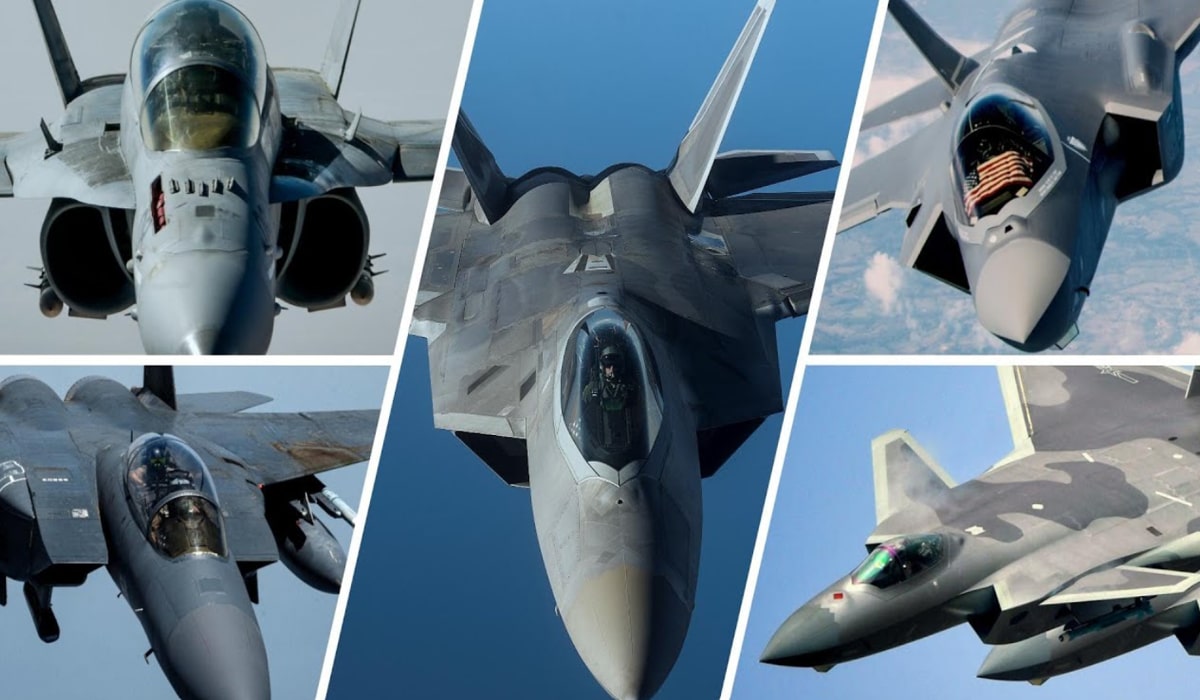
1: Lockheed Martin F-22 Raptor (USA)
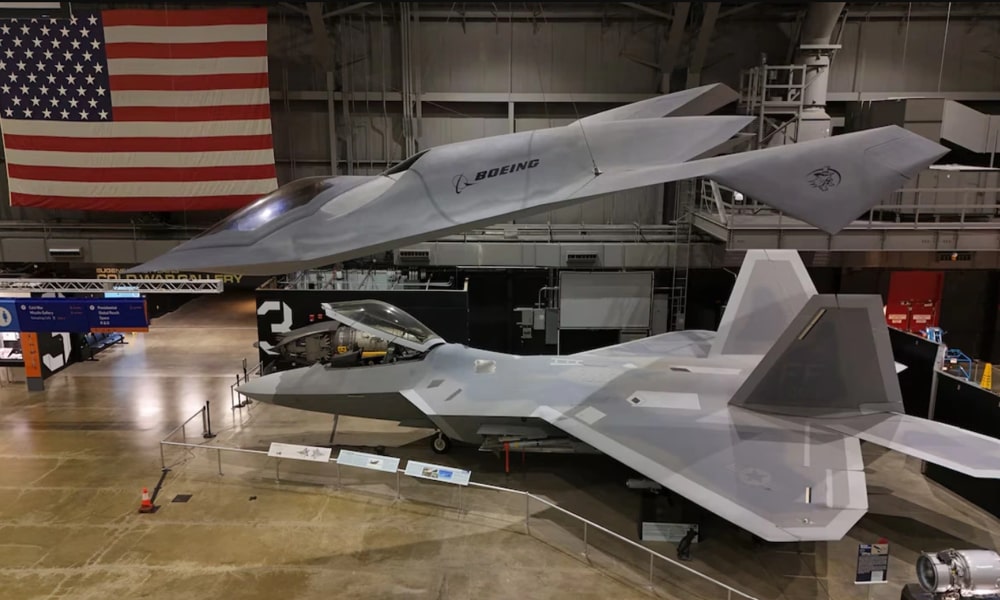

Speed: Mach 2.25 (2,410 km/h)
The F-22 remains unmatched in air-to-air combat. No other aircraft combines its stealth, supercruise capability, and combat systems in one package.
Key Features: The AN/APG-77 AESA radar detects targets before they know the Raptor exists. Supercruise at Mach 1.8 means the F-22 reaches combat zones faster while carrying more weapons. Two-dimensional thrust vectoring gives it turning capability that defies physics—pilots routinely pull maneuvers that would stall conventional fighters.
Internal weapons bays carry six AIM-120 AMRAAMs and two AIM-9 Sidewinders. The jet can also carry two 1,000-pound JDAMs for ground attack while maintaining full stealth.
Combat Record: Syria, 2014-present. F-22s established air superiority over ISIS-controlled territory, operating alongside less-capable coalition aircraft while remaining undetected by Russian air defense systems. In simulated combat, Raptors achieve kill ratios exceeding 30:1 against fourth-generation fighters.
Limitations: Production ended in 2011 at 187 aircraft. Unit cost exceeded $350 million including development costs. Export is legally prohibited. The fleet requires extensive maintenance—each flight hour demands 30+ hours of maintenance.
Why It’s #1: Nothing else can do what the F-22 does. When air superiority is non-negotiable, this is the aircraft air forces want.
2: Lockheed Martin F-35 Lightning II (USA)
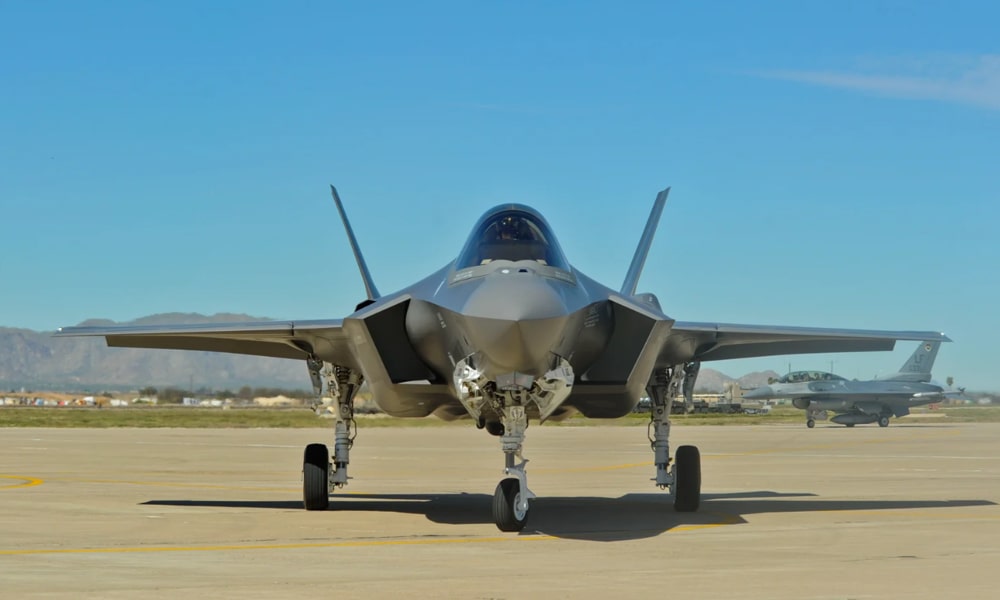
Speed: Mach 1.6 (1,930 km/h)
The F-35 is the most advanced multirole fighter in production, with over 1,000 aircraft delivered to 18 countries. It’s slower than the F-22 but brings capabilities no other jet can match.
Three Variants:
- F-35A: Conventional takeoff and landing for air forces
- F-35B: Short takeoff/vertical landing for marines and smaller carriers
- F-35C: Carrier operations with larger wings and reinforced landing gear
Key Features: Sensor fusion is the F-35’s superpower. The AN/APG-81 radar, six infrared cameras (DAS), and EOTS targeting pod feed data into a single display. The pilot doesn’t manage sensors—the jet does it automatically.
MADL (Multifunction Advanced Data Link) allows F-35s to share targeting data without radio emissions. Four aircraft become one distributed sensor network. Enemy forces face coordinated attacks from directions they can’t predict.
Global Adoption: Israel uses F-35Is for strikes in Syria and Iran. British F-35Bs operate from carriers in the Pacific. Polish, Finnish, and German orders expand NATO’s fifth-generation fleet. Japan now builds F-35s domestically.
Latest Updates: Block 4 upgrades add new weapons, longer-range missiles, and improved electronic warfare. The TR-3 computer upgrade triples processing power for future capabilities.
Why It’s #2: The F-35 isn’t trying to beat the F-22 in dogfights. It’s designed to destroy enemies before they know they’re under attack—and it does this better than anything else.
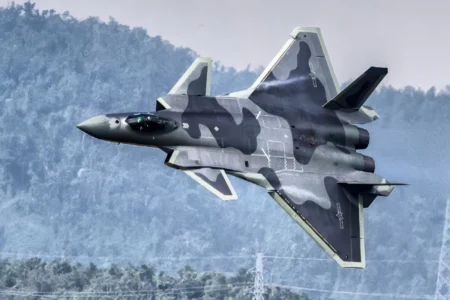
3: Chengdu J-20 Mighty Dragon (China)
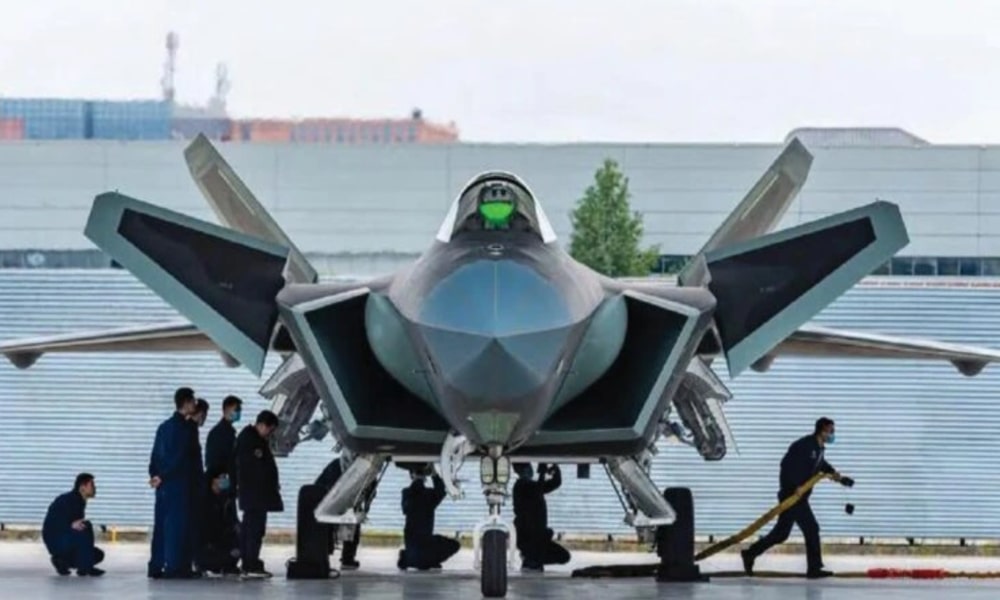
Speed: Mach 2.0 (2,130 km/h)
China’s first fifth-generation fighter challenges US air dominance in the Pacific. The J-20 isn’t trying to match American jets capability-for-capability—it’s designed to exploit their weaknesses.
Key Features: The canard-delta wing configuration prioritizes range over agility. While the F-22 dominates dogfights, the J-20 is built to kill tankers, AWACS, and other support aircraft that enable US power projection. Take out those assets, and American fighters can’t operate effectively in the Western Pacific.
WS-15 engines entered production in 2024, replacing Russian AL-31 engines. This gives the J-20 supercruise capability and better thrust-to-weight ratio. The AESA radar tracks multiple targets beyond 200 kilometers.
Role: Anti-access/area denial. The J-20 doesn’t need to beat F-22s in combat—it needs to create enough uncertainty to keep US carriers at distance. Six internal hardpoints carry PL-15 long-range missiles and PL-10 short-range weapons.
Numbers: China operates approximately 200+ J-20s as of early 2026, with production expanding. The PLAAF plans for 500+ aircraft by 2030.
Why It’s #3: The J-20 proved that stealth technology isn’t an American monopoly. It’s operational, it’s numerous, and it’s designed specifically to counter US tactics in the Pacific theater.
4: Sukhoi Su-57 Felon (Russia)
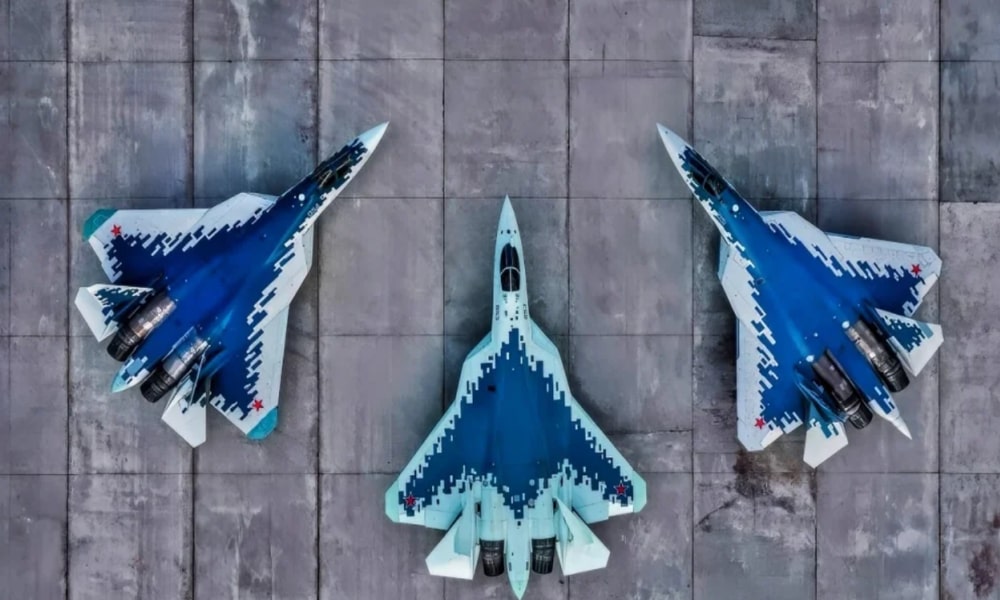
Speed: Mach 2.0 (2,135 km/h)
Russia’s answer to fifth-generation fighters faces production challenges but brings unique capabilities. The Su-57 prioritizes maneuverability and long-range missiles over absolute stealth.
Key Features: Three-dimensional thrust vectoring allows maneuvers no Western fighter can match. The aircraft can point its nose 30+ degrees off its flight path—critical for close-range combat with high-off-boresight missiles.
Internal weapons bays carry six missiles, but the Su-57 often flies with external hardpoints, sacrificing stealth for payload. The N036 Byelka radar system uses multiple arrays for 360-degree coverage without physically rotating.
Export Prospects: India backed out of co-development in 2018, citing performance concerns. Algeria and Turkey showed interest but haven’t committed. Russia struggles to produce aircraft at scale due to sanctions on advanced components.
Production Status: Fewer than 30 aircraft delivered as of 2026. Russia initially planned 76 by 2028 but scaled back orders. The Ukraine conflict diverted resources from Su-57 production to immediate wartime needs.
Why It’s #4: The Su-57 has impressive technology but limited operational impact. Production numbers matter—18 F-22s can only be in 18 places at once.
5: Dassault Rafale (France)
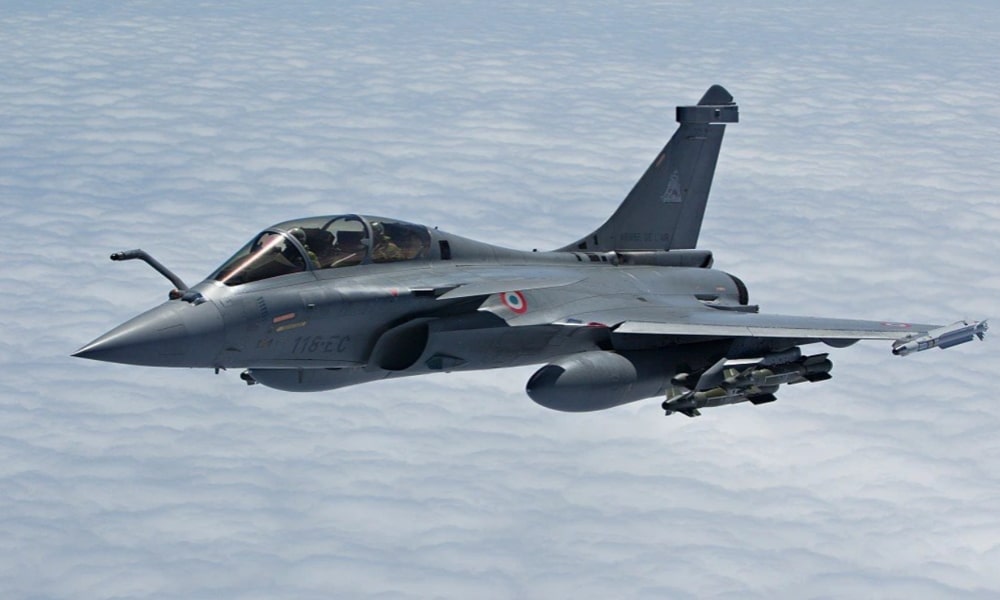
Speed: Mach 1.8 (2,220 km/h)
The Rafale proves that fourth-generation designs still compete when properly upgraded. France’s omnirole fighter handles air superiority, ground attack, nuclear deterrence, and carrier operations with the same airframe.
Key Features: SPECTRA electronic warfare system provides passive detection and active jamming. The system creates a “stealth-like” effect by degrading enemy radar effectiveness rather than reducing radar cross-section.
RBE2 AESA radar tracks 40 targets while engaging four simultaneously. The Rafale carries Meteor beyond-visual-range missiles with 150+ kilometer range and MICA IR/RF missiles for closer engagement.
Nuclear Capable: The Rafale can deliver the ASMP-A nuclear missile—a capability only a handful of fighters possess. This makes it central to French strategic deterrence.
Export Success: Egypt bought 54, India ordered 36 (with more pending), Greece operates 24, UAE purchased 80, and Croatia acquired 12 used aircraft. Export customers chose the Rafale over American and Russian competitors despite higher costs.
Upgrades: F4 standard adds new sensors, improved AESA radar, satellite connectivity, and integration with European weapons. First F4 deliveries began in 2024.
Why It’s #5: The Rafale does everything well. It’s not the stealthiest or fastest, but it’s proven, reliable, and backed by France’s defense industry.
6: Eurofighter Typhoon (Europe)
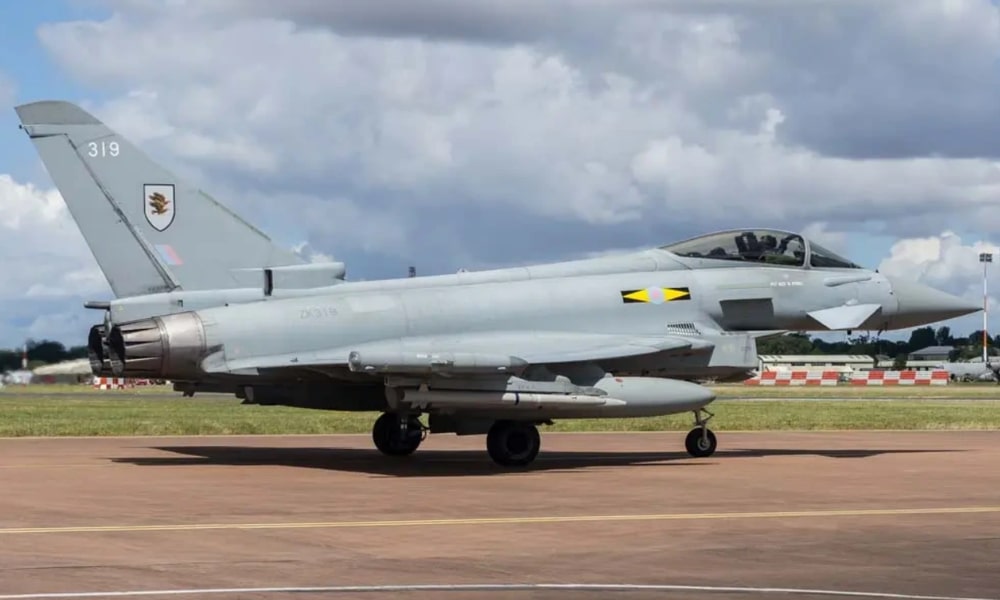
Speed: Mach 2.0 (2,495 km/h at altitude)
Built by the UK, Germany, Italy, and Spain, the Typhoon emphasizes air superiority through agility and advanced radar. It’s one of the few fighters that can challenge fifth-generation aircraft in certain scenarios.
Key Features: Delta-canard design provides exceptional maneuverability. Pilots report the Typhoon “goes where you point it” with minimal control input. This makes it lethal in visual-range combat.
CAPTOR-E AESA radar repositions electronically rather than mechanically, allowing the aircraft to track targets to the side while flying straight. In exercises, Typhoons detected and tracked F-22s using infrared sensors when the Raptors maneuvered close-range.
Operators: RAF (UK), Luftwaffe (Germany), Italian Air Force, Spanish Air Force, plus export customers including Saudi Arabia, Kuwait, Oman, Qatar, and Austria.
Upgrade Path: ECRS Mk2 radar adds electronic attack capability, essentially giving the Typhoon built-in jamming. Integration with Meteor missiles makes it dangerous at beyond-visual-range.
Why It’s #6: The Typhoon can’t match fifth-generation stealth, but it remains a formidable air defense fighter. European air forces rely on it as their primary interceptor.
7: Boeing F/A-18E/F Super Hornet (USA)
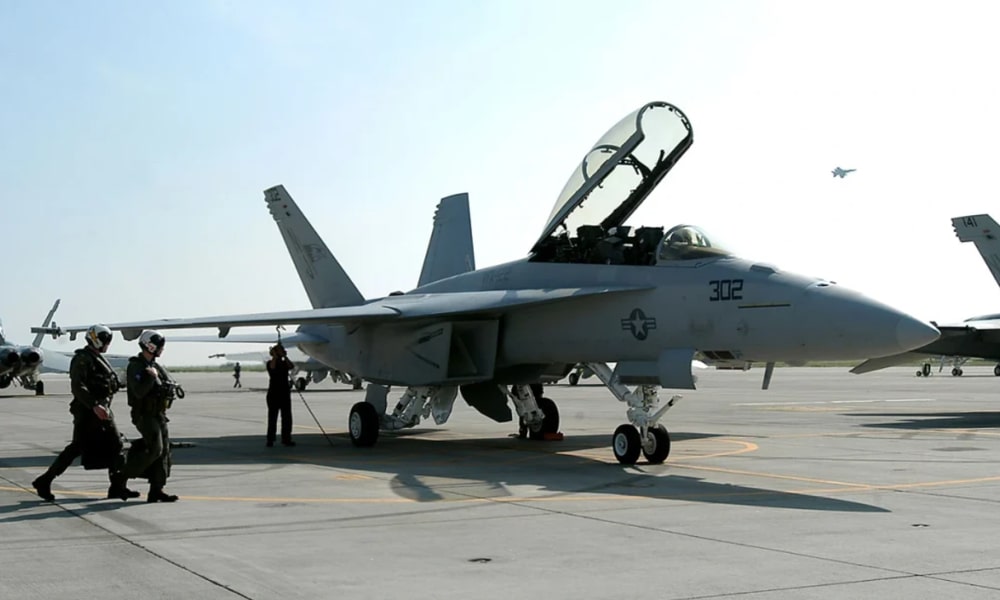
Speed: Mach 1.8 (2,190 km/h)
The Super Hornet serves as the US Navy’s workhorse, operating from carriers worldwide. It’s not the most advanced fighter, but it’s reliable, adaptable, and combat-proven.
Key Features: Carrier operations demand ruggedness the Super Hornet provides. The aircraft handles arrested landings, catapult launches, and saltwater exposure that would destroy land-based fighters.
APG-79 AESA radar provides excellent detection ranges. The Super Hornet carries AIM-120D missiles, AGM-88 HARM anti-radiation missiles, and JDAM precision bombs. Internal fuel and external tanks give it 1,800+ kilometer combat radius.
Growler Variant: The EA-18G Growler electronic warfare variant replaced the EA-6B Prowler. It jams enemy radars, intercepts communications, and destroys air defense systems with AGM-88 missiles. Every carrier air wing includes Growlers.
Proven Combat Record: Operations over Iraq, Syria, Yemen, and Afghanistan. The Super Hornet flew thousands of combat sorties, proving its reliability under combat conditions.
Future: Block III upgrades add conformal fuel tanks, infrared search and track, advanced networking, and longer airframe life. The Navy plans to operate Super Hornets through the 2040s.
Why It’s #7: The Super Hornet isn’t flashy, but it works. Carrier air wings depend on it for strike missions, air defense, and support roles.
8: Sukhoi Su-35 Flanker-E (Russia)
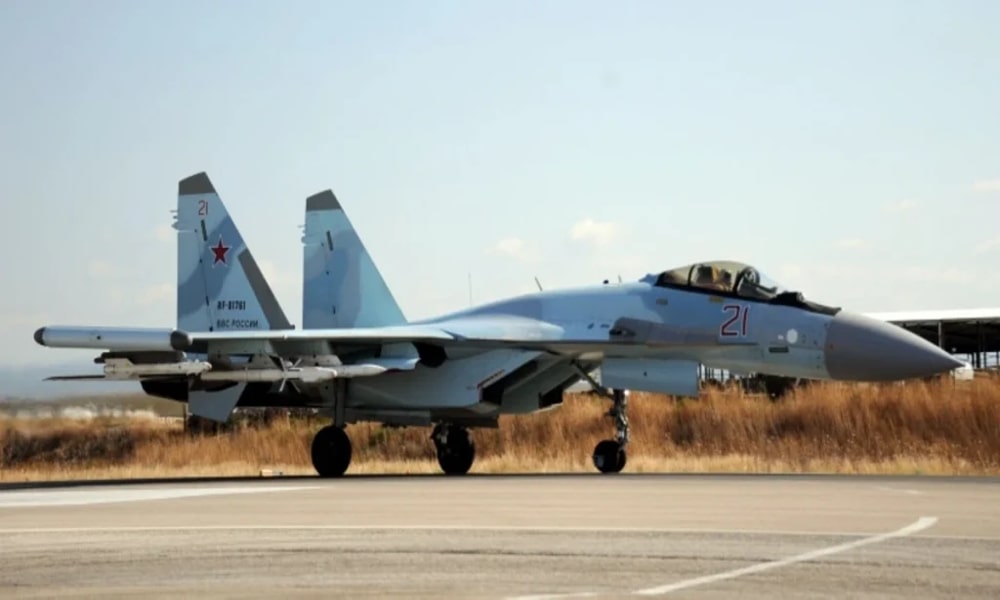
Speed: Mach 2.25 (2,400 km/h)
The Su-35 represents the peak of fourth-generation fighter development. Russia couldn’t produce enough Su-57s, so they enhanced the proven Su-27 design instead.
Key Features: Thrust-vectoring nozzles provide extraordinary agility. The Su-35 performs the “Pugachev’s Cobra” and “Kulbit” maneuvers that violate conventional aerodynamics—the aircraft can essentially fly backward briefly.
Irbis-E passive electronically scanned array radar detects fighter-sized targets at 400 kilometers and tracks 30 targets while engaging eight. It can even detect some stealth aircraft at reduced ranges by using multiple frequencies.
Internal fuel capacity gives the Su-35 exceptional range—3,600 kilometers without external tanks. Twelve hardpoints carry a mix of R-77 medium-range missiles, R-73 short-range missiles, and ground attack weapons.
Export: China bought 24 Su-35s despite having their own J-20—they wanted the AL-41F1S engines for study. Indonesia operates 11 aircraft. Egypt and other countries expressed interest.
Air Combat Capabilities: In exercises, Su-35s perform well against Western fourth-generation fighters. The combination of thrust vectoring, high-speed performance, and long-range missiles makes it dangerous.
Why It’s #8: The Su-35 is the best non-stealth fighter Russia produces. It can’t match fifth-generation aircraft, but it remains effective against most threats.
9: Chengdu J-10C Vigorous Dragon (China)
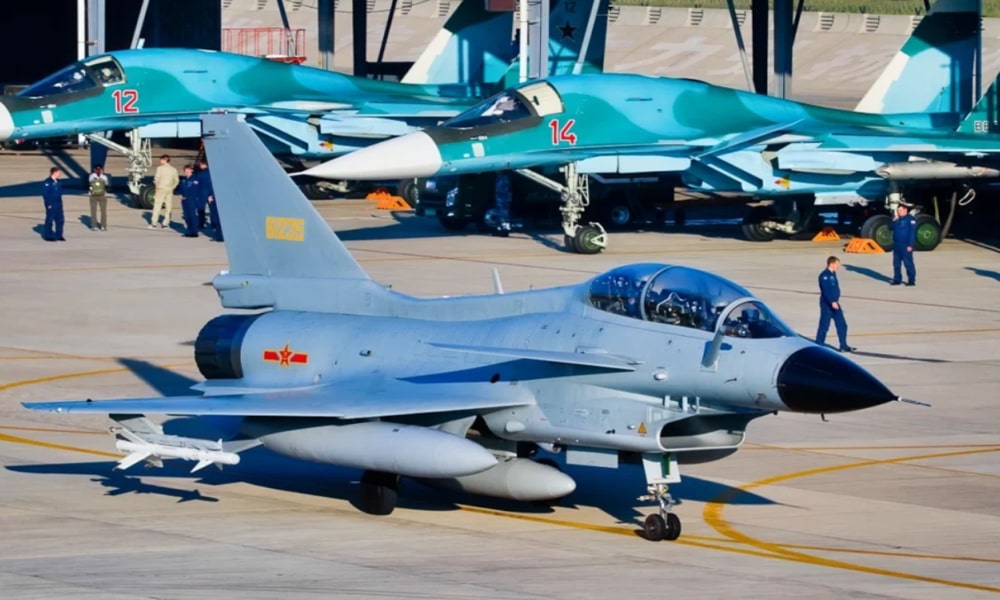
Speed: Mach 2.0 (2,300 km/h)
China’s lightweight multirole fighter serves as the PLAAF’s backbone. Think of it as China’s answer to the F-16—numerous, capable, and continuously upgraded.
Key Features: AESA radar provides detection ranges comparable to Western systems. The J-10C carries PL-15 missiles with 200+ kilometer range, giving it beyond-visual-range capability against most opponents.
Indigenous WS-10 Taihang engines replaced Russian AL-31s, making the J-10C fully Chinese. This matters for sustainability—China can produce and maintain the fleet without foreign dependencies.
Modern avionics include helmet-mounted displays, advanced electronic warfare systems, and data links for network-centric operations.
PLAAF Backbone: China operates 400+ J-10 variants, with the J-10C representing the latest standard. The aircraft handles air defense, ground attack, and maritime strike missions.
Export: Pakistan ordered 25 J-10CEs to replace aging F-16s and Mirage fighters. This marks the J-10’s first export success and validates Chinese fighter development.
Why It’s #9: The J-10C proves China can build competitive fourth-generation fighters domestically. It’s not revolutionary, but it’s effective and numerous.
10: Saab JAS 39 Gripen E (Sweden)
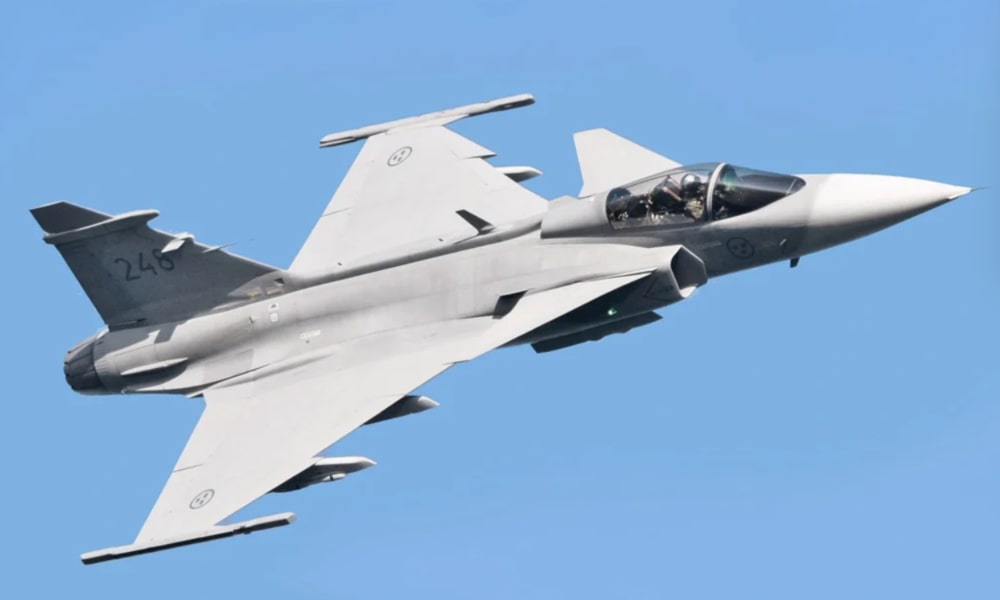
Speed: Mach 2.0 (2,470 km/h)
Sweden designed the Gripen for a specific mission: defend Swedish airspace while operating from highway strips with minimal support. The result is the most cost-effective modern fighter.
Key Features: Network-centric warfare integration allows Gripen Es to share data seamlessly with ground forces, navy ships, and other aircraft. One Gripen can guide missiles fired by another aircraft that never activated its own radar.
Raven ES-05 AESA radar provides excellent performance despite the Gripen’s small size. The aircraft can take off from 800-meter runways and operate from roads during wartime.
Operational costs run $5,000-7,000 per flight hour—roughly half what larger fighters cost. Six conscripts can rearm and refuel a Gripen in under 10 minutes.
Export Success: Brazil ordered 36 Gripen Es to replace aging F-5s. Thailand operates earlier Gripen C/Ds. Sweden markets the aircraft to countries seeking capability without American or Russian dependence.
Unique Advantages: The Gripen E carries Meteor missiles, giving it beyond-visual-range punch comparable to larger fighters. Advanced electronic warfare systems provide protection against modern threats.
Why It’s #10: The Gripen E offers the best capability-per-dollar of any modern fighter. Small air forces can afford capabilities that previously required much larger budgets.
Fighter Jet Comparison Table
| Rank | Fighter Jet | Country | Max Speed | Generation | Stealth | Supercruise | Active Units |
|---|---|---|---|---|---|---|---|
| 1 | F-22 Raptor | USA | Mach 2.25 | 5th | Yes | Yes | 187 |
| 2 | F-35 Lightning II | USA | Mach 1.6 | 5th | Yes | Limited | 1,000+ |
| 3 | J-20 Mighty Dragon | China | Mach 2.0 | 5th | Yes | Yes | 200+ |
| 4 | Su-57 Felon | Russia | Mach 2.0 | 5th | Partial | Yes | <30 |
| 5 | Rafale | France | Mach 1.8 | 4th+ | No | No | 250+ |
| 6 | Eurofighter Typhoon | Europe | Mach 2.0 | 4th+ | No | No | 550+ |
| 7 | F/A-18E/F Super Hornet | USA | Mach 1.8 | 4th+ | No | No | 550+ |
| 8 | Su-35 Flanker-E | Russia | Mach 2.25 | 4th+ | No | No | 120+ |
| 9 | J-10C Vigorous Dragon | China | Mach 2.0 | 4th+ | No | No | 400+ |
| 10 | Gripen E | Sweden | Mach 2.0 | 4th+ | No | No | 100+ |
Future of Fighter Jets
Sixth-Generation Programs
The US NGAD (Next Generation Air Dominance) program aims for operational capability by 2030. Details remain classified, but reports indicate variable-cycle engines, AI co-pilots, and integration with loyal wingman drones. The Air Force describes NGAD as a “family of systems” rather than a single aircraft.
Britain’s Tempest program partners with Italy and Japan, targeting 2035 deployment. The design emphasizes adaptability—modular systems allow rapid updates without redesigning the entire aircraft.
France, Germany, and Spain collaborate on FCAS (Future Combat Air System), also targeting 2035-2040. Like NGAD, FCAS includes manned fighters working with unmanned loyal wingmen.
Unmanned Combat Aircraft
Loyal wingman drones like the XQ-58 Valkyrie and MQ-28 Ghost Bat will fly alongside manned fighters. These aircraft carry sensors and weapons but cost one-tenth what manned fighters cost. Losing a drone is acceptable; losing an F-35 and pilot is catastrophic.
Hypersonic Weapons Integration
Future fighters will carry hypersonic missiles that travel at Mach 5+. These weapons can strike targets hundreds of kilometers away before defenses react. Russia’s Kinzhal and China’s DF-17 represent early examples.
AI and Autonomous Systems
AI already handles sensor fusion and threat prioritization in the F-35. Future systems will manage entire missions, suggesting tactics and even executing maneuvers faster than human pilots could decide.
The future of air combat isn’t just faster jets—it’s smarter systems that process information and make decisions at machine speed.
Frequently Asked Questions
Which is the best fighter jet in the world?
The F-22 Raptor holds this title based on pure air-to-air capability. Its combination of stealth, supercruise, maneuverability, and sensors gives it advantages no other aircraft can match. However, “best” depends on mission. The F-35 exceeds the F-22 for multirole operations and network warfare. The Rafale offers better versatility for smaller air forces that need one aircraft for multiple missions.
Is the F-22 better than the F-35?
For air superiority, yes. The F-22 was designed specifically to dominate air-to-air combat. It’s faster, more maneuverable, and optimized for killing other fighters.
The F-35 was designed for multirole operations—air-to-air, air-to-ground, electronic warfare, and reconnaissance. It excels at coordinating attacks with other aircraft and ground forces. In exercises, F-35s often defeat F-22s by using superior sensors and networking rather than dogfighting.
Different missions demand different aircraft. You wouldn’t use an F-22 for close air support, and you wouldn’t send F-35s to establish air superiority against advanced opponents.
How fast can the fastest fighter jet fly?
The MiG-25 Foxbat holds the record at Mach 3.2 (3,470 km/h), but that speed required special conditions and damaged the engines. Among modern fighters, the MiG-31 Foxhound reaches Mach 2.83 in practice.
For aircraft on this list, the Su-35 and F-22 both achieve Mach 2.25+. However, maximum speed matters less than sustained performance. The F-22’s supercruise at Mach 1.8 without afterburners is more tactically useful than brief sprints at maximum speed.
What is a fifth-generation fighter jet?
Fifth-generation fighters combine:
- Stealth technology (reduced radar cross-section)
- Supercruise (supersonic flight without afterburners)
- Advanced avionics and sensors
- Sensor fusion (combining multiple sensor inputs)
- Network-centric warfare capability
Only four aircraft meet these criteria: F-22, F-35, J-20, and Su-57 (though the Su-57’s stealth is debated). These aircraft represent fundamental advances over fourth-generation designs, not just incremental improvements.
Which country has the most advanced fighter jets?
The United States leads in deployed fifth-generation fighters with 187 F-22s and 1,000+ F-35s operational. No other country approaches these numbers.
China rapidly closes the gap with 200+ J-20s and aggressive production schedules. Their technology still trails American aircraft, but the gap narrows yearly.
Russia possesses advanced designs but struggles with production. They have fewer than 30 Su-57s despite years of development.
How much does a fighter jet cost?
F-35A: $80-85 million (2024 pricing) F-22: $350+ million including development costs Rafale: $100-120 million Su-35: $80-90 million Gripen E: $60-85 million
These figures reflect flyaway costs. Total program costs including development, training, spare parts, and support infrastructure multiply these numbers by 2-3x. Operating costs over a 30-year service life often exceed purchase price.
Read Also: JF-17 vs Tejas: Which Fighter Jet Actually Wins?
Conclusion
The F-22 Raptor, F-35 Lightning II, and J-20 Mighty Dragon represent the current state of fighter technology. These aircraft don’t just fly faster or carry more weapons—they change how air combat works.
Stealth allows them to operate in environments where fourth-generation fighters can’t survive. Advanced sensors and networking turn individual aircraft into nodes in a larger combat system. The pilot doesn’t just fly the jet; they command a distributed force of sensors and weapons.
The gap between fifth-generation and fourth-generation fighters exceeds the gap between fourth-generation jets and 1960s designs. A Rafale or Typhoon can defeat earlier fighters easily—but they struggle against F-22s and F-35s that see them first and shoot from beyond response range.
Technology continues advancing. Sixth-generation fighters, loyal wingman drones, and AI systems will define the next decade of air combat. The aircraft on this list represent 2026’s best—but 2030’s fighters are already in development. For more information, visit Crew Daily.