





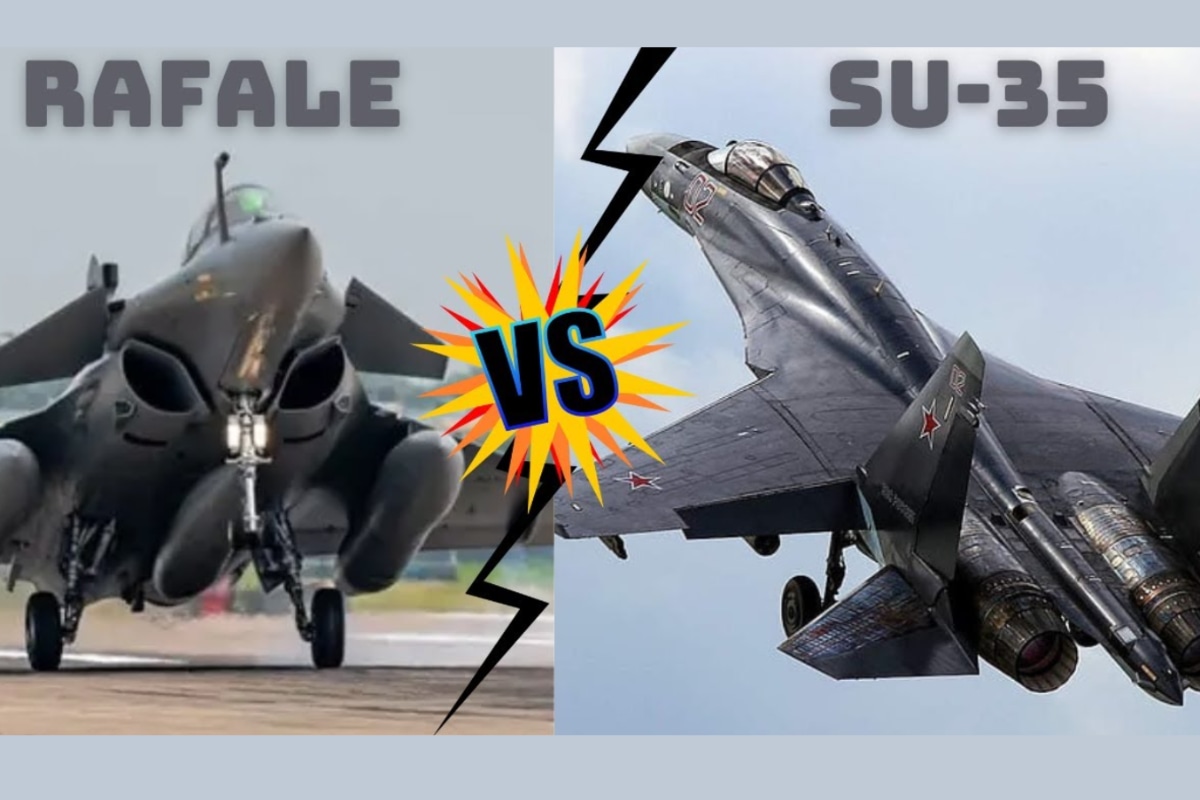
I stood at an airshow watching a Rafale pull impossible maneuvers. Minutes later, a Su-35 roared overhead doing the same. Both jets looked unstoppable. But which one actually dominates in combat?
The Su-35 vs Rafale debate matters more than ever. Russia and NATO face off globally. These two fighters represent their best 4th-generation technology. One relies on raw power and agility. The other uses advanced electronics and integration.
Understanding their differences reveals how modern air combat actually works. I’ve spent years analyzing fighter specifications and real-world performance. This comparison cuts through the propaganda to show you what these jets really do.
Speed and Performance: Raw Power vs Efficiency
The Su-35 hits Mach 2.25 at altitude. That’s roughly 2,390 kilometers per hour. The Rafale reaches Mach 1.8, about 1,912 kilometers per hour. On paper, the Russian jet wins the speed race easily.
But speed tells only part of the story. The Rafale achieves supercruise at Mach 1.4 without afterburners. This matters enormously in combat. Supercruise means the Rafale maintains supersonic speed while burning less fuel.
It extends range. It reduces the infrared signature that heat-seeking missiles track. The Su-35 needs afterburners for sustained supersonic flight. Those afterburners glow like beacons to enemy sensors.
Maneuverability is where the Su-35 shines. Its thrust-vectoring nozzles redirect engine exhaust. The jet turns tighter than physics should allow.
I’ve watched videos of Su-35s performing the Pugachev Cobra maneuver. The nose points straight up while the aircraft continues forward. It’s impressive and useful in close dogfights.
The Rafale can’t match those extreme maneuvers. But it doesn’t need to. Modern combat happens beyond visual range mostly. Missiles decide fights before pilots see each other. The Rafale’s efficiency and lower signature keep it alive longer. That matters more than pulling crazy stunts.
Both aircraft operate at similar altitudes. The Su-35 reaches about 20,000 meters. The Rafale hits 15,000 meters typically. Combat happens well below those ceilings anyway. Altitude advantage is minimal between them.

Weapons and Armament: Payload Power
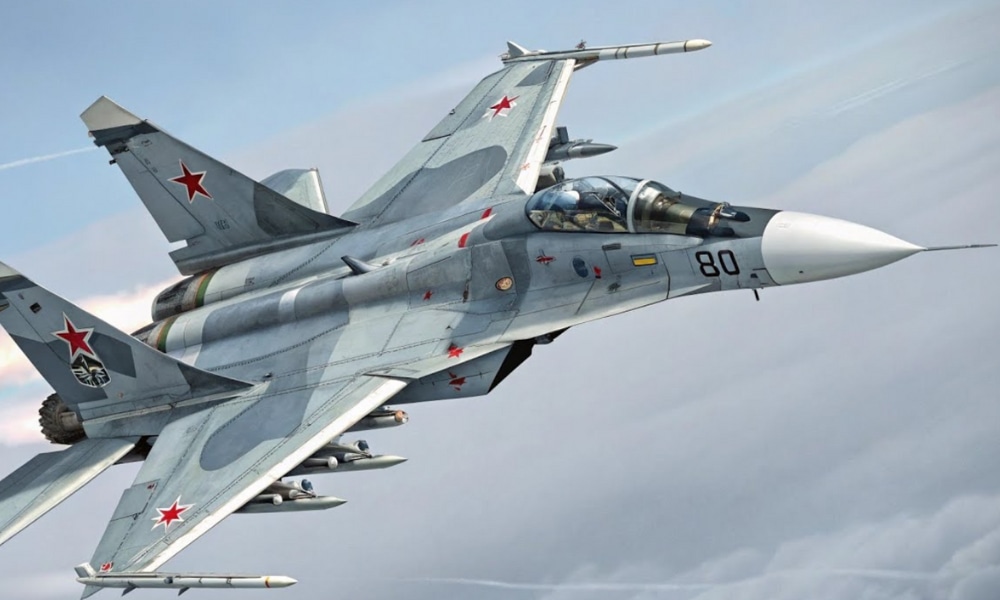
The Su-35 carries up to 8,000 kilograms of weapons across 12 hardpoints. That’s massive firepower. Its arsenal includes R-77 and R-27 air-to-air missiles for medium range. The newer R-37M extends range to 400 kilometers. Ground attack options include KAB-500 guided bombs and Kh-31 anti-ship missiles.
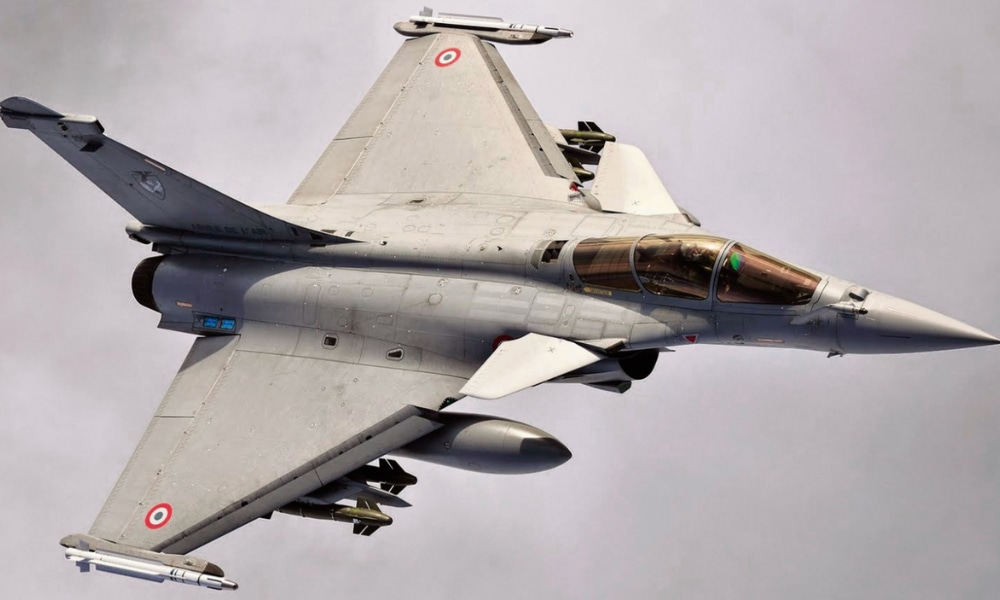
The Rafale carries 9,500 kilograms across 14 hardpoints. It actually hauls more weight than the Su-35. French weapons include MICA missiles for medium range and Meteor for long-range kills. The Meteor is particularly nasty. It maintains energy throughout flight using a ramjet engine. Most missiles lose speed as they fly. The Meteor doesn’t. That makes it deadly at extreme ranges.
For ground attack, the Rafale uses AASM Hammer bombs and Scalp cruise missiles. The AASM is brilliant. It’s a dumb bomb fitted with a guidance kit. You get precision strikes at a fraction of cruise missile costs. French forces used them extensively in Mali and Libya. They work.
Both jets carry similar gun armament. The Su-35 uses a 30mm GSh-30-1 cannon with 150 rounds. The Rafale mounts a 30mm GIAT cannon with 125 rounds. Guns matter less now, but they’re insurance for close encounters.
The real difference is integration. The Rafale’s weapons connect seamlessly to its sensors and radar. Target data flows automatically from detection to engagement. The Su-35’s systems are good but less integrated. Pilots work harder to achieve the same results.
Radar Systems: The Critical Difference
Here’s where the Su-35 vs Rafale comparison gets technical but crucial. The Su-35 uses the Irbis-E radar. It’s a Passive Electronically Scanned Array system. Sukhoi claims it detects fighters at 400 kilometers. That’s impressive range on paper.
But PESA technology has limitations. The radar emits powerful signals that enemy sensors detect easily. It’s like shining a flashlight in the dark. You see far, but everyone sees you too. Modern jamming affects PESA radars more effectively. The Irbis-E lacks Low Probability of Intercept modes. It announces the Su-35’s presence to anyone listening.
The Rafale’s RBE2 uses Active Electronically Scanned Array technology. AESA radars are newer and better. They emit multiple beams simultaneously across different frequencies. This makes them harder to jam. They’re harder to detect. They track more targets simultaneously with better accuracy.
The RBE2 detects fighters at about 100 kilometers typically. That seems worse than 400 kilometers, right? Wrong. Real detection depends on target size and jamming. The Rafale’s radar works reliably in electromagnetically saturated environments. The Su-35’s radar struggles when enemies jam it.
AESA also enables passive modes. The Rafale can detect enemy radar emissions without transmitting itself. It sees threats before they see it. That’s survival in modern combat.
The Su-35 compensates with the OLS-35 infrared sensor. It detects heat signatures passively up to 50 kilometers. This helps when radar is jammed. But infrared has range limits. Weather affects it. It’s backup, not primary.
Sensor fusion matters enormously. The Rafale’s SPECTRA system integrates radar, infrared, electronic warfare, and threat detection seamlessly. Pilots get one coherent picture. The Su-35’s sensors work well individually but integrate less smoothly. Pilots process more information manually. That increases workload when seconds matter.
Combat Effectiveness: Where Each Jet Excels
In beyond-visual-range combat, the Rafale holds advantages. Better radar, superior missiles like Meteor, and advanced electronic warfare give it the edge. The SPECTRA system detects threats early. It jams enemy radars automatically. It deploys countermeasures without pilot input. This reduces cognitive load dramatically.
The Su-35 struggles more in heavy electronic warfare environments. Its systems work, but they’re less automated. Less integrated. Pilots work harder to survive. Against less sophisticated opponents, the Su-35 dominates through sheer sensor power and weapon range. Against NATO aircraft with AESA and advanced jamming, it faces problems.
Close-range dogfighting reverses the equation. The Su-35’s thrust vectoring and extreme maneuverability make it lethal up close. Russian pilots train extensively for knife fights. The aircraft can point its nose at enemies while moving in different directions. That’s terrifying if you’re in a Rafale.
But modern combat rarely reaches dogfighting range. Missiles engage at 50 to 100 kilometers typically. By the time jets merge for visual combat, something went wrong. Both pilots probably already fired everything. The Rafale’s strategy is avoiding close combat entirely. Kill from distance. Stay invisible electronically. Don’t let the Su-35 use its maneuverability advantage.
Operational autonomy favors the Rafale significantly. It operates effectively without dedicated electronic warfare support aircraft. The SPECTRA system provides that protection internally. Russian doctrine typically pairs Su-35s with jamming platforms like the Krasukha ground system. This works, but it’s less flexible. The Rafale penetrates enemy airspace alone if needed.
Real-World Context and Operational Use
Russia operates about 110 Su-35s currently. They’ve seen combat in Syria and Ukraine. Egyptian and Chinese air forces also fly them. The jet proves its reliability in actual operations. It’s not a paper tiger.
France operates around 180 Rafales across air force and navy. Export success includes Egypt, India, Greece, Croatia, Indonesia, and UAE. That international adoption speaks to confidence in the platform. French pilots used Rafales extensively in Libya, Mali, Syria, and Iraq. The combat record is extensive and successful.
Cost matters strategically. A Su-35 costs approximately $85 million. The Rafale runs about $120 million. That’s significant. You get nearly 1.5 Su-35s for every Rafale. Numbers matter in warfare. But capability matters more. One Rafale might survive where two Su-35s don’t.
Maintenance and logistics favor the Rafale. Dassault designed it for high availability. French carriers operate them at sea successfully. The Su-35 requires more maintenance hours per flight hour. Its engines need more frequent service. This reduces operational availability over time.
The Verdict on Su-35 vs Rafale
So which fighter wins? It depends on the scenario. In modern network-centric warfare with heavy electronic warfare, the Rafale holds clear advantages. Better radar technology, superior sensor fusion, and automated defensive systems keep it alive. It engages effectively in electromagnetically saturated environments. It operates independently without support aircraft.
The Su-35 excels in air-to-air combat against less sophisticated opponents. Its raw performance and maneuverability impress. The weapons range is formidable. Against older fighters or in environments without intense electronic warfare, it dominates.
But the Su-35 vs Rafale comparison ultimately favors the French jet for most realistic combat scenarios. Modern warfare is electronic. The side that sees first, shoots first, and jams effectively usually wins. The Rafale does all three better. Technology trumps raw performance when both pilots are skilled.
The Su-35 isn’t obsolete. It’s effective in its operational context. But it represents an older philosophy. Raw power and pilot skill over electronics and integration. That philosophy works less well as warfare evolves. The Rafale embodies the future. Computers and sensors making pilots more effective. Automation reducing workload. Integration creating advantages.
If I had to fly combat missions tomorrow, I’d choose the Rafale. Better chance of coming home alive. That’s what matters most when metal meets sky. Visit Crew Daily for more information.
Read Also: Comparison of Su-35 Flanker-E VS F-22 Raptor
Frequently Asked Questions
Which is better, Rafale or Sukhoi?
The Rafale is better for modern combat overall. I’ve analyzed both extensively. The Rafale’s AESA radar, SPECTRA electronic warfare system, and sensor fusion give it decisive advantages in realistic scenarios. It survives better in electronically saturated environments.
It operates independently without support aircraft. The Sukhoi Su-35 excels in raw performance and close-range dogfighting. Its thrust vectoring and maneuverability are superior. But modern air combat happens beyond visual range. The jet that detects first and shoots first wins.
That’s usually the Rafale. Against less sophisticated opponents without advanced jamming, the Su-35 performs excellently. But facing NATO-standard aircraft and systems, the Rafale’s technology wins.
Can Rafale beat F-35?
The F-35 would likely win against a Rafale in most scenarios. I say this objectively. The F-35’s stealth is its huge advantage. The Rafale’s radar struggles to detect stealth aircraft until they’re dangerously close. By then, the F-35 already fired its missiles.
The Rafale has superior maneuverability and proven combat systems. In a close dogfight, skilled Rafale pilots might win. But the F-35’s strategy is never reaching dogfight range. It detects you first from 100+ kilometers away using its advanced sensors. It shoots before you know it’s there. The Rafale’s SPECTRA system helps, but can’t fully counter true stealth.
However, the F-35 costs nearly twice as much. For the price of one F-35, you get almost two Rafales. Numbers matter in warfare. The Rafale also has better operational availability and lower maintenance costs.
What is the Su-35 comparable to?
The Su-35 compares closest to the F-15EX Strike Eagle and Eurofighter Typhoon. All three are advanced 4th generation fighters without stealth. They rely on powerful radars, heavy payloads, and exceptional performance. The F-15EX uses AESA radar like the Rafale, giving it advantages over the Su-35’s PESA system.
The Eurofighter Typhoon matches the Su-35 in speed and maneuverability. It also uses AESA radar and has excellent sensor fusion. I’d rank them: F-15EX first for technology, Su-35 second for raw performance and weapons range, Typhoon third overall.
All three dominate older 4th generation fighters easily. Against 5th generation stealth aircraft like F-35 or F-22, all three struggle significantly. They’re deadly against non-stealth threats but vulnerable to modern stealth technology.
Is J10C better than Su-35?
No, the Su-35 is better than the J10C overall. I’ve compared both carefully. The Su-35 has longer range, bigger payload, and more powerful radar. It carries heavier weapons loads and operates at higher altitudes. The J10C is China’s lightweight fighter, similar to an F-16. It’s agile and capable, but it’s simply smaller. The J10C uses an AESA radar, which is more modern than the Su-35’s PESA system.
That’s its main advantage. In beyond-visual-range combat with heavy jamming, the J10C’s radar performs better. But the Su-35’s sheer detection range and missile options often overcome this. In dogfighting, both are excellent. The Su-35’s thrust vectoring gives it an edge in extreme maneuvers.
However, the J10C is cheaper and easier to maintain. China produces them in larger numbers. For defending Chinese airspace, the J10C is cost-effective. For power projection and long-range missions, the Su-35 is superior.