


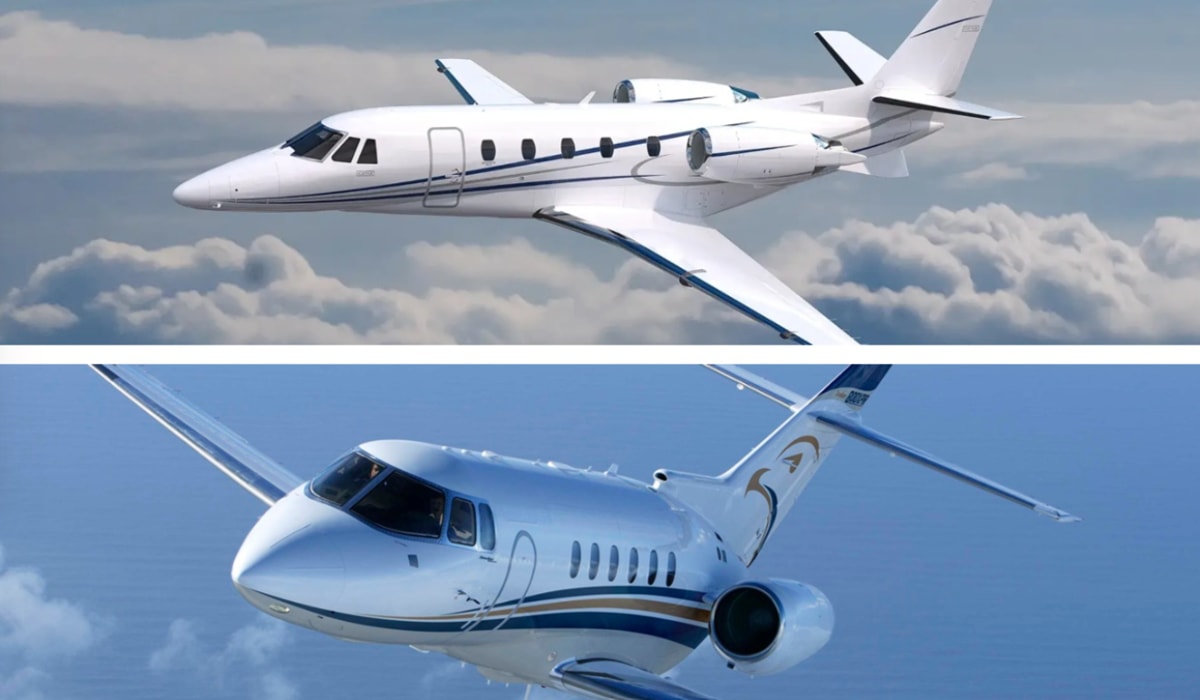
You’re standing at the private terminal, ready to book your first charter flight. The broker asks a simple question: “Light jet or midsize?” And suddenly, you’re stuck. What’s the actual difference? Which one makes sense for your trip?
This confusion costs travelers thousands. Pick too small, and you’re cramped for hours with your knees touching the seat in front. Choose too large, and you’re burning cash on empty seats and unused range.
Here’s what you need to know about light jets versus midsize jets, without the industry jargon.
What Makes a Light Jet Different
Light jets are the compact sedans of private aviation. They seat 6-8 passengers in a cabin that’s typically 4.5 to 5 feet tall and about 20 feet long. Think cozy, not spacious.
These aircraft handle flights up to 1,500-2,000 nautical miles. That’s roughly three hours in the air before you need fuel. Perfect for hopping from New York to Miami or Los Angeles to Denver.
Popular models include the Cessna Citation CJ3+, Embraer Phenom 300, and Learjet 75. They cruise around 400-500 mph and can climb to 45,000 feet. The cabins have basic amenities: leather seats, fold-out tables, maybe a small refreshment area. Don’t expect flight attendants or full galleys here.
The big advantage? Light jets land at smaller airports. Short runways aren’t a problem. This means you skip the congestion at major hubs and get closer to your actual destination.
What Midsize Jets Bring to the Table
Midsize jets step up the game. You’re looking at 8-9 passengers in a cabin where most adults can stand upright. The extra space isn’t just luxury, it’s functional. You can actually work during the flight.
Range expands to 2,500-3,000 nautical miles. That unlocks coast-to-coast trips without fuel stops. Boston to Los Angeles? No problem. New York to London? You’ll need to refuel, but many transcontinental routes open up.
The Hawker 900XP, Citation XLS+, and Gulfstream G150 dominate this category. They cruise faster than light jets and carry significantly more luggage. You also get enclosed lavatories, full galleys for hot meals, and room for a flight attendant.
Cabin height matters more than you’d think. At 5.7 feet in a Citation XLS+, you’re not hunching over. Business meetings happen comfortably. Conference calls don’t feel cramped.
The Real Differences That Matter
Range and Refueling
Light jets max out around 2,000 nautical miles. Plan a New York to Los Angeles trip and you’re stopping in Denver or Kansas City for fuel. Not ideal when time matters.
Midsize jets cover 2,500-3,000 nautical miles easily. Same NYC to LA route? Direct flight, no stops. You save 90 minutes or more on longer trips.
Passenger Comfort
Squeeze six people into a light jet for 90 minutes, and everyone’s fine. Stretch that to four hours, and you’ll hear complaints. The seats are comfortable enough, but personal space shrinks fast.
Midsize jets give each passenger breathing room. Conference-style seating lets four people face each other with a table between them. Two others can recline in the back. You’re not playing musical chairs with laptops and briefcases.
Luggage Reality
Light jets claim they handle baggage for their passenger count. Reality check: everyone’s bringing carry-on sized bags only. Golf clubs, skis, or multiple suitcases per person? Forget it.
Midsize jets solve this with external baggage compartments. Ski trip with six people? No problem. Week-long business trip with presentation materials? Pack what you need.
Cost Considerations
Here’s where it gets interesting. Light jets run $2,500-$4,000 per flight hour. Midsize jets cost $4,500-$7,000 per hour. Seems like an easy win for light jets, right?
Not exactly. Flying four people from Chicago to Dallas in a light jet costs roughly $12,000. Same trip in a midsize jet runs $18,000. But split that among eight people in the midsize jet? You’re at $2,250 per person versus $3,000 in the light jet.
The math changes based on passenger count and distance. Short trips with small groups favor light jets. Longer flights with more people swing toward midsize options.
Airport Access
Light jets need only 3,000-4,000 feet of runway. This opens up thousands of small airports nationwide. Trying to reach Aspen, Vail, or other mountain destinations? Light jets handle short runways better.
Midsize jets typically need 4,000-5,000 feet. Still accessible at most private airports, but you lose some flexibility. For 95% of trips, this doesn’t matter. For that 5%, it’s everything.
When to Choose a Light Jet
Pick light jets for regional business trips. You’re flying New York to DC, Houston to Dallas, or any route under 1,000 miles with fewer than six people. The efficiency makes sense.
Weekend getaways with family or friends work perfectly. Four people heading to Vegas for three days? Light jet handles it easily. The lower hourly rate keeps costs reasonable.
Time-sensitive trips to smaller airports benefit from light jets. Need to reach a resort town with a 3,500-foot runway? Your options narrow to light jets or turboprops.
Budget-conscious flights where you want private aviation benefits without premium costs. Light jets deliver the core experience: skip TSA, fly on your schedule, land close to your destination.
When Midsize Makes Sense
Business teams traveling cross-country need midsize jets. Eight executives flying New York to San Francisco for a board meeting? The nonstop flight and onboard workspace justify the cost.
International trips within midsize range get comfortable. Miami to Sao Paulo, Los Angeles to Cabo, New York to Bermuda—these routes work better when passengers can move around.
Longer domestic flights with luggage requirements point toward midsize. Ski trips, golf outings, extended business travel with samples or equipment all benefit from the extra capacity.
When productivity during flight matters, midsize jets deliver. Hold meetings, make confidential calls, spread out documents. The cabin space transforms travel time into work time.
The Bottom Line
Light jets excel at short-range flights with small groups. They’re cost-effective, access more airports, and deliver the private aviation experience without premium pricing. Perfect for 2-3 hour regional trips.
Midsize jets make sense for longer flights, larger groups, or when comfort during extended travel matters. The extra space, range, and amenities justify higher costs for the right trips.
Your decision comes down to three factors: passenger count, flight distance, and budget flexibility. Four people flying 800 miles? Light jet wins. Eight people crossing the country? Midsize makes economic sense.
Don’t let brokers upsell you on features you won’t use. Match the aircraft to your actual needs. That’s how you get value from private aviation, whether you choose light or midsize.
Ready to book your next flight? Compare specific routes and aircraft at your preferred charter broker. Ask about empty leg flights in both categories. Sometimes you’ll find midsize jets at light jet prices when they’re repositioning anyway. For more information, crew daily.
