


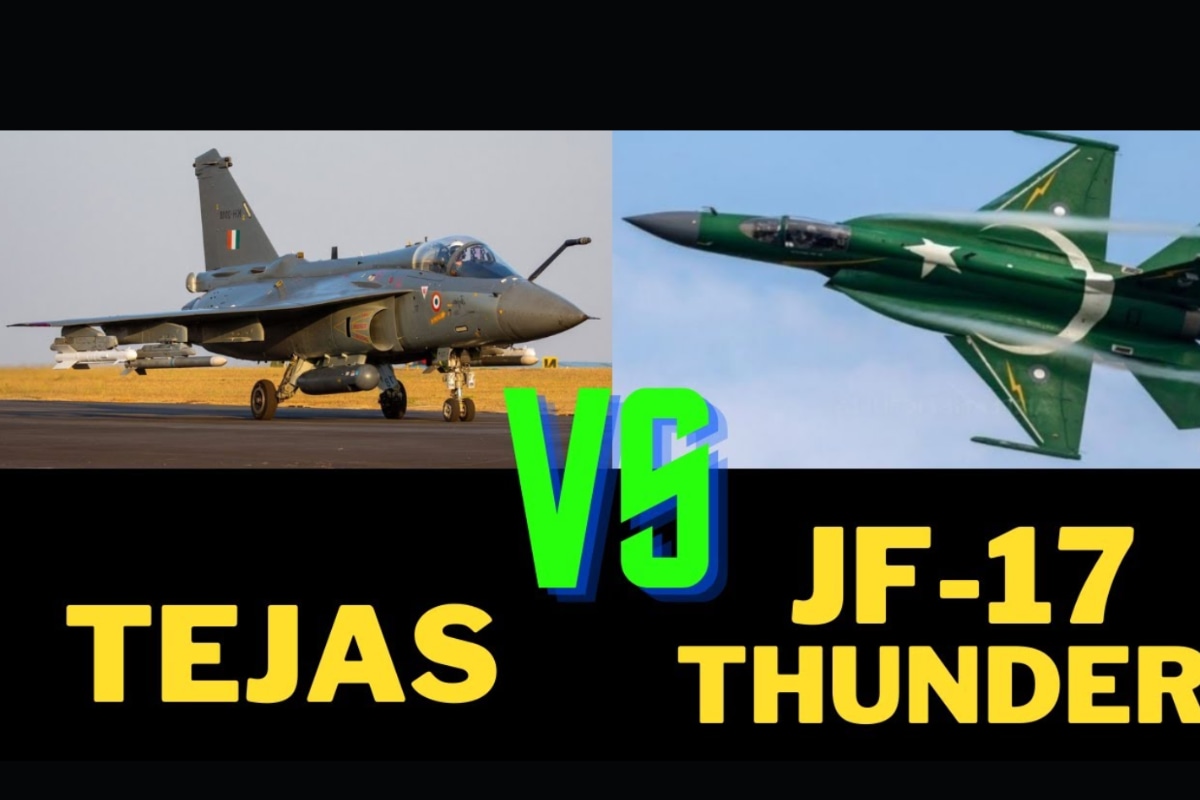
The JF-17 vs Tejas debate is like India-Pakistan cricket. Everyone picks sides. Nobody changes their mind. Pakistan went with China to build the Thunder. India decided to go solo with Tejas. Both wanted to ditch their ancient MiG-21s.
Forty years and billions of dollars later, we have two completely different fighters. One’s selling globally. The other can’t find a buyer.
Let’s see what the actual numbers say.
Quick Specs Comparison
| Specification | JF-17 Block 3 | Tejas Mk1A |
|---|---|---|
| First Flight | 2003 | 2001 |
| Operational | 2007 | 2020 |
| Unit Cost | $25-32 million | $42-58 million |
| Empty Weight | 6,586 kg | 6,560 kg |
| Max Speed | Mach 1.6 | Mach 1.8 |
| Service Ceiling | 16,500 m | 15,250 m |
| Combat Radius | 1,350 km | 500 km (850 with tanks) |
| Hardpoints | 7 | 8 |
| Max Payload | 3,800 kg | 4,000 kg |
The Development Story
JF-17 took a rejected Soviet MiG-33 design. China bought it cheap in 1995. Pakistan jumped in as partner. First jet flew in 2003. Production started 2007. Total development time: 12 years from start to service.
Tejas started in the 1980s. Lots of delays. Engine problems. Sanction issues. Design changes every few years. First flight 2001. Actually operational in 2020. Total development time: Nearly 40 years. That’s not a typo. Four decades.
Engine Performance
| Engine Specs | JF-17 (RD-93) | Tejas (GE F404) |
|---|---|---|
| Max Thrust | 84.5 kN | 85 kN |
| Thrust-to-Weight | 0.95 | 1.07 |
| Origin | Russia | USA |
Tejas has better thrust-to-weight. Climbs faster. Turns tighter. Accelerates quicker. JF-17 depends on Russian engines. Tejas depends on American engines. Neither is truly independent. The Tejas Mk2 will get the bigger GE F414 engine. That’s 98 kN thrust. Significant jump.
Radar & Avionics
JF-17 Block 3:
- KLJ-7A AESA radar
- Detection range: 170 km
- Tracks 15 targets, engages 4
- Chinese electronic warfare suite
Tejas Mk1A:
- Israeli EL/M-2052 AESA radar
- Detection range: 148 km
- Better jamming resistance
- Indigenous electronic warfare systems
JF-17 sees farther. Tejas has better radar quality. Both work fine for their mission.
The Real Combat Test
February 2019. Pakistan and India had an aerial clash.
JF-17s participated. Shot down enemy aircraft according to Pakistan. Completed missions. All jets returned safely.
That’s real combat. Against a capable enemy. With modern weapons.
Tejas? Training missions only. No hostile engagements. Zero combat experience.
You can’t fake battle testing.
Export Market Reality
JF-17 Sales:
- Pakistan: 138+ aircraft
- Myanmar: 16 aircraft
- Nigeria: 3 aircraft
- Azerbaijan: 40 ordered
- Iraq: 12 aircraft
Total foreign sales: 70+ jets, $2+ billion in revenue.
Tejas Export Attempts:
| Country | Result |
|---|---|
| Malaysia | Lost to Korean FA-50 |
| Egypt | No progress |
| Argentina | Rejected |
| Sri Lanka | Talks dead |
| Philippines | Dropped |
| Nigeria | Chose JF-17 instead |
Total exports: Zero. Not one single aircraft. Nigeria literally picked JF-17 over Tejas. That tells you everything about market confidence.
Why JF-17 Sells?
Price matters. JF-17 costs $25 million. Tejas costs $50 million. That’s double. No political strings. Pakistan doesn’t lecture buyers about human rights. China doesn’t either. Combat proven. Buyers want jets that actually fought. Not training aircraft.
British components in Tejas create sanction risks. Countries remember what happened to Pakistan’s F-16s. Simple math explains the export gap.
Production Numbers
PAC Kamra builds 16-25 JF-17s yearly. Consistent. Reliable. 138+ already flying with Pakistan. HAL produces 8-16 Tejas annually. Ramping up slowly. Only 40+ in Indian service. JF-17 has manufacturing momentum. Tejas is catching up but way behind.
Flight Performance
| Metric | JF-17 | Tejas | Winner |
|---|---|---|---|
| Top Speed | Mach 1.6 | Mach 1.8 | Tejas |
| Turn Time | 26 seconds | 24 seconds | Tejas |
| Service Ceiling | 16,500 m | 15,250 m | JF-17 |
| Combat Radius | 1,350 km | 500 km | JF-17 |
Tejas is faster and more agile. Better for dogfights. JF-17 flies higher and farther. Better for deep strikes. Different strengths for different missions.
Technology Approach
Tejas uses 45% composite materials. Advanced stuff. Lighter airframe. Better stealth characteristics. Full digital fly-by-wire on all three axes. Computer controls everything. Allows unstable designs for better maneuverability. JF-17 sticks with metal construction. Aluminum and steel. Cheaper. Easier to fix in the field.
Hybrid fly-by-wire. Digital on pitch only. Mechanical for roll and yaw. Good enough for the job. Tejas is more advanced technically. JF-17 is more practical operationally.
Read Also: JF-17 Thunder: Saudi Arabia–Pakistan Mega Deal
Weapons Capability
Both carry modern weapons. Both support beyond visual range combat. Both have precision strike capability. JF-17 uses Chinese missiles mainly. PL-5, SD-10, CM-400AKG. Also compatible with some Western weapons. Tejas uses Israeli and Indian missiles. Derby, Python-5, Astra. Brahmos-NG coming soon. Payload difference is minimal. 3,800 kg vs 4,000 kg. Both adequate.
Maintenance Reality
JF-17’s metal construction makes field repairs easier. You can fix aluminum with basic tools. Battle damage repair is simpler. Parts availability is excellent. Pakistan and China both produce them. Russian engine support exists worldwide.
Tejas needs specialized composite repair. Not every base can handle it. Requires trained technicians and special equipment. Supply chain is maturing but still developing. Everything comes from India mostly. Operational availability rates matter. JF-17 wins here.
Operating Costs
| Cost Type | JF-17 | Tejas |
|---|---|---|
| Per Flight Hour | $3,000 | $4,000-5,000 |
| Annual Per Aircraft | ~$450,000 | ~$600,000+ |
JF-17 is cheaper to fly. Simple design keeps costs down. Matters for developing countries with tight budgets.
Future Plans
JF-17 Block 4 (PFX) is under development. Indigenous AESA radar. Better stealth features. More advanced electronic warfare. Will bridge to Pakistan’s fifth-generation program. Keeps the platform relevant through 2040. Tejas Mk2 promises major upgrades. Bigger engine. Longer fuselage. 11 hardpoints instead of 8.
Completely new AESA radar. Modern avionics suite. Basically a different aircraft. Both programs are evolving. The arms race continues.
The Honest Verdict
JF-17 wins on practicality. Lower cost. Combat proven. Actually selling. Easier to maintain. Ready to fight today. Tejas wins on technology. More advanced systems. Better performance specs. Indigenous Indian production.
For most countries? JF-17 makes more sense. You get capable aircraft cheap. No political drama. Proven in combat. For India? Tejas achieves strategic autonomy. No foreign dependency. Indigenous aerospace industry. Worth the premium.
The market has spoken. 70+ JF-17s exported. Zero Tejas sold. Numbers don’t lie. For more information, visit Crewdaily.com.
FAQs
Which is faster?
Tejas hits Mach 1.8. JF-17 maxes at Mach 1.6. Delta wing gives Tejas the speed edge.
Has either seen combat?
JF-17 fought in the 2019 Pakistan-India clash. Tejas has never engaged hostile aircraft.
Why can’t Tejas find buyers?
Double the price. No combat record. British parts create sanction risks. Production delays hurt credibility.
Which has better radar?
JF-17’s radar sees 170 km. Tejas sees 148 km. But Tejas has superior processing power. Different strengths.
What’s the real price difference?
JF-17 costs around $28 million. Tejas costs around $50 million. Nearly double for the Indian jet.
Which is more reliable?
JF-17 has higher availability rates. Metal construction is easier to maintain. Simpler systems mean fewer breakdowns.
