





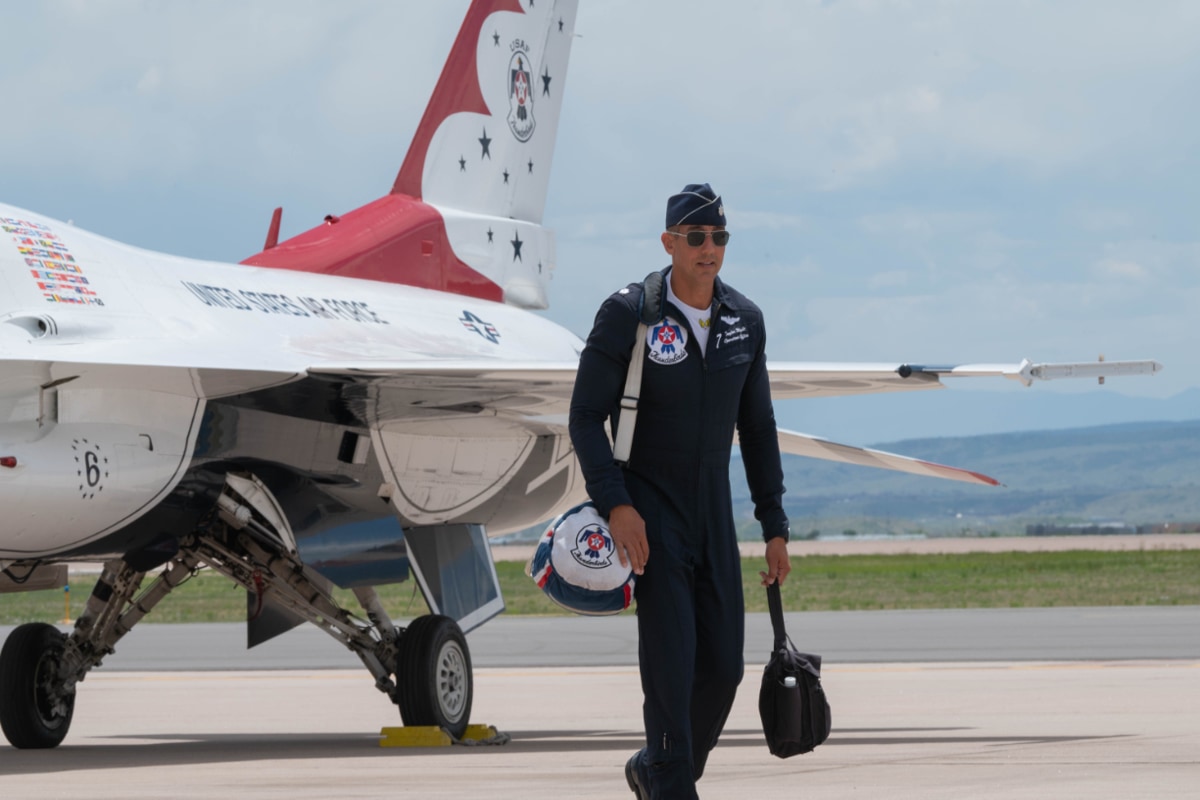
Thunderbird pilots earn between $70,000 and $130,000 per year, depending on rank, years of service, and allowances. Most Majors and Lieutenant Colonels earn $90,000–$110,000 annually, including flight pay and housing benefits.
Air Force officers who receive standard military compensation—not special “show pay.” Their earnings come from base salary, flight pay, housing allowances, and aviation bonuses that stack together into a competitive total package.
Thunderbird Pilot Salary Overview
A typical Thunderbird pilot makes $90,000 to $110,000 annually. Most team members hold the rank of Major or Lieutenant Colonel with 8-15 years of military service.
Thunderbird pilots are active-duty Air Force pilots, not civilians. They serve a two-year assignment with the demonstration squadron before returning to regular Air Force duties. Their pay follows standard Department of Defense tables—the same structure used for all military aviators.
The salary range reflects differences in rank, time in service, and location-based allowances. A newer Major in their first tour might earn closer to $85,000, while a senior Lieutenant Colonel approaches $125,000.
How Are Thunderbird Pilots Paid?
Military pilot compensation has four main parts. Base pay comes first. Then flight pay adds on top. Housing and food allowances adjust for location. Aviation bonuses reward commitment to flying careers.
Base Air Force Pay by Rank
Rank determines your starting point. A Major with 10 years of service earns $8,270 per month in base pay ($99,240 yearly). A Lieutenant Colonel at the same experience level makes $9,668 monthly ($116,016 yearly).
Time in service matters as much as rank. Two Majors can have different salaries if one has 8 years and the other has 14 years on active duty.
The 2025 military pay tables update annually with cost-of-living adjustments.
Flight Pay and Aviation Bonuses
All Air Force pilots receive Aviation Career Incentive Pay (ACIP), commonly called flight pay. This ranges from $150 to $1,000 per month based on years of aviation service.
Most Thunderbird pilots qualify for $650-850 monthly in ACIP—an extra $7,800 to $10,200 per year.
Aviation Bonus Pay (AvB) offers retention incentives. Pilots who commit to additional service years can receive $15,000 to $35,000 annually. Not every Thunderbird pilot takes this bonus, but many do before or during their assignment.
Housing, Food, and Other Allowances
Basic Allowance for Housing (BAH) covers rent or mortgage costs. Rates vary by duty station. Thunderbirds are based at Nellis Air Force Base in Las Vegas, where BAH for an O-4 (Major) ranges from $2,100 to $2,700 monthly depending on dependents.
Basic Allowance for Subsistence (BAS) adds $311.68 per month for food.
These allowances are tax-free, which increases their real value compared to civilian income.
What Affects a Thunderbird Pilot’s Salary?
Three factors drive pay differences among team members.
Rank and Time in Service
The Air Force promotes pilots based on performance and years served. Most Thunderbird slots go to Majors and Lieutenant Colonels. A few select Captains join the team, but they earn less—typically $75,000 to $85,000 total.
Higher rank always means higher pay at the same experience level.
Flight Experience and Qualifications
Years of rated aviation service determine ACIP levels. A pilot with 6 years of flight time gets $650 monthly. One with 14 years gets $840.
Qualification in multiple aircraft doesn’t directly increase pay, but it often correlates with longer service and higher bonuses.
Assignment Length with the Thunderbirds
The standard Thunderbird tour lasts two years. During this time, pilots maintain their regular Air Force pay structure. There’s no “performance bonus” for air shows.
Some pilots extend their tours or return for a second assignment. This doesn’t change their salary formula but may affect career timing for promotions.
Benefits Beyond Salary
Cash compensation tells half the story.
Healthcare: Full medical, dental, and vision coverage for the pilot and family. No premiums, copays, or deductibles for most services. Civilian equivalent value: $15,000-25,000 annually.
Retirement: Military pension after 20 years of service. A Lieutenant Colonel retiring at 20 years receives roughly $5,000 per month for life, adjusting for inflation.
Career prestige: The Thunderbirds represent the top 1% of Air Force pilots. This assignment accelerates promotions and opens doors to senior leadership roles.
Future civilian opportunities: Airlines aggressively recruit former Thunderbird pilots. Many transition to captain positions earning $200,000-300,000 within a few years.
The combination of guaranteed pension, healthcare, and career acceleration adds substantial value that salary alone doesn’t capture.
How Much Do Thunderbird Pilots Make Compared to Other Air Force Pilots?
Thunderbird pilots earn the same base compensation as other fighter pilots of equal rank and experience.
A Major flying F-16s at Kunsan Air Base makes the same base pay as a Thunderbird Major. The difference comes from location allowances—overseas assignments sometimes include additional pays.
Fighter pilots generally: $80,000 to $140,000 depending on rank, experience, and bonuses. Thunderbirds fall in the middle of this range.
Commercial airline pilots: First officers at major carriers start around $90,000-100,000 but reach $150,000-200,000 within 5-7 years. Captains earn $200,000-400,000. However, airlines don’t offer military pensions or zero-cost healthcare.
The Thunderbird advantage isn’t financial—it’s the career credential and leadership development.
Read Also: How Much Does a Private Jet Cost in 2026?
Is Becoming a Thunderbird Pilot Worth It?
From a pure salary perspective, no. You could make more flying for FedEx or Delta.
From a career and legacy perspective, absolutely.
Thunderbird pilots gain:
- Elite status in military aviation
- Accelerated promotion potential
- Leadership experience managing high-stakes operations
- Network connections across DoD and civilian aviation
- Lifetime achievement recognized across the industry
The $100,000 salary comes with benefits worth another $40,000-50,000, a pension plan, and a résumé line that opens every door.
Most former Thunderbirds say the experience was priceless, even if the paycheck wasn’t exceptional. For more information, visit Crew Daily.
Frequently Asked Questions
Do Thunderbird pilots get paid extra?
No. Thunderbird pilots receive standard Air Force compensation for their rank and experience. There’s no special “demonstration pay” or performance bonus for air shows. Their total earnings come from base pay, flight pay, housing allowances, and any aviation bonuses they qualified for before joining the team.
What rank are most Thunderbird pilots?
Most Thunderbird pilots are Majors (O-4) or Lieutenant Colonels (O-5) with 8-15 years of commissioned service. The team occasionally selects high-performing Captains (O-3), and the commander is typically a Lieutenant Colonel. This rank distribution ensures experienced aviators with 1,500+ flight hours in fighter aircraft.
How hard is it to become a Thunderbird pilot?
Extremely hard. Applicants need 1,000+ hours in fighters, an excellent service record, and command recommendation. The selection process includes interviews, background checks, and demonstration flights. Only 8-12 pilots serve at any time, with 2-4 openings per year from hundreds of qualified applicants. Acceptance rate is under 5%.