






When people search for the fastest military aircraft in the world, they usually want one clear answer: which aircraft holds the absolute speed record? But if we look deeper, the intent is broader than that.
Some readers want the fastest fighter jet. Some want historical records. Others want to know why modern jets don’t fly at Mach 3 anymore. And many are curious about hypersonic aircraft and future military speed.
So in this guide, we’ll cover all of it — accurately and with proper aviation context.
Speed in military aviation is measured in Mach number, not just miles per hour. Mach 1 equals the speed of sound, which varies depending on altitude and temperature. At sea level, Mach 1 is roughly 767 mph (1,235 km/h), but at high altitude it changes due to atmospheric conditions.
Now let’s answer the main question clearly.
Table of Contents
ToggleWhat Is the Fastest Military Aircraft Ever Built?
The fastest operational military aircraft ever built is the
Lockheed SR-71 Blackbird.
It reached speeds above Mach 3.3, which translates to more than 2,100 mph.


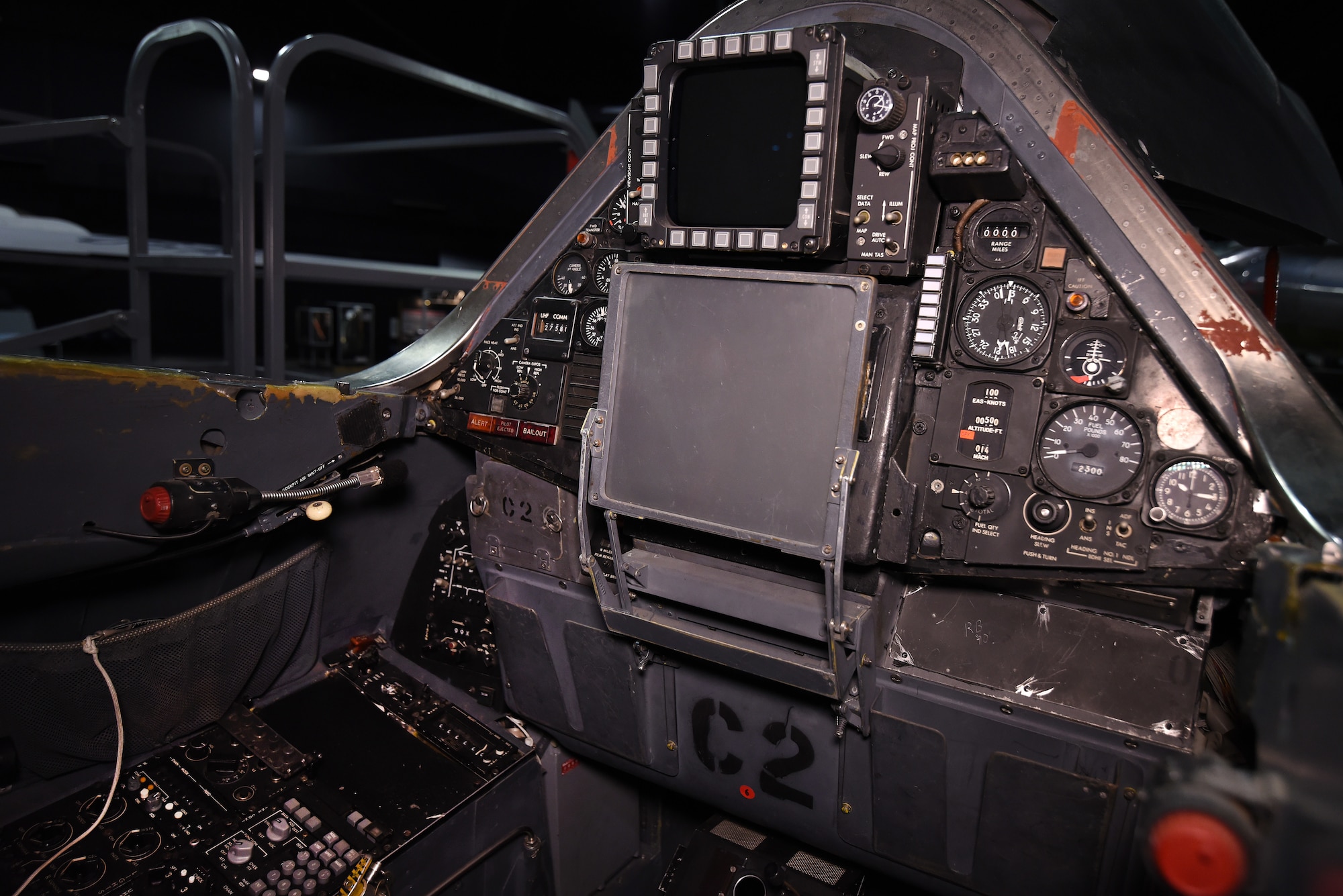
The SR-71 was not a fighter jet. It was a high-altitude reconnaissance aircraft developed by Lockheed’s Skunk Works for the United States Air Force during the Cold War. Its mission was simple but extremely demanding: fly higher and faster than any surface-to-air missile could intercept.
What made it extraordinary was not just speed, but how it achieved that speed.
The aircraft was built largely from titanium to withstand extreme aerodynamic heating. At Mach 3+, air friction heated the airframe to over 500°F. The fuselage actually expanded during flight.
It used Pratt & Whitney J58 turbojet engines, which operated partially like ramjets at high speed. The variable geometry air intake system controlled shock waves entering the engine, allowing stable supersonic combustion.
Even in 2026, no operational manned military aircraft has surpassed its sustained speed record.
The Cold War Speed Race: Why Mach 3 Was Strategic
To understand why aircraft like the SR-71 and the MiG-25 were built, we need historical context.
During the 1960s, both the United States and the Soviet Union were developing high-altitude bombers and long-range nuclear delivery systems. Air defense systems were improving rapidly. Radar networks were expanding. Surface-to-air missiles were becoming more capable.
The solution at the time was altitude and speed.
If an aircraft could fly high enough and fast enough, it could avoid interception. That doctrine drove the design of extreme-speed interceptors and reconnaissance platforms.
Speed was not about air combat maneuvering. It was about survival and strategic intelligence.
Top 10 Fastest Military Aircraft (Operational Ranking)
Below are the fastest operational military aircraft ever fielded by air forces worldwide. This ranking excludes experimental-only platforms and civilian supersonic aircraft.
1. Lockheed SR-71 Blackbird – Mach 3.3+
Role: Strategic reconnaissance
Country: United States
Status: Retired (1998)
Still the undisputed speed champion of operational military aviation.
2. MiG-25 – Mach 2.83
The MiG-25 Foxbat was designed to intercept American bombers like the B-70 Valkyrie. It prioritized raw speed and climb rate over agility.
However, sustained flight near Mach 2.8 could severely damage its engines. This highlights an important distinction between maximum speed and sustainable operational speed.
3. MiG-31 – Mach 2.83
An evolution of the MiG-25, the MiG-31 added advanced radar and long-range missile capability. It remains one of the fastest active interceptor aircraft in service.
4. F-15 Eagle – Mach 2.5+
The F-15 combines high thrust-to-weight ratio with aerodynamic efficiency. It remains one of the most capable air superiority fighters ever built.
5. F-111 Aardvark – Mach 2.5
Designed for deep strike missions, the F-111 featured variable-sweep wings that optimized performance across subsonic and supersonic regimes.
6. Su-27 – Mach 2.35
7. MiG-29 – Mach 2.3
8. F-22 Raptor – Mach 2.25
9. F-4 Phantom II – Mach 2.23
10. Eurofighter Typhoon – Mach 2.0
| Rank | Aircraft | Country | Max Speed | Top Speed (mph) | Role | Engine Type | Service Ceiling | Status (2026) |
|---|---|---|---|---|---|---|---|---|
| 1 | Lockheed SR-71 Blackbird | USA | Mach 3.3+ | 2,193 mph | Reconnaissance | Turbojet (J58) | 85,000 ft | Retired |
| 2 | MiG-25 | USSR | Mach 2.83 | 1,900 mph | Interceptor | Turbojet | 80,000 ft | Retired |
| 3 | MiG-31 | Russia | Mach 2.83 | 1,865 mph | Interceptor | Turbofan | 82,000 ft | Active |
| 4 | F-15 Eagle | USA | Mach 2.5+ | 1,650 mph | Air Superiority | Turbofan | 65,000 ft | Active |
| 5 | F-111 Aardvark | USA | Mach 2.5 | 1,650 mph | Strike | Turbofan | 60,000 ft | Retired |
| 6 | Su-27 | USSR/Russia | Mach 2.35 | 1,550 mph | Air Superiority | Turbofan | 62,000 ft | Active |
| 7 | MiG-29 | USSR/Russia | Mach 2.3 | 1,520 mph | Multirole Fighter | Turbofan | 59,000 ft | Active |
| 8 | F-22 Raptor | USA | Mach 2.25 | 1,500 mph | Stealth Fighter | Turbofan | 65,000 ft | Active |
| 9 | F-4 Phantom II | USA | Mach 2.23 | 1,470 mph | Multirole Fighter | Turbojet | 60,000 ft | Limited Service |
| 10 | Eurofighter Typhoon | Europe | Mach 2.0 | 1,320 mph | Multirole Fighter | Turbofan | 55,000 ft | Active |
Fastest Fighter Jet vs Fastest Aircraft: Understanding the Difference
Many readers search for the “fastest fighter jet in the world.” That is slightly different from the fastest military aircraft overall.
The SR-71 was faster, but it was not a fighter. Among fighter jets, the MiG-31 and MiG-25 remain among the fastest in terms of maximum dash speed.
However, modern fighters like the F-22 prioritize supercruise, stealth geometry, and advanced avionics over maximum Mach number.
This shift reflects modern combat doctrine.
Why Modern Fighter Jets Don’t Exceed Mach 3
This is one of the most misunderstood topics in aviation.
Flying at Mach 3 generates enormous thermal stress. Aerodynamic heating increases structural strain and radar signature. Fuel consumption increases dramatically when using afterburners.
Modern air combat emphasizes:
-
Low radar cross-section
-
AESA radar
-
Electronic warfare systems
-
Beyond-visual-range missile engagement
-
Data fusion
Aircraft like the F-22 Raptor can supercruise at around Mach 1.5 without afterburners, which is far more tactically useful than a short Mach 3 dash.
Speed is important. But survivability, detection range, and missile capability now define air superiority.
Engineering Factors That Limit Maximum Speed
Several aerospace engineering factors determine how fast a military aircraft can fly:
1. Thrust-to-Weight Ratio
More thrust enables higher acceleration and climb rate.
2. Engine Design
Turbojets perform better at high supersonic speeds.
Low-bypass turbofans balance fuel efficiency and thrust.
3. Air Intake Geometry
Shockwave control becomes critical above Mach 2.
4. Structural Materials
Titanium alloys handle heat better than aluminum.
5. Fuel Capacity
High-speed flight burns fuel rapidly, reducing combat radius. Speed is always a trade-off.
Hypersonic Aircraft and Future Military Speed
Hypersonic flight begins at Mach 5. Programs supported by DARPA continue to explore scramjet propulsion and high-speed atmospheric flight.
The Boeing X-43 achieved Mach 9.6 in testing. However, it was unmanned and experimental. As of 2026, no operational manned military aircraft flies at sustained hypersonic speed.
Hypersonic missiles exist. Hypersonic fighters do not.
Frequently Asked Questions
What is the fastest military aircraft in history?
The Lockheed SR-71 Blackbird holds the record among operational military aircraft, reaching speeds above Mach 3.3.
What is the fastest fighter jet currently in service?
The MiG-31 remains one of the fastest active interceptor aircraft, capable of Mach 2.83 under optimal conditions.
Why was the SR-71 retired if it was so fast?
Operational cost, satellite reconnaissance improvements, and evolving intelligence systems reduced its strategic necessity.
What does Mach 1 equal in mph?
At sea level, Mach 1 equals approximately 767 mph, though this changes with altitude.
Final Analysis
If we define speed purely by maximum Mach number, the SR-71 Blackbird remains unmatched. If we define combat effectiveness, modern stealth fighters dominate. Military aviation has evolved from a race for speed to a race for information dominance. And that is the real story behind the fastest military aircraft in the world. For more information, visit crewdaily.com.