







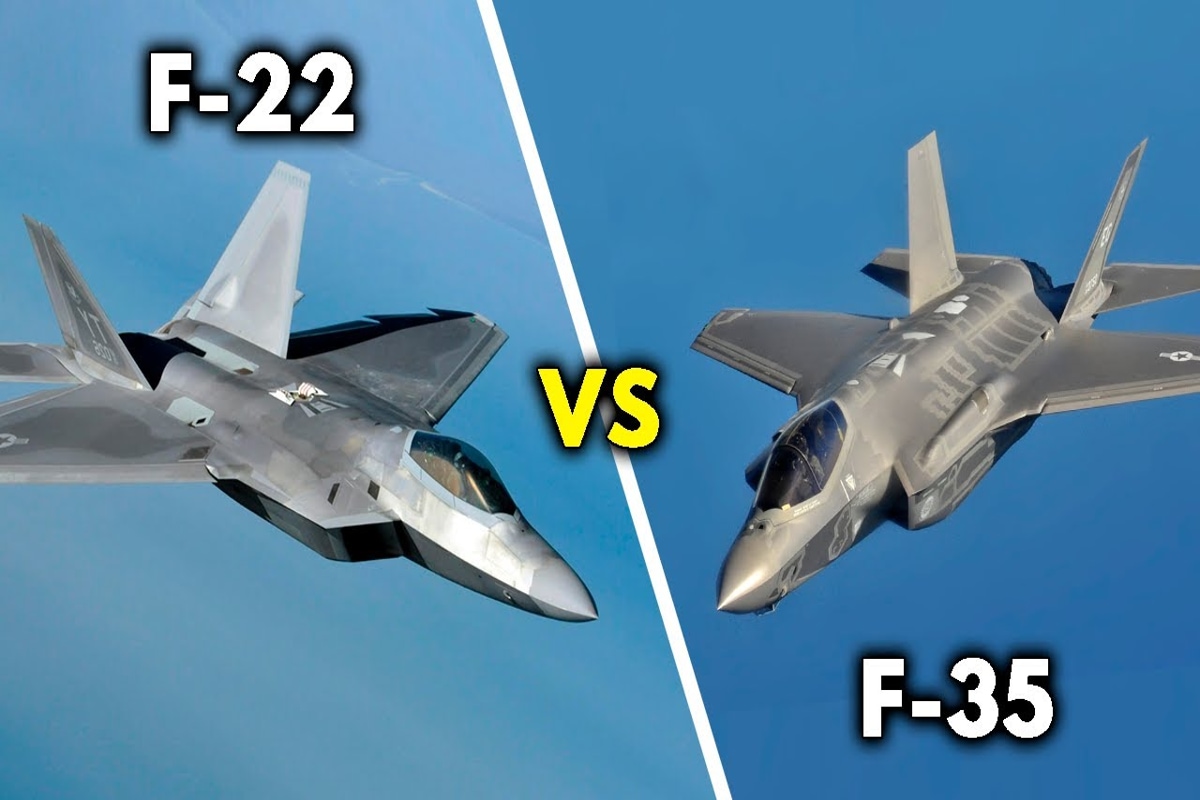
The F-22 vs F-35 debate splits aviation enthusiasts and military experts alike. Both jets wear the same fifth-generation badge, but they fight very different battles. The F-22 Raptor hunts enemy fighters with brutal efficiency. It hits Mach 2.25 and tears through contested airspace like nothing else can.
The F-35 Lightning II takes a different approach entirely. It balances air combat with ground strikes, reconnaissance, and electronic warfare.
Think of the F-22 as a heavyweight boxer built for knockouts. The F-35 plays chess while everyone else plays checkers. Speed tells part of the story in the F-22 vs F-35 matchup. The Raptor climbs at 62,000 feet per minute and dominates dogfights with thrust-vectoring engines. The Lightning II tops out at Mach 1.6 but carries advanced sensors that see threats before enemies know they’re there.
Cost separates them dramatically too. Each F-22 ran taxpayers around $334 million when you count development costs. Only 187 were built before production stopped in 2012.
The F-35 costs roughly $82-109 million per unit depending on the variant, with over 1,200 delivered globally. The F-22 vs F-35 comparison isn’t about which jet wins. It’s about understanding what each does best and why both matter for modern warfare.
F-22 vs F-35 Dogfight: Raw Power Meets Smart Tech
Put an F-22 against an F-35 in a dogfight and the Raptor wins almost every time. The F-22 pulls pitch rates over 40 degrees per second. Its twin Pratt & Whitney F119 engines pump out 70,000 pounds of thrust with thrust vectoring that moves ±20 degrees.
This lets the Raptor outmaneuver practically anything in the sky. The F-35 maxes out around 28 degrees per second in sustained turns. It lacks thrust vectoring entirely. Former Air Force Chief of Staff Gen.
Mark Welsh said it straight: the F-35 “was never designed to be the next dogfighting machine.” The Lightning II’s single F-135 engine delivers strong performance but can’t match the Raptor’s thrust-to-weight ratio of 1.25 in full afterburner. In close-range knife fights, the F-22’s agility dominates.
But modern air combat happens beyond visual range most of the time. The F-35’s sensor fusion and electronic warfare systems give it different advantages.
It detects threats earlier and coordinates with other aircraft seamlessly. Retired Marine Corps pilot David Berke flew both jets extensively.
He explains the F-35 acts as a “quarterback” for the entire battlespace. It shares targeting data instantly with ground forces, ships, and other aircraft. The F-22 excels at pure air superiority. The F-35 excels at information warfare.
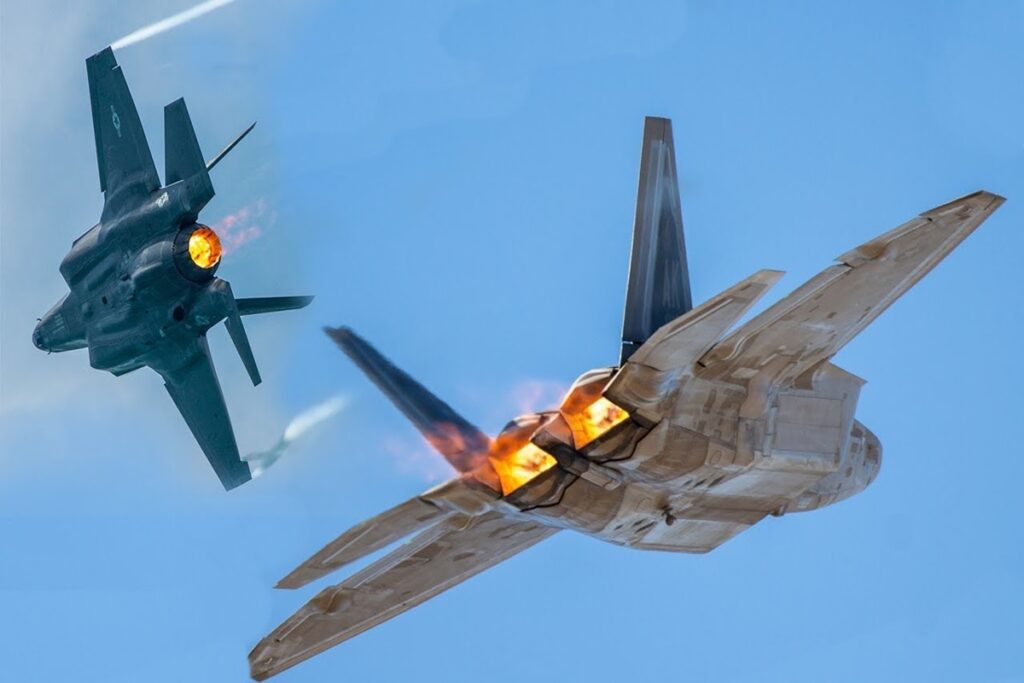

Yes, the F-22 is larger than the F-35 in every dimension. The Raptor stretches 62.1 feet long compared to the Lightning II’s 50.4 feet. Its wingspan measures 44.5 feet versus the F-35’s 35 feet. The F-22 stands 16.5 feet tall while the F-35 reaches 14 feet. Maximum takeoff weight tells the same story. The F-22 tips the scales at 83,500 pounds fully loaded.
The F-35 maxes out at 70,000 pounds. This size difference reflects their distinct roles. The F-22 needs more internal fuel and weapons capacity for extended air superiority missions. The F-35 prioritizes a smaller, more versatile airframe for multi-role operations across different military branches.
F-22 vs F-35: Complete Specifications
| Specification | F-22 Raptor | F-35 Lightning II |
|---|---|---|
| Length | 62.1 ft (18.9 m) | 50.4 ft (15.4 m) |
| Wingspan | 44.5 ft (13.6 m) | 35 ft (10.7 m) |
| Height | 16.5 ft (5.0 m) | 14 ft (4.3 m) |
| Max Takeoff Weight | 83,500 lbs (37,869 kg) | 70,000 lbs (31,752 kg) |
| Max Speed | Mach 2.25 (1,500+ mph) | Mach 1.6 (1,200 mph) |
| Supercruise | Yes (Mach 1.5+) | No |
| Climb Rate | 62,000 ft/min | 45,000 ft/min |
| Combat Radius | 590 nautical miles | 670 nautical miles |
| Service Ceiling | 65,000 ft | 50,000 ft |
| Engine | 2× Pratt & Whitney F119 | 1× Pratt & Whitney F135 |
| Thrust (Total) | 70,000 lbs | 43,000 lbs |
| Thrust Vectoring | Yes (±20°) | No |
| Internal Fuel | 18,000 lbs | 18,250 lbs (F-35A) |
| Unit Cost | $334M (with R&D) | $82-109M |
| Turn Rate | 40+ degrees/second | ~28 degrees/second |
| First Flight | 1997 | 2006 |
| Total Produced | 187 | 1,200+ (ongoing) |
Cost Comparison
The F-35 plays chess while everyone else plays checkers. Speed tells part of the story in the F-22 vs F-35 matchup. The Raptor climbs at 62,000 feet per minute and dominates dogfights with thrust-vectoring engines.
The Lightning II tops out at Mach 1.6 but carries advanced sensors that see threats before enemies know they’re there. Cost separates them dramatically too. Each F-22 ran taxpayers around $334 million when you count development costs.
Only 187 were built before production stopped in 2012. The F-35 costs roughly $82-109 million per unit depending on the variant, with over 1,200 delivered globally. The F-22 vs F-35 comparison isn’t about which jet wins. It’s about understanding what each does best and why both matter for modern warfare.
F-22 vs F-35 RCS: Stealth Levels Compared
The F-22 vs F-35 debate splits aviation enthusiasts and military experts alike. Both jets wear the same fifth-generation badge, but they fight very different battles. The F-22 Raptor hunts enemy fighters with brutal efficiency. It hits Mach 2.25 and tears through contested airspace like nothing else can. The F-35 Lightning II takes a different approach entirely. It balances air combat with ground strikes, reconnaissance, and electronic warfare.
Think of the F-22 as a heavyweight boxer built for knockouts. The F-35 plays chess while everyone else plays checkers. Speed tells part of the story in the F-22 vs F-35 matchup. The Raptor climbs at 62,000 feet per minute and dominates dogfights with thrust-vectoring engines. The Lightning II tops out at Mach 1.6 but carries advanced sensors that see threats before enemies know they’re there.
Cost separates them dramatically too. Each F-22 ran taxpayers around $334 million when you count development costs. Only 187 were built before production stopped in 2012. The F-35 costs roughly $82-109 million per unit depending on the variant, with over 1,200 delivered globally. The F-22 vs F-35 comparison isn’t about which jet wins. It’s about understanding what each does best and why both matter for modern warfare.
Read Also: Su-35 vs Rafale: Speed, Weapons, Radar & Combat Comparison
F-35 vs F-22 Speed: The Supercruise Advantage
The F-22 vs F-35 debate splits aviation enthusiasts and military experts alike. Both jets wear the same fifth-generation badge, but they fight very different battles. The F-22 Raptor hunts enemy fighters with brutal efficiency. It hits Mach 2.25 and tears through contested airspace like nothing else can. The F-35 Lightning II takes a different approach entirely. It balances air combat with ground strikes, reconnaissance, and electronic warfare. T
hink of the F-22 as a heavyweight boxer built for knockouts. The F-35 plays chess while everyone else plays checkers. Speed tells part of the story in the F-22 vs F-35 matchup. The Raptor climbs at 62,000 feet per minute and dominates dogfights with thrust-vectoring engines. The Lightning II tops out at Mach 1.6 but carries advanced sensors that see threats before enemies know they’re there. Cost separates them dramatically too. For more information, visit crewdaily.com.