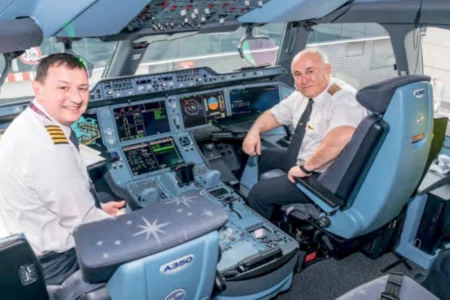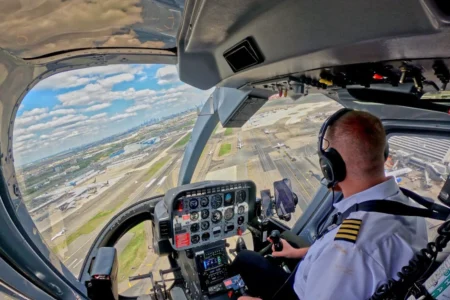






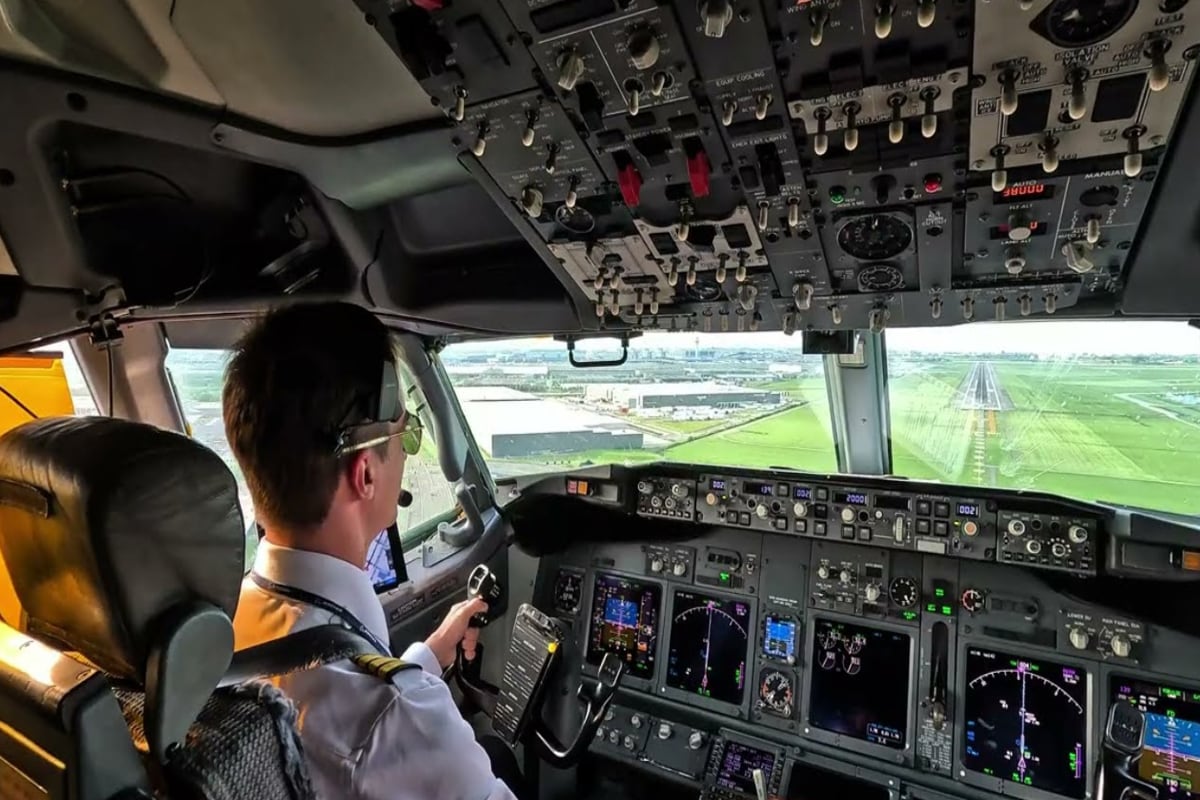
Do Pilots Still Land the Plane Themselves? Yes, pilots still land planes themselves in most flights. Commercial pilots manually control landings about 90-95% of the time. Autoland systems exist but only get used in specific low-visibility conditions at certified airports.
The pilot always monitors, makes decisions, and takes control if needed. Even during autoland approaches, pilots manage thrust, configure flaps, and stay ready to intervene. Automation assists pilots—it doesn’t replace them. The final responsibility for every landing sits with the human crew in the cockpit, regardless of which systems are active.
How Aircraft Landings Actually Work (Pilot Perspective)?
Landing an aircraft involves precise phases that pilots actively manage from several miles out.
The approach begins 10-30 miles from the runway. Pilots configure the aircraft by extending flaps, lowering landing gear, and reducing speed to approach speed—typically 130-160 knots for commercial jets. Air traffic control vectors the aircraft onto the final approach path, usually 3 degrees down toward the runway.
On final approach, pilots align with the runway centerline while maintaining the correct glide path. They monitor altitude, speed, descent rate, and position continuously. The autopilot can fly this segment, but pilots must stay engaged with hands near controls.
The flare happens 20-50 feet above the runway. Pilots pull back on the control column to raise the nose slightly, reducing descent rate. This transition from descent to level flight requires timing and feel that autopilot systems handle differently than human pilots.
Touchdown occurs when the main wheels contact the runway. Pilots then lower the nose wheel, deploy spoilers to kill lift, and apply brakes. Reverse thrust helps slow the aircraft. These final seconds demand constant adjustments based on wind, runway conditions, and aircraft behavior.
Autopilot vs Autoland: What’s the Difference?
Most people confuse autopilot with autoland. They’re completely different systems with different capabilities.
Autopilot maintains heading, altitude, and speed during cruise and descent. It follows programmed routes and can fly approaches down to 200 feet above the runway. At that point, regulations require pilots to have visual contact with the runway or execute a missed approach. The autopilot disconnects, and pilots hand-fly the final seconds to touchdown.
Autoland is a separate, more advanced system that actually touches down on the runway without pilot control inputs. It requires three independent autopilot computers, dual flight management systems, and multiple redundant components. Most aircraft don’t have this capability—it’s typically found on larger commercial jets like the Boeing 777, Airbus A320 family, and wide-body aircraft.
The key difference: autopilot flies the plane but doesn’t land it. Autoland completes the entire landing including flare and touchdown.
Even with autoland engaged, pilots don’t sit idle. They monitor system performance, manage thrust levers, call out altitudes, and prepare to disconnect automation if anything looks wrong. One pilot’s hands stay on the controls throughout the approach, ready to take over instantly.
Autoland disengages immediately after touchdown. Pilots then manually steer, brake, and taxi the aircraft. No commercial airliner taxis itself to the gate.
When Do Pilots Land Manually? (Most of the Time)
Manual landings happen on approximately 95% of commercial flights worldwide.
Pilots hand-fly landings whenever weather permits visual approaches. This means cloud ceilings above 1,000 feet and visibility exceeding 3 miles. Most days at most airports meet these conditions easily.
Airlines require pilots to maintain manual landing proficiency. Captains and first officers alternate who flies each leg, and both regularly practice hand-flown approaches. Some airlines mandate a minimum number of manual landings per month to keep skills sharp.
Training emphasizes manual flying skills heavily. Simulator sessions include engine failures on approach, crosswind landings, rejected landings, and unusual attitude recoveries—all flown manually. The FAA and EASA require pilots to demonstrate consistent manual landing ability during checkrides.
Pilots prefer manual landings in many situations. Hand-flying gives better feel for wind conditions, turbulence, and aircraft energy management. Crosswinds above 15-20 knots often require manual techniques like wing-low or crab methods that autoland systems can’t handle.
Short runways get manual landings too. Pilots can touch down in a precise spot and apply maximum braking immediately. Autoland systems typically use more runway because they’re programmed conservatively.
Regional jets, turboprops, and smaller aircraft rarely have autoland capability. These pilots hand-fly virtually every landing throughout their careers.
When Does Autoland Get Used? (Low Visibility & ILS)
Autoland activates only when weather drops below minimums for manual approaches and the airport has the right equipment.
The Instrument Landing System (ILS) provides the precision guidance autoland needs. ILS transmits radio beams that define the exact approach path. Aircraft receivers interpret these signals and feed data to the flight computers.
ILS approaches have three categories based on visibility minimums:
CAT I allows approaches down to 200 feet ceiling and 1,800 feet visibility. Pilots must see the runway to continue and land manually.
CAT II permits approaches to 100 feet ceiling and 1,200 feet visibility. Some aircraft can autoland in CAT II conditions with proper certification.
CAT III has three subcategories. CAT IIIa allows 700 feet visibility. CAT IIIb permits 150 feet visibility. CAT IIIc theoretically allows zero visibility, though no airports currently certify for this.
Only CAT II and CAT III approaches support autoland operations. The airport must certify the ILS equipment, runway lighting, and ground systems to these higher standards. This costs millions and requires constant maintenance.
Fewer than 500 runways worldwide have CAT III certification. Major hubs like London Heathrow, San Francisco, and Frankfurt have it. Smaller regional airports rarely invest in this infrastructure.
Aircraft need special certification too. The airline must prove the plane’s autoland system works reliably through extensive testing. Pilots need additional training and recurrent checks demonstrating they can monitor autoland properly.
Weather conditions trigger autoland use. When fog, snow, or heavy rain reduces visibility below 1,800 feet, pilots may use autoland if available. Dense fog is the most common reason—particularly at airports prone to marine layer effects.
When asking do pilots land planes themselves, it’s important to note that both pilots must be qualified for CAT II/III operations. If one pilot lacks certification, autoland cannot be used—even if weather conditions require it—and the aircraft must divert to an airport with better visibility.
Is Autoland Safer Than Human Pilots? (Critical Comparison)
Autoland excels in specific conditions but can’t replace human judgment and adaptability.
Autoland advantages include perfect consistency. The system flies the same approach path every time with minimal deviation. It doesn’t get tired, distracted, or stressed. In thick fog with zero visual references, autoland removes the human element of spatial disorientation.
Precision is another strength. Autoland touchdowns happen within a few feet of the programmed spot. Descent rates stay smooth and controlled. The system processes sensor data faster than humans and makes tiny corrections constantly.
However, autoland has serious limitations. Crosswinds above 15-20 knots exceed most autoland limits. The system can’t apply wing-low techniques or make aggressive corrections for wind shear. Pilots must disconnect and hand-fly in gusty conditions.
Runway contamination creates problems. Ice, snow, or standing water affect braking and directional control after touchdown. Autoland doesn’t adjust for these conditions the way experienced pilots do. It can’t compensate if one main gear hits a slick patch while the other has grip.
System failures require immediate pilot takeover. If one autopilot computer disagrees with the others, autoland disengages automatically. Pilots then hand-fly the landing, often in the worst weather, with minimal time to transition.
Unexpected situations confuse automation. A vehicle on the runway, birds in the approach path, or sudden wind shifts require instant human decisions. Autoland follows its program regardless of changing circumstances.
Aviation safety statistics show manual landings and autoland have similar safety records when used appropriately. The key phrase is “when used appropriately”—pilots choose the right tool for each situation. This human decision-making process drives overall safety more than any single system capability.
Do Pilots Still Train for Manual Landings? (Absolutely)
Manual landing proficiency remains a cornerstone of pilot training and career-long requirements.
Initial airline training requires dozens of practice landings before flying passengers. New hires spend weeks in simulators hand-flying approaches in various conditions. Normal landings, crosswind landings, single-engine landings, and no-flap landings all get practiced repeatedly.
Recurrent training happens every six months for commercial pilots. Each simulator session includes multiple manual approaches and landings. Instructors fail systems, add weather challenges, and test decision-making under pressure. Pilots must demonstrate they can hand-fly confidently without relying on automation.
Line checks evaluate pilots during actual flights. FAA or company check airmen observe pilots flying normal trips and grade their performance. Manual landings factor heavily into these evaluations.
Some airlines mandate minimum monthly manual landings. This prevents over-reliance on automation and maintains muscle memory for hand-flying. Pilots who use autoland frequently still practice manual techniques to stay current.
The FAA publishes advisory circulars emphasizing manual flying skills. After several incidents where pilots couldn’t hand-fly effectively when automation failed, regulators pushed airlines to maintain stronger manual flying standards.
European authorities through EASA have similar requirements. The philosophy is consistent worldwide—automation assists pilots who must remain proficient at flying without it.
Why Autoland Is NOT Used on Every Flight?
Several practical limitations prevent widespread autoland use beyond low visibility situations.
Crosswind restrictions ground autoland systems quickly. Most autoland-certified aircraft limit crosswinds to 10-15 knots for automatic landings. Normal manual crosswind limits reach 30-38 knots. On windy days, pilots hand-fly because autoland simply can’t handle the conditions.
Airport infrastructure blocks autoland at most destinations. Without CAT II or CAT III ILS, autoland won’t engage. Installing this equipment costs $3-10 million per runway. Smaller airports can’t justify the expense for weather events that happen a few times per year.
Equipment redundancy requirements add weight and complexity. Autoland needs triple autopilots, dual radio altimeters, and backup hydraulic systems. This adds 500-1,000 pounds to the aircraft and increases maintenance costs. Budget airlines often order planes without full autoland capability to save money.
Operational costs matter too. Using autoland requires both pilots to maintain CAT II/III currency. This means extra simulator time, more frequent training, and documentation overhead. Airlines weigh these costs against how often they truly need autoland at their destinations.
Runway occupancy time increases slightly with autoland. The system uses conservative parameters that may float longer before touchdown. At busy airports, controllers prefer pilots who can nail precise touchdown points and clear the runway quickly.
Pilot proficiency concerns drive some airlines to encourage manual landings when safe. If pilots only hand-fly in emergencies, their skills degrade. Airlines want crews comfortable with manual flying so they’re ready when automation fails.
Airbus vs Boeing: Automation Philosophy Explained
Boeing and Airbus approach automation differently, affecting how pilots interact with landing systems.
Boeing philosophy emphasizes pilot authority. The pilot can overpower automation at any time by applying control pressure. If you pull back on the yoke hard enough, the autopilot disconnects. Boeing believes pilots should always feel directly connected to the aircraft’s flight controls.
Boeing aircraft use conventional control columns. Moving the yoke physically moves cables or hydraulic actuators that deflect control surfaces. Even with autopilot engaged, pilots feel resistance and feedback through the controls.
Airbus uses fly-by-wire with sidestick controllers. The sidestick sends electronic signals to flight computers, which then move control surfaces. There’s no physical connection between the stick and the actual flight controls.
Airbus philosophy trusts computers to prevent pilots from exceeding aircraft limits. The flight control laws won’t let pilots stall the plane or overstress the airframe in normal mode. Pilots work within an envelope the computers enforce.
During landings, these differences show clearly. In a Boeing, pilots can feel buffeting through the controls and adjust instinctively. In an Airbus, pilots rely more on instruments because the sidestick doesn’t provide the same tactile feedback.
Both manufacturers offer robust autoland systems. Boeing’s is on the 737 MAX, 777, and 787. Airbus includes it on the A320 family, A330, A350, and A380. Certification requirements from the FAA ensure both systems meet identical safety standards.
Pilot training differs slightly between manufacturers. Boeing training emphasizes manual flying skills throughout the curriculum. Airbus training includes more systems management and understanding automation modes.
Neither approach is inherently superior. Both philosophies have produced extremely safe aircraft with excellent safety records, and pilots adapt to whichever system they fly, becoming fully proficient in that automation style.
Common Myths About Planes Landing Themselves
Several misconceptions about autoland and pilot involvement circulate widely.
Myth: Pilots just watch screens and don’t do anything during autoland.
Reality: Pilots actively monitor multiple systems, manage thrust, call out altitudes, verify approach clearances, and prepare to disconnect automation if anything deviates. Their hands stay on or near the controls throughout. Workload during autoland often exceeds manual landings because monitoring demands such intense focus.
Myth: All modern planes can land themselves.
Reality: Many aircraft lack autoland capability entirely. Regional jets, most turboprops, older 737s, and budget airline fleets often don’t have the required systems. Even equipped aircraft need specific airport infrastructure that most runways don’t provide.
Myth: Autopilot means the plane flies itself completely.
Reality: Autopilot maintains programmed flight paths but requires constant pilot oversight. Pilots enter routes, approve changes, monitor performance, and intervene when needed. Calling it “autopilot” creates false impressions—”flight path management system” would be more accurate.
Myth: Autoland gets used because it’s safer than pilots.
Reality: Autoland gets used when visibility prevents safe visual landings. It’s a tool for specific conditions, not a safety upgrade over skilled pilots in good weather. Statistics show both methods achieve similar safety levels in appropriate conditions.
Myth: Pilots don’t need training if planes land automatically.
Reality: Automation increases training requirements. Pilots must understand how systems work, recognize malfunctions, and take over instantly when automation fails. Modern pilots train more extensively than earlier generations who hand-flew everything.
Frequently Asked Questions
Do pilots always land planes manually?
No, but they do most of the time. About 90-95% of commercial landings are flown manually by pilots. Autoland only gets used when fog, snow, or other weather reduces visibility below the minimums required for visual approaches. Even during autoland, pilots actively monitor all systems and can take over within seconds.
Can a plane land without a pilot?
Physically yes, but legally and practically no. Modern autoland systems can touch down without pilot control inputs, but regulations require two qualified pilots in the cockpit monitoring the approach. The pilots must be ready to take over instantly if anything goes wrong. No commercial airline operates flights without pilots.
What happens if autopilot fails during landing?
Pilots immediately take manual control and continue the approach. This scenario gets practiced extensively in training. Modern aircraft have triple-redundant autopilot systems for autoland approaches, so complete failures are extremely rare. If failure occurs above decision height, pilots assess whether to continue or execute a go-around based on weather and aircraft status.
Do pilots turn off autopilot every flight?
Yes, the autopilot disconnects before or during every landing. On manual approaches, pilots typically disconnect autopilot between 1,500 and 500 feet above the ground to hand-fly the final segment. During autoland approaches, the system disconnects automatically after touchdown. Pilots then manually steer and brake during rollout and taxi.
Is autoland used in emergencies?
Not typically. Autoland requires specific weather conditions, certified airports, and functioning aircraft systems. Most emergencies involve system failures that make autoland unavailable or inadvisable. Pilots train to hand-fly approaches with various emergencies because that’s the realistic scenario they’ll face. Autoland is for low visibility, not emergencies.
Who is responsible during autoland?
The pilot in command remains responsible for the safety of the flight at all times. During autoland, the pilot flying monitors automation while the pilot monitoring backs them up. If either pilot sees something wrong, they can disconnect automation and take manual control. The human crew never relinquishes responsibility to automation.
Final Verdict: Who Really Lands the Plane?
Pilots land planes. Automation helps in specific situations, but humans make every critical decision.
The pilot in command decides whether to use autoland or hand-fly based on weather, airport equipment, crew qualifications, and aircraft status. That decision requires judgment automation doesn’t possess. Throughout the approach, pilots monitor, manage, and prepare to intervene. After touchdown, pilots immediately resume manual control for braking and steering.
Do pilots land planes themselves? Yes, they do. The pilot in command decides whether to use autoland or hand-fly based on weather, airport equipment, crew qualifications, and aircraft status.
That decision requires judgment automation doesn’t possess. Throughout the approach, pilots monitor, manage, and prepare to intervene. After touchdown, pilots immediately resume manual control for braking and steering. For more information you can visit Crewdaily.com.