







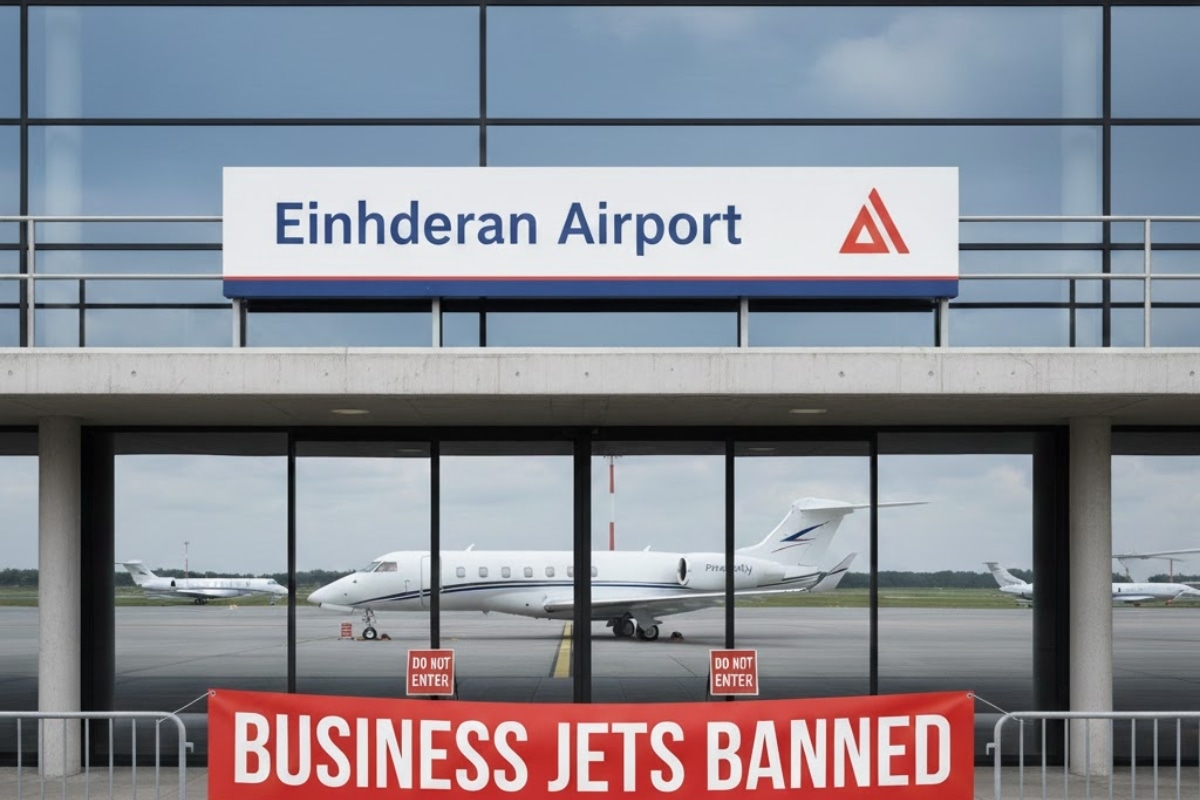
Eindhoven Airport in the Netherlands just dropped a bombshell on the business aviation world.
Starting in 2024, the airport officially banned business jets from using its facilities. No more private planes. No more executive charters. The decision sent shockwaves through Europe’s aviation community.
This isn’t just another policy tweak. It’s a clear signal that private aviation faces growing restrictions across Europe. Climate activists are cheering. Business travelers are scrambling for alternatives.
Let’s break down what actually happened and what it means for you.
What Is the Business Jet Ban at Eindhoven Airport?
The ban is straightforward but strict.
Eindhoven Airport now prohibits all business jets from landing or taking off. This includes private jets, corporate aircraft, and charter flights under 20 passengers.
The policy took effect in January 2024. Airport authorities aren’t making exceptions.
Only commercial airlines and military aircraft can use the facility now. The Dutch government backed the decision as part of its broader aviation policy.
If you had Eindhoven on your flight plan, you need a new route.
Why Did Eindhoven Airport Ban Business Jets?
Three main reasons drove this decision.
First, noise pollution became unbearable for nearby residents. Eindhoven sits close to residential areas. Business jets operating at odd hours created constant complaints. Local communities pushed hard for relief.
Second, environmental pressure played a massive role. The Netherlands committed to aggressive carbon reduction targets. Private jets became an easy target because they emit significantly more CO2 per passenger than commercial flights.
Third, capacity issues forced tough choices. Eindhoven wanted to prioritize commercial aviation that serves more people. Military operations also needed guaranteed access. Business jets got squeezed out.
The airport wasn’t alone in feeling this pressure. Multiple European cities face similar tensions between aviation growth and environmental goals.
How This Ban Affects Private and Corporate Flyers
The impact hits hard if you relied on Eindhoven.
Business executives who regularly flew into the region now face serious disruptions. Your convenient 45-minute flight just became a multi-hour journey with ground transportation added.
Charter operators lost a key hub. Companies that scheduled regular corporate flights through Eindhoven had to completely rebuild their operations.
Costs went up immediately. Alternative airports charge higher landing fees. Longer ground transfers mean more time and money. Some clients simply can’t justify the added expense.
Flexibility disappeared too. Last-minute business trips that once took hours to arrange now require days of planning. When time equals money, these delays hurt.
The scheduling nightmare is real. Popular alternative airports have limited slots. You might not get your preferred departure time anymore.
Which Airports Are Private Jet Operators Using Instead?
Private flyers scattered to several nearby options.
Rotterdam The Hague Airport became the closest alternative, about 100 kilometers northwest. It accepts business jets and offers good facilities. The catch? Capacity fills up fast during peak business hours.
Maastricht Aachen Airport sits 90 kilometers south. It welcomes private aviation and has less congestion. Ground transportation to Eindhoven’s business district takes roughly 75 minutes.
Amsterdam Schiphol remains an option despite being 125 kilometers away. It handles business jets but charges premium fees. Traffic and slot availability create headaches.
Antwerp Airport in Belgium attracts some traffic too. Distance and border crossing add complexity but it’s viable for certain routes.
Each alternative brings trade-offs. No perfect replacement exists for what Eindhoven offered.
Impact on Business Aviation in Europe
This ban signals a troubling trend for private aviation.
Other European airports are watching closely. Amsterdam already implemented restrictions on private jet movements. France debates similar measures at multiple regional airports.
The pattern is clear: business jets face increasing scrutiny continent-wide.
Charter companies and fixed-base operators worry about their future. If major airports start copying Eindhoven’s approach, the industry faces serious contraction.
Some experts predict a domino effect. When one major airport bans business jets successfully, others feel emboldened to follow.
The European Union’s environmental policies add fuel to this fire. As carbon reduction targets tighten, private aviation makes an easy political target.
Business aviation groups are fighting back with lobbying and public relations campaigns. But public opinion isn’t on their side right now.
Environmental Debate — Are Private Jet Bans Effective?
Here’s where it gets complicated.
Business jets do emit more CO2 per passenger than commercial flights. A private jet might produce 2 tons of carbon per hour while carrying just a handful of people.
But private aviation represents only 2% of total aviation emissions. Commercial airlines dwarf this figure.
Critics argue that banning business jets is symbolic rather than impactful. It feels good politically but doesn’t move the needle on climate change.
The industry responds with sustainability efforts. Sustainable aviation fuel (SAF) can reduce emissions by up to 80%. Newer aircraft models burn 20-30% less fuel than older generations.
Many operators now offer carbon offset programs. Some invest heavily in SAF and next-generation electric aircraft development.
The real question: Should policy target the lowest-hanging fruit or focus on the biggest emitters?
Eindhoven chose visibility over impact. The ban generates headlines and pleases constituents, even if environmental benefits remain modest.
What Private Jet Owners and Operators Should Do Next
If you fly business jets in Europe, adapt quickly.
Start by reviewing all your regular routes. Identify which ones used or might have used Eindhoven. Build alternative flight plans now before you need them urgently.
Monitor European aviation regulations religiously. Subscribe to industry updates. The landscape changes fast.
Build relationships with multiple FBOs across Europe. Don’t depend on single airports anymore. Diversification protects you when restrictions hit.
Consider investing in newer, more efficient aircraft. Regulators look more favorably on modern jets with better environmental profiles.
Explore SAF options wherever possible. Yes, it costs more. But it strengthens your position when facing political pressure.
Stay connected with business aviation associations. They provide early warnings about potential restrictions and coordinate industry responses.
Finally, prepare alternative transportation strategies. Sometimes ground transportation or commercial first-class beats navigating private jet restrictions.
The Road Ahead
The Eindhoven Airport business jet ban marks a turning point for European private aviation.
What seemed impossible just five years ago is now reality. A major European airport completely shut out business jets.
Other airports will study this closely. If Eindhoven faces no major economic backlash, expect copycats.
Private aviation must evolve or face more restrictions. Better environmental performance isn’t optional anymore—it’s survival.
For business travelers who depend on private jets, flexibility matters more than ever. The days of assuming any major airport welcomes your aircraft are over.
The aviation world is changing. Those who adapt earliest will navigate these challenges best. Stay informed. Plan ahead. And always have a backup airport ready. Fore more information, visit Crewdaily.com.
FAQs: Business Jets Banned at Eindhoven Airport
Are all private jets banned at Eindhoven Airport?
Yes, Eindhoven Airport prohibits all business jets regardless of size or type. This includes private jets, corporate aircraft, and charter flights carrying fewer than 20 passengers.
The ban covers both landing and takeoff operations. Only commercial airline flights and military aircraft can use the airport now. No exceptions are granted for emergency situations involving business jets either.
Is the ban temporary or permanent?
The ban is permanent as currently implemented. Eindhoven Airport authorities have not indicated any plans to reverse the decision. The policy formed part of a long-term strategic shift for the airport’s operations. Dutch government officials support the ban as part of broader environmental goals. Unless significant political or economic pressure forces a reversal, business jets won’t return to Eindhoven.
Can charter flights still operate at Eindhoven?
Only large charter flights using commercial-sized aircraft can operate. Small charter jets that typically serve business travelers face the same ban as private jets. If your charter uses an aircraft with more than 20 seats operating scheduled services, you might qualify.
But most executive charter operations using business jets cannot use Eindhoven anymore. You’ll need to route through alternative airports like Rotterdam or Maastricht.
Will other European airports impose similar bans?
Several European airports are considering similar restrictions. Amsterdam Schiphol already limits business jet movements during certain hours. French regional airports debate private aviation restrictions regularly. Geneva and Zurich face mounting pressure from environmental groups.
The trend across Europe clearly moves toward more restrictions on private aviation. Expect more airports to follow Eindhoven’s lead, especially in environmentally conscious countries like the Netherlands, Germany, and Scandinavia.
What happens if I accidentally fly to Eindhoven?
Don’t try it. The ban is strictly enforced through air traffic control. Business jets won’t receive landing clearance. If you file a flight plan to Eindhoven in a prohibited aircraft, controllers will reject it immediately. Attempting to land anyway could result in serious legal consequences and fines. Always verify your aircraft type is permitted before filing any flight plan to European airports.
Which nearby airport is the best Eindhoven alternative?
Rotterdam The Hague Airport is the closest viable option at 100 kilometers away. It offers good business aviation facilities and accepts all jet types. Maastricht Aachen Airport provides another solid choice with less congestion.
Your best option depends on your final destination and scheduling needs. Many operators now use multiple alternatives depending on slot availability and ground transportation requirements.