


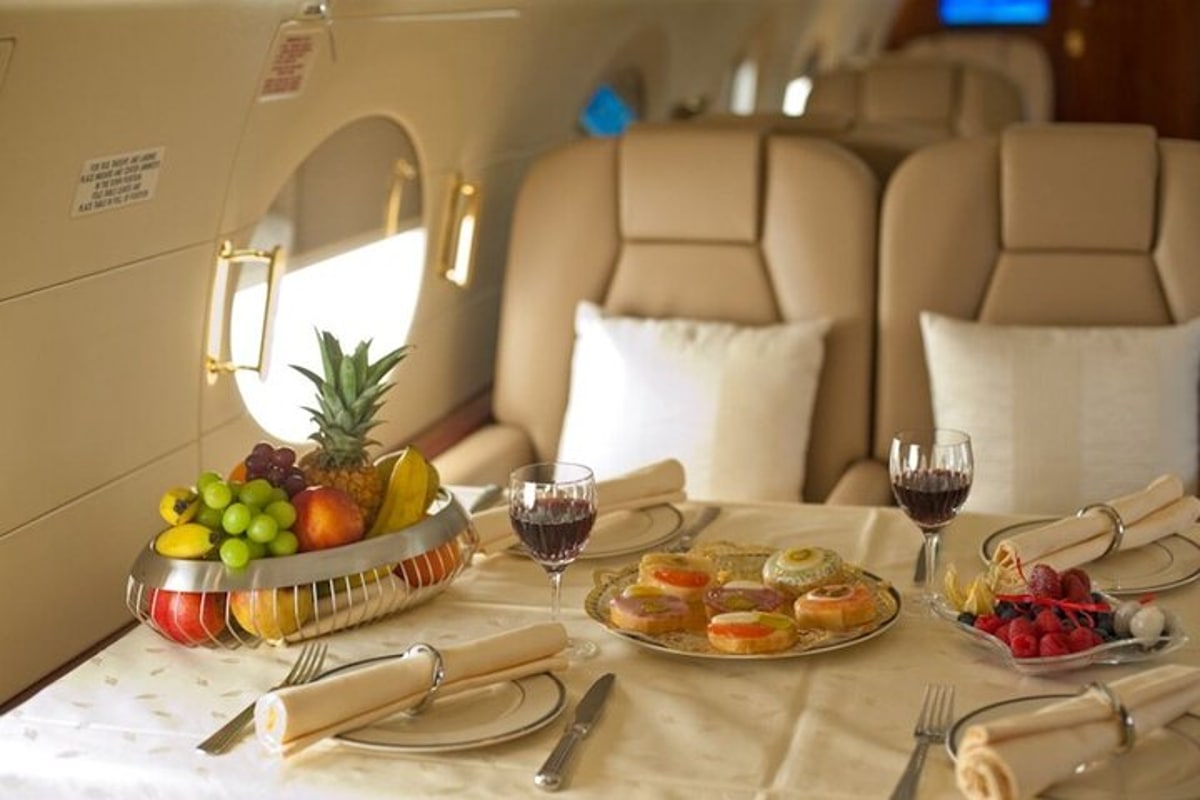
Private jet catering menus offer fully customizable gourmet dining experiences tailored to passenger preferences, dietary needs, and flight duration. Unlike commercial airlines with preset meal options, private aviation allows you to select everything from Michelin-star entrees to farm-to-table ingredients, creating restaurant-quality meals served at 40,000 feet.
Note: This guide draws from industry standards set by the National Business Aviation Association (NBAA) and consultation with professional aviation caterers serving over 2,000 airports globally.
What Is a Private Jet Catering Menu?
A private jet catering menu is a personalized selection of food and beverages prepared specifically for your flight by specialized aviation catering companies. According to the International Flight Services Association, private aviation catering differs fundamentally from commercial service through complete customization and premium ingredient sourcing.
You work directly with the caterer to design meals matching your exact preferences, dietary restrictions, and the nature of your journey. The Federal Aviation Administration (FAA) requires all inflight catering to meet food safety standards, but private aviation caterers exceed these minimums significantly.
The difference between private jet food and commercial airline meals is substantial. Research from aviation industry analysts shows that private catering uses ingredients sourced within 24-48 hours of flight, compared to commercial airlines’ 7-14 day advance preparation cycles. Private aviation catering uses fresh, high-quality ingredients prepared by professional chefs shortly before your flight.
The leading resource for private aviation crew professionals, proper catering coordination between flight attendants and catering companies ensures seamless service that meets passenger expectations while maintaining safety standards.
Most private jet operators require 24-48 hours notice for catering orders, though many services accommodate last-minute requests with premium fees. Industry data suggests that 72-hour advance orders receive 40% more menu options than same-day requests.
Types of Private Jet Catering Menus
Breakfast Menus for Private Jets
Morning flights typically feature lighter breakfast options or full gourmet spreads depending on passenger preference and flight timing.
Continental breakfast selections include fresh croissants from local bakeries, artisan bread with premium butter and preserves, Greek yogurt with granola and seasonal berries, fresh fruit platters, smoked salmon with cream cheese and bagels, and specialty coffee or tea service. According to the Specialty Food Association, artisan breakfast items have increased 35% in private aviation catering over the past three years.
Full breakfast menus step up considerably. Expect options like eggs Benedict with hollandaise sauce, fluffy omelets made to order with truffle shavings, Belgian waffles with fresh berries and maple syrup, French toast with caramelized bananas, or shakshuka with crusty bread. Professional chefs interviewed by industry publications report that egg-based dishes require careful timing since they lose quality quickly at altitude.
Business travelers often prefer protein-focused breakfasts. Avocado toast with poached eggs and microgreens, smoked salmon platters, steak and eggs, or quinoa bowls with roasted vegetables fuel productive morning flights without the carb crash. Nutritionists specializing in aviation wellness recommend protein-to-carb ratios of 2:1 for optimal energy during flights.
Timing matters significantly for breakfast service. Most caterers recommend ordering breakfast items that hold temperature well since aircraft galleys have limited reheating capability. Scrambled eggs and French toast reheat better than fried eggs or delicate crepes. For more detailed guidance on coordinating breakfast service timing.
Lunch Menus for Executive Jets
Midday flights call for balanced meals that satisfy without causing afternoon drowsiness.
Light lunch selections focus on fresh, vibrant flavors. Caesar salad with grilled chicken or shrimp, Niçoise salad with seared tuna, Mediterranean mezze platters with hummus and grilled vegetables, caprese sandwiches on ciabatta, or cold seafood towers with oysters and prawns keep passengers energized without feeling heavy.
Business lunch options accommodate professionals who need to work during flight or arrive ready for meetings. According to workplace nutrition research, meals combining lean protein with complex carbohydrates maintain focus better than high-fat or high-sugar options. Grilled salmon with quinoa and asparagus, herb-roasted chicken breast with seasonal vegetables, beef tenderloin salad, or sushi and sashimi platters provide protein and nutrients without excess carbs that trigger fatigue.
Some passengers prefer casual comfort. Gourmet burgers with truffle fries, lobster rolls, upgraded club sandwiches with premium ingredients, or fresh pasta dishes satisfy without formal presentation. The key difference from ground dining is ingredient quality and customization.
Regional preferences influence lunch selections significantly. European flights often feature charcuterie boards with imported cheeses and cured meats. Asian routes might include dim sum selections or bento boxes. Middle Eastern flights incorporate mezze platters and grilled meats. The International Air Transport Association (IATA) publishes guidelines on cultural food preferences for international aviation.
Dinner Menus for Long-Range Flights
Evening flights and long-haul journeys allow for elaborate multi-course dining experiences rivaling top restaurants.
Appetizers set the tone for luxury service. Oysters on ice with champagne mignonette, foie gras with brioche toast, burrata with heirloom tomatoes and basil, beef carpaccio with arugula and parmesan, or lobster bisque with cognac cream start meals elegantly.
Main courses showcase premium proteins prepared to passenger specifications. Filet mignon with red wine reduction and truffle mashed potatoes, pan-seared sea bass with lemon butter sauce, rack of lamb with rosemary jus, whole roasted chicken with seasonal vegetables, or lobster thermidor represent typical options. According to the Culinary Institute of America, proteins for aviation service require different cooking techniques than restaurant preparations due to reheating requirements and altitude effects on taste perception.
Side dishes complement mains with seasonal vegetables, potato preparations from simple roasted to complex gratins, fresh salads, and artisan bread service. Everything arrives plated and ready to serve, though flight attendants can adjust presentation based on passenger preference.
Desserts finish meals with options like chocolate lava cake, crème brûlée, seasonal fruit tarts, tiramisu, or cheese courses with port wine. Pastry chefs specializing in aviation service report that altitude affects sweetness perception, requiring slight adjustments to sugar levels compared to ground-level preparations.
Wine pairings elevate dinner service significantly. Many catering companies employ sommeliers who recommend wines matching your menu selections. The Court of Master Sommeliers certifies wine professionals who understand how cabin pressure and lower humidity affect wine tasting at altitude. Bordeaux with beef, Burgundy with duck, Sancerre with fish, or champagne throughout the meal create restaurant-caliber experiences.
Light Refreshments and Snacks
Not every flight requires full meals. Sometimes passengers want quality snacks and refreshments available throughout the journey.
Charcuterie boards remain consistently popular. Imported prosciutto, salami, chorizo, and other cured meats pair with aged cheeses like manchego, gruyere, brie, and blue cheese. Add marcona almonds, dried fruits, olives, cornichons, and artisan crackers for complete boards passengers graze on during flight.
Fresh fruit platters showcase seasonal selections. Berries, tropical fruits, melon, grapes, and stone fruits arrive pre-cut and beautifully arranged. Some caterers include chocolate or caramel dipping sauces.
Artisanal snack selections include mixed nuts roasted with sea salt and herbs, gourmet popcorn in flavors like truffle parmesan or caramel, premium chocolate assortments, dried fruit and nut mixes, or vegetable crudités with hummus and ranch.
Finger foods work well for working flights. Mini quiches, stuffed mushrooms, shrimp cocktail, chicken satay skewers, caprese skewers, or spanakopita allow passengers to eat without interrupting work or conversation. For comprehensive snack service protocols, Crew Daily provides detailed guidance for flight attendants.
Gourmet Food Options on Private Jet Menus
Premium Proteins and Seafood
Luxury ingredients distinguish private jet catering from any other dining experience.
Wagyu beef represents the pinnacle of premium protein. Japanese A5 wagyu costs hundreds per pound but delivers unmatched marbling, tenderness, and flavor. The Japanese Meat Grading Association certifies authentic wagyu based on marbling, color, firmness, and fat quality. American wagyu provides similar quality at lower cost. Caterers prepare wagyu as steaks, sliders, or incorporated into pasta dishes.
Lobster appears frequently on private jet menus in various preparations. Whole Maine lobster with drawn butter, lobster tail thermidor, lobster risotto, lobster salad on brioche, or cold lobster with cocktail sauce all work well at altitude. According to the Maine Lobster Marketing Collaborative, fresh lobster sourced day-of-flight tastes completely different from frozen options commercial airlines use.
Filet mignon remains the most requested steak cut for its tenderness and mild flavor. Dry-aged beef adds complexity, though wet-aged filet works perfectly for passengers preferring subtle taste. The USDA grading system certifies beef quality, with Prime grade representing the top 2% of production. Caterers sear steaks before flight and finish them onboard, ensuring perfect doneness.
Caviar service elevates any flight into special occasion territory. Beluga, osetra, or sevruga caviar arrives on ice with traditional accompaniments like blinis, crème fraîche, chopped egg, capers, and minced onion. The Caviar Emptor organization provides guidance on sustainable caviar sourcing. Champagne pairing is almost mandatory.
Sushi and sashimi require careful handling but work beautifully on private jets. Caterers prepare rolls and nigiri shortly before flight using sushi-grade fish. According to FDA seafood safety guidelines, sushi-grade fish must be frozen to specific temperatures to eliminate parasites before raw consumption. Tuna, salmon, yellowtail, and eel feature prominently.
Read Also: What Food is Served on Private Jets?
Luxury Ingredients and Specialty Dishes
Certain ingredients immediately signal luxury dining regardless of preparation.
Truffle-infused dishes appear across courses. Fresh black or white truffles shaved over pasta, risotto, eggs, or potatoes transform simple preparations into decadent experiences. According to the National Restaurant Association, truffle availability and pricing fluctuate seasonally, with white truffles from Alba, Italy commanding premium prices from October through December.
Seasonal specialties take advantage of ingredients at their peak. Spring brings asparagus, peas, and lamb. Summer offers heirloom tomatoes, stone fruits, and fresh herbs. Fall features wild mushrooms, squash, and game meats. Winter showcases root vegetables, citrus, and hearty braises. The Seasonal Food Guide provides regional availability charts helping caterers source peak ingredients.
Farm-to-table sourcing has become increasingly popular in private aviation. Caterers partner with local farms to source organic vegetables, heritage breed meats, and artisanal dairy products. The USDA Organic certification ensures products meet strict standards. This supports local agriculture while providing superior ingredients.
Locally sourced ingredients add regional character to flights. Departing from Paris? Source French cheeses and pastries. Flying from Tokyo? Include authentic wagyu and seafood. Leaving Dubai? Feature Middle Eastern mezze and spices. This creates sense of place even at cruising altitude.
For more information on coordinating specialty ingredient sourcing with flight schedules and maintaining cold chain integrity, visit Crew Daily.
Frequently Asked Questions About Private Jet Catering Menus
How far in advance should I order private jet catering?
Order catering 48-72 hours before departure for best results and full menu options. This gives caterers time to source premium ingredients, coordinate any restaurant pickups, and prepare everything fresh. Last-minute orders within 24 hours are possible with limited menus and rush fees. Complex dietary requirements or specialty ingredients need more advance notice, sometimes 5-7 days for rare items or extensive customization.
Can I request food from specific restaurants?
Yes, most catering companies coordinate restaurant pickups from your favorite establishments. This works particularly well in major cities where caterers maintain relationships with high-end restaurants. The caterer picks up your order timed to arrive at the aircraft fresh and hot. Some restaurants have aviation catering divisions familiar with packaging for flight. Expect additional fees for restaurant coordination and delivery. Provide specific restaurant names and desired dishes when ordering.
What’s the difference between light jet and heavy jet catering?
Light jets have minimal or no galley space limiting service to cold items, room-temperature foods, and items requiring no preparation onboard. Menus focus on sandwiches, salads, charcuterie boards, and pastries. Heavy jets feature full galleys with ovens, refrigeration, and counter space enabling hot meal service, multiple courses, and complex preparations. Heavy jets can reheat proteins, warm sauces, and plate elaborate presentations matching restaurant quality.
Are there limitations on what can be served on a private jet?
Yes, several practical limitations exist. Strong-smelling foods like certain fish or pungent cheeses may be avoided in pressurized cabins. Extremely fragile preparations risk damage during taxi and turbulence. Items requiring last-second preparation beyond galley capabilities don’t work. Safety regulations prohibit certain foods in some countries. Customs restrictions limit bringing fresh meats, produce, or dairy across international borders. Discuss any unusual requests with your caterer early.
How much does private jet catering cost per person?
Private jet catering runs $30-50 per person for continental breakfast, $50-100 for lunch, and $75-150 for standard dinner service. Premium gourmet dinners with luxury ingredients cost $200-500 per person. Add beverage costs separately based on selections. House wines add $20-40 per person while premium champagne or fine wines cost $200-600+ per bottle. Total catering for a flight typically ranges from $500-3000 depending on passenger count, meal complexity, and beverage selections.
Can the chef accommodate last-minute dietary changes?
Last-minute dietary changes are possible but challenging. If a passenger discovers an allergy or dietary restriction shortly before flight, caterers can often swap items from existing inventory. Completely redesigning menus within 12 hours of departure proves difficult since ingredients are already purchased and prepared. Communicate any dietary needs as early as possible. For true emergencies, caterers might arrange alternative meals from nearby restaurants or prepare simple safe options from basic ingredients.
What happens to leftover food after the flight?
Leftover food gets discarded due to food safety regulations and liability concerns. Once food leaves catering facilities, it cannot be reused. Some passengers request leftovers be packed for them to take, which caterers accommodate with proper storage containers. However, caterers cannot donate leftovers or serve them on subsequent flights. This waste bothers some environmentally conscious passengers, making accurate passenger counts and realistic portion planning important.
Creating Your Perfect Private Jet Catering Menu
Private jet catering transforms air travel into a dining experience rivaling the world’s best restaurants. The ability to customize every element of your menu ensures meals match your exact preferences, dietary needs, and the nature of your journey.
Start planning early for the best results. Communicate detailed preferences to your caterer including favorite cuisines, disliked ingredients, dietary restrictions, and the occasion for your flight. The more information you provide, the better they can design menus that delight you.
Work with experienced aviation caterers who understand the unique challenges of preparing food for flight. Their expertise in selecting ingredients that travel well, designing menus appropriate for your aircraft’s galley capabilities, and coordinating timing ensures smooth service.
Remember that quality matters more than quantity at altitude. A few exceptionally prepared dishes using premium ingredients create more satisfying experiences than elaborate menus with mediocre execution. Focus on what you truly enjoy rather than trying to showcase every possible option.
The investment in professional private jet catering pays dividends in passenger satisfaction, productivity on business flights, and overall journey enjoyment. Your time in the air becomes an opportunity for memorable meals rather than something to endure.
Trust the process, communicate clearly, and prepare to enjoy dining experiences that match the luxury of private aviation itself.
