


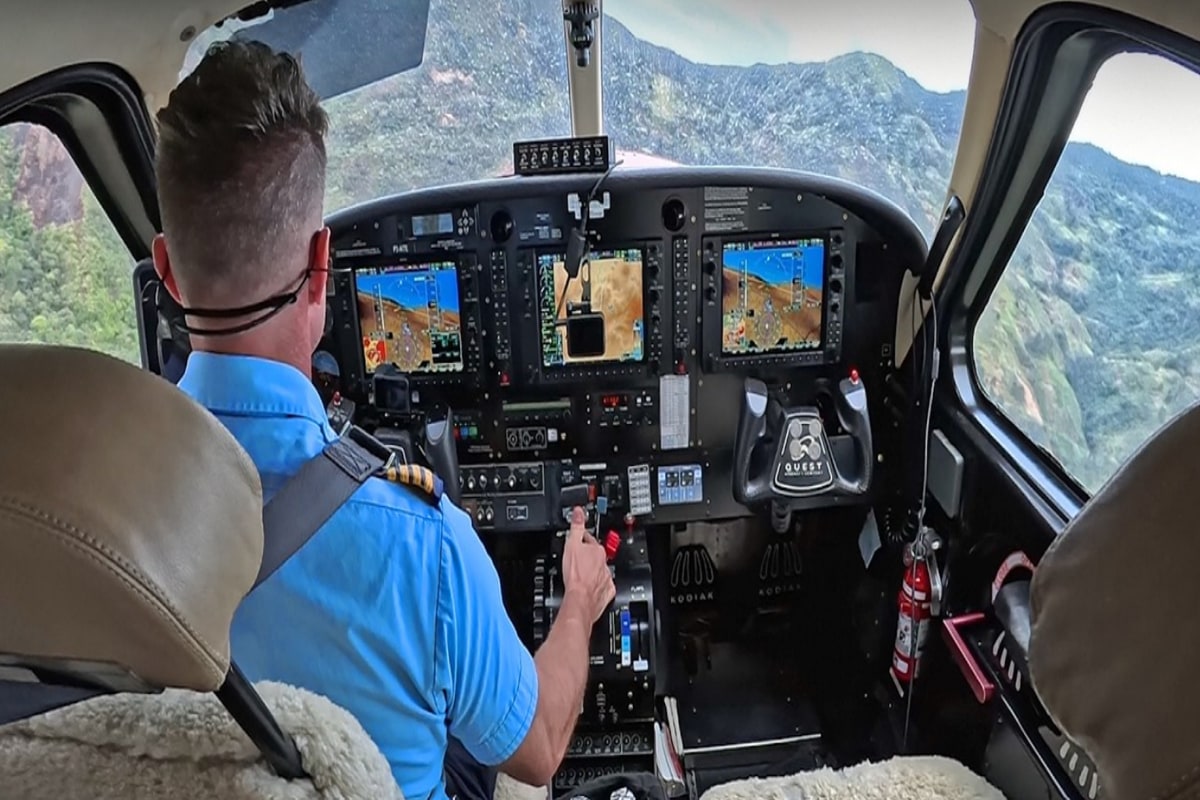
You’re cruising at 35,000 feet, enjoying your in-flight snack, when the captain’s voice crackles through the speakers: “Flight attendants, prepare for landing.”
In that moment, do you ever wonder who’s actually bringing this massive metal tube safely back to earth; the pilot or the computer?
Here’s something that might surprise you: despite having technology capable of landing aircraft with pinpoint precision, most pilots still prefer to do it themselves.
Let’s discuss why pilots prefer manual landing and what it means for your next flight.
The Human Mind vs The Machine Touch
Autoland systems in modern aircrafts can execute near-perfect touchdowns in conditions where human vision is completely useless.
So do pilots land planes manually in today’s high-tech world? The answer is YES, almost always. According to industry data, pilots manually land aircraft in approximately 95% of all commercial flights worldwide. That’s not because the automation doesn’t work, it’s because pilots actively choose the manual approach.
Think about it this way: would you rather have a surgeon who operates regularly or one who only watches a robot do it? The same principle applies in the cockpit.
Keeping Skills Sharp in the Sky
This is the big one. Why pilots prefer manual landing often boils down to one critical word: proficiency.
Imagine learning to drive, then spending years only watching your car’s self-driving mode do everything. When that system inevitably fails during a thunderstorm on a mountain road, how confident would you feel grabbing the wheel? Not very.
Pilots think the same way. Every manual landing is practice for the emergency that hopefully never comes. When you land an aircraft 200-300 times per year by hand, you maintain the muscle memory, the judgment calls, and the split-second decision-making skills that define exceptional flying.
This is also part of why pilots are so respected in our society. They’re highly trained professionals who maintain hands-on expertise in an increasingly automated world.
Reading Conditions That Computers Can’t
Here’s where things get interesting. While computers excel at precision, they struggle with adaptability.
A seasoned pilot approaching an airport can feel a crosswind shifting, sense a wind shear developing, or notice that runway conditions look slicker than reported. They process dozens of environmental cues that sensors might miss or misinterpret.
Do pilots land planes manually to show off? Absolutely not. They do it because their biological sensors, eyes, ears, and that little voice called experience, often provide better real-time data than the aircraft’s systems.
Think about how a pilot navigates in the sky to reach a destination during the flight. They’re constantly cross-referencing multiple information sources: GPS, ground-based navigation aids, visual references, and weather radar.
This is particularly crucial when conditions change rapidly. That beautiful clear approach can turn challenging in seconds if unexpected turbulence hits or another aircraft is slow to clear the runway.
The Muscle Memory Factor
Let’s talk about something fascinating: proprioception. That’s your body’s ability to sense position and movement without thinking about it.
When pilots regularly perform manual landings, they develop an almost supernatural feel for their aircraft. They know, not intellectually, but instinctively, when the descent rate feels wrong or the nose attitude needs adjustment.
You can’t learn this from an iPad or maintain it through automation. You build it through repetition, and you keep it through practice.
Safety Through Redundancy
Here’s a perspective most passengers never consider. Any pilot explains why flying is safe will mention redundancy, having backup systems for your backup systems. Manual landing capability is the ultimate backup.
Autoland systems are fantastic, but they depend on:
- Functioning autopilot computers
- Ground-based instrument landing systems (ILS)
- Multiple working sensors
- Electrical systems
- Hydraulic systems
Pilots just need working flight controls and a view of the runway. (Well, and their training, experience, and steady nerves, but you get the point.)
By maintaining manual landing proficiency, pilots ensure that even if every automated system fails, they can still bring everyone home safely.
Understanding When to Touch Down
How do pilots know when to land involves more than just watching the runway approach. It’s about energy management, timing, and feel.
During a manual landing, pilots are constantly solving a three-dimensional physics problem: they’re managing speed, descent rate, and alignment simultaneously while accounting for wind, weight, and runway conditions.
The PAPI lights (those red and white lights beside the runway) give pilots a visual reference for their glide path. But experienced pilots often feel when they’re on the right trajectory before the lights even confirm it. That’s the kind of intuitive understanding that comes from doing something hundreds or thousands of times.
How do pilots know when to land also involves real-time judgment calls that computers can’t make. Is that runway wet enough to need extra stopping distance? Should we delay touchdown slightly to avoid wake turbulence from the aircraft ahead? These split-second decisions separate good landings from great ones.
The Respect Factor in Aviation
There’s a reason why pilots are so respected across cultures and industries. They’re trusted with hundreds of lives while navigating complex machinery through a dynamic, three-dimensional environment.
Manual landing proficiency is a badge of honor in the profession. It demonstrates that a pilot hasn’t become complacent, hasn’t delegated their core skills to machines, and remains ready to handle whatever the sky throws at them. And the young pilots especially understand that respect comes through demonstrated competence.
The Technical Dance of Approach
To really understand why pilots prefer manual landing, you need to appreciate the technical complexity involved.
As the aircraft descends, loading pilots with multiple simultaneous tasks: monitoring airspeed, configuring flaps and landing gear, communicating with air traffic control, and briefing the approach. This workload management continues right through touchdown.
Modern pilots also need to interpret complex navigation displays. Why do maps for pilots show things like radio masts and other obstacles? Because during manual approaches, pilots need instant awareness of terrain and man-made hazards. These charts become critical references, especially when flying visual approaches to unfamiliar airports.
The physical act of landing requires precise control inputs. Too much back pressure and you’ll balloon (climb unexpectedly). Too little and you’ll arrive on the runway harder than passengers prefer.
Pressure, Performance, and Physiology
Here’s an interesting thing: why pilots use pressurized cabin technology relates directly to maintaining peak performance during critical phases like landing.
At high altitudes, reduced oxygen impairs judgment and reaction time. By maintaining cabin pressure equivalent to 6,000 to 8,000 feet even when cruising at 40,000 feet, why pilots use pressurized cabin systems becomes clear.
Navigation Integration
How does a pilot navigate in the sky to reach a destination involves integrating GPS coordinates, traditional ground-based navigation beacons, visual landmarks, and ATC instructions. This multi-source navigation continues right through the landing phase.
When pilots fly manual approaches, especially visual approaches, they’re using the same integrated navigation mindset that’s been guiding them since takeoff.
The Training Never Stops
Loading pilots with currency requirements ensures they’re always sharp. Most airlines require pilots to perform a certain number of landings within specific timeframes to remain current. Many of these must be manual landings.
But beyond regulatory minimums, serious pilots seek out manual landing opportunities because they know it’s the foundation of their craft.
Weather, Wisdom, and Wind Correction
Real-world conditions rarely cooperate with textbook procedures. Crosswinds, gusts, wind shear, rain, snow; these are where manual landing skills truly shine.
Autoland systems have strict weather limitations. Many won’t even engage in certain crosswind conditions. But pilots have landed in situations that would send computers into abort mode, using techniques like wing-low approaches or crab-and-kick methods.
Passenger Comfort Considerations
Experienced pilots can often achieve softer touchdowns than autoland systems. While computers land safely, they sometimes land firmly (within acceptable limits but noticeably harder than a skilled human pilot).
That smooth touch of the runway you sometimes experience? That’s probably a pilot who’s executed thousands of manual landings and has perfected it.
Read Also: How Long Does It Take to Refuel a Private Jet?
The Future: Humans and Automation Together
Here’s the reality: automation isn’t the enemy, and why pilots prefer manual landing isn’t about resisting technology.
The most successful pilots use autoland in near-zero visibility when it’s the safest option, but they’ll manually land in good weather to stay proficient for the days when all the technology fails.
This balanced approach represents the evolution of aviation: humans and machines working together, each covering the other’s weaknesses.
Real Pilot Perspectives
When you ask working pilots about why pilots prefer manual landing, their answers are remarkably consistent:
“It’s what we’re trained for, and training that isn’t used is training that’s lost.”
These aren’t anti-technology statements. They’re professional commitments to maintaining peak readiness for the job’s most critical moments.
What to Expect in Your Next Flight
So next time you’re settling into your seat, wondering whether you’ll feel a smooth arrival or a firmer one, remember that there’s probably a skilled pilot up front making real-time decisions based on thousands of hours of experience.
That’s not just comforting, it’s the product of a professional culture that values hands-on expertise and continuous skill development.
Stay Connected to the Aviation World
Understanding why pilots prefer manual landing is just one piece of the fascinating puzzle that is modern aviation. From the intricate systems that keep aircraft safe to the skills that turn ordinary people into exceptional pilots, there’s always more to discover.
Want to dive deeper into aviation insights, aircraft specifications, and the real stories behind flight? Subscribe to Crew Daily’s newsletter for weekly updates that bring you closer to the cockpit. We break down complex aviation topics into engaging, understandable content for enthusiasts and professionals alike. From more information, visit crew daily.
