


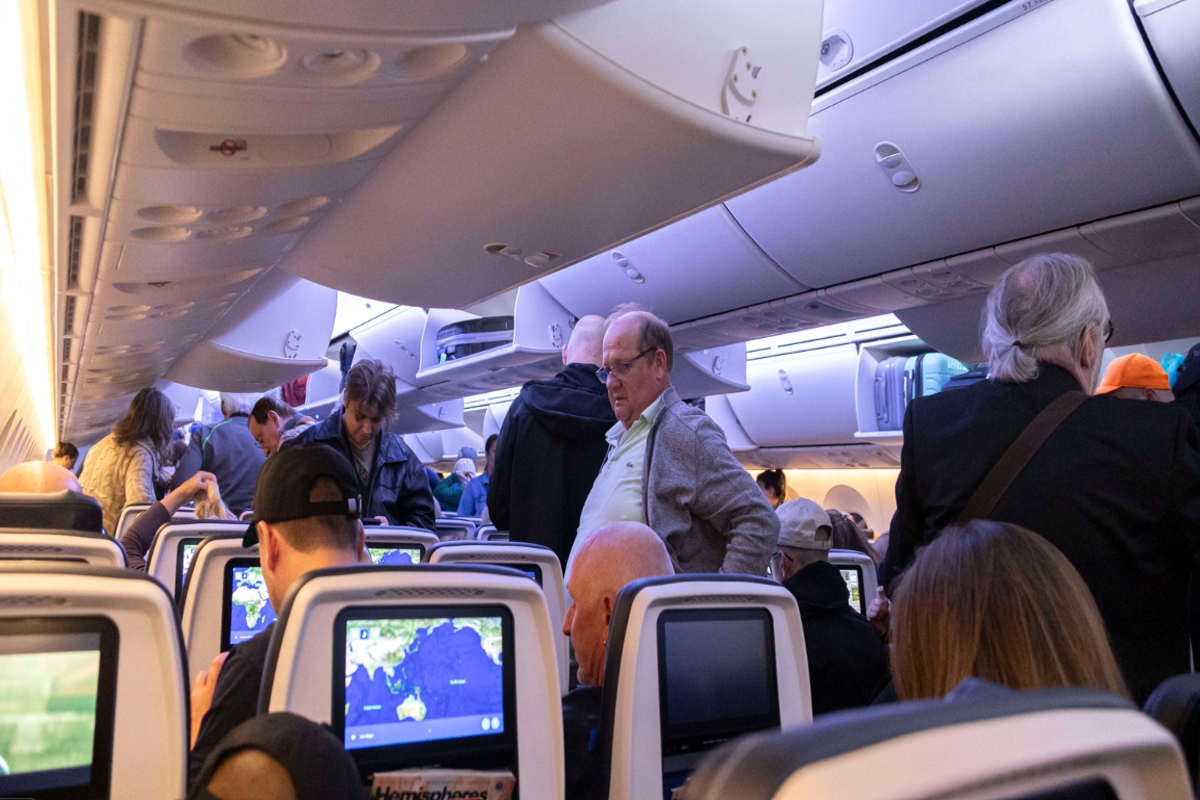
You’re buckled into seat 23B. The flight attendant just wrapped up the safety demonstration. Your phone shows three hours and forty-two minutes until landing.
That number isn’t moving fast enough.
Flights feel longer than they should because most people board completely unprepared. No downloaded entertainment. No backup plans. Just hoping the in-flight Wi-Fi works or the seat screen doesn’t glitch out twenty minutes into takeoff.
Here’s the truth: flights don’t have to drag. The difference between a brutal three-hour slog and a flight that actually flies by comes down to what you bring and how you spend the time.
This isn’t about filling every second with productivity. Some flights you’ll want to zone out completely. Others you might feel like learning something new or getting work done. The key is having options that match your mood—whether you’re exhausted, restless, bored, or somewhere in between.
Everything below works without Wi-Fi once you’ve done the prep. Some activities need zero planning at all. All of them beat staring at the seatback pocket for hours. In this article we will know what are the best things to Do on a Plane
Let’s dig in.
1. Watch Downloaded Movies, Shows & In-Flight Entertainment
Most people default to watching something, and for good reason. It’s the easiest way to make hours disappear without effort.
In-Flight Entertainment Systems
Airlines load their systems with movies, TV shows, documentaries, and sometimes live TV. The selection varies wildly by airline and route. International carriers like Emirates, Qatar Airways, and Singapore Airlines stock hundreds of options. Budget airlines like Spirit and Frontier often have nothing at all.
Long-haul flights get better entertainment libraries than short domestic hops. A 12-hour flight to Tokyo might have 200+ movies. A 90-minute hop to Dallas gets maybe 20.
What to expect:
- Recent theatrical releases (usually 2-6 months after theater run)
- Classic films and TV series
- Foreign films with subtitles
- Kids’ content (Disney, Pixar, animated shows)
- Documentaries and special interest programming
The problems with relying on this:
Screens malfunction. I’ve boarded flights where my seat screen was completely dead. No reboot fixed it. The flight attendant apologized and offered me nothing as a backup.
Selection disappoints. You might find nothing worth watching in the entire catalog.
Audio quality is terrible with those free airline earbuds. They hurt after 30 minutes and the sound is tinny.
How to do this right:
Bring your own headphones. Over-ear headphones with noise canceling work best, but even cheap earbuds beat what the airline provides. Make sure they have a standard headphone jack or bring an adapter—some planes still use the weird two-prong connectors.
Check the entertainment guide before your flight. Most airlines publish their current movie and TV selection on their website or app. Search “[airline name] entertainment this month” and you’ll find it. This helps you plan what to watch or decide if you need backup downloads.
Charge your devices before boarding. If the in-flight system fails, you’ll need your phone or tablet ready to go.
Downloaded Content (The Backup Plan)
Never rely solely on in-flight entertainment. Always download content before you reach the airport.
Netflix: Lets you download tons of shows and movies for offline viewing. Open the app, search for content, tap the download icon. Quality stays high even offline. Downloaded content expires after a set period (usually 7-30 days depending on licensing), so don’t download things months in advance.
Amazon Prime Video: Works the same way as Netflix. Select shows and movies support downloading. Quality options let you save space on your device if storage is tight.
Disney+, HBO Max, Hulu: Most streaming services now support offline downloads. Check the app’s download section before your trip.
YouTube Premium: Lets you download YouTube videos for offline playback. Great for tutorials, documentaries, or favorite creators.
Apple TV+: Download shows and movies directly through the app.
How much to download:
For a 3-hour flight, download at least 4-5 hours of content. You won’t watch it all, but you want choices. Maybe you start a movie and hate it. Maybe you finish something faster than expected. Running out of content mid-flight is miserable.
For international flights (10+ hours), download 15-20 hours. Sounds excessive, but better to have too much than too little.
Storage tips:
A 2-hour movie in HD takes roughly 2-4GB of space. Lower the quality settings if your phone storage is limited. Standard definition still looks fine on a phone screen and saves significant space.
Delete downloads after your trip to free up space.
Genre recommendations:
Action and thrillers work great on planes. They’re engaging enough to hold attention but don’t require deep focus.
Comedies and light dramas help when you’re tired.
Avoid heavy, depressing films unless that’s your thing. Watching something dark and slow in a cramped metal tube hits different.
Series episodes work better than movies for shorter flights. You can stop between episodes without losing the thread.
2. Read Books, E-Readers & Magazines
Reading on planes feels different than reading at home. No phone notifications. No one asking you questions. Just you, the book, and the hum of engines.
Physical Books vs E-Readers
Physical books:
The tactile experience is better. Turning real pages, feeling the weight of the book, seeing your progress—all of that matters to some readers.
No battery concerns. A paperback never dies mid-chapter.
Easier on the eyes for some people. No screen glare or blue light.
But they add weight and take up space in your carry-on. A thick hardcover can weigh over a pound.
E-readers (Kindle, Kobo, Nook):
You can load hundreds of books and the device weighs less than a paperback. Perfect for long trips where you might finish multiple books.
Battery life lasts weeks with normal use. Even heavy reading during a long flight barely drains it.
Adjustable font sizes help if you have vision issues or just prefer bigger text.
Built-in dictionaries let you look up words without breaking focus.
Many have backlit screens that work in dim cabin lighting without bothering your neighbor.
The downside is you need to charge them before the flight. And some people just don’t like reading on screens.
My take: E-readers are better for travel. The convenience of having multiple books in one lightweight device wins. But if you strongly prefer physical books, bring one. The best reading device is the one you’ll actually use.
What to Read on a Plane
Not all books work equally well at altitude. Dense philosophy or complex non-fiction can be hard to focus on when you’re cramped and tired.
Best genres for flights:
Thrillers and mysteries keep you turning pages. Gillian Flynn, Lee Child, Tana French—anything that creates momentum and makes you want to know what happens next.
Light fiction and beach reads work when you want easy escapism. These don’t demand intense concentration. You can put them down if you need a break and pick right back up.
Business and self-help books if you’re in productive mode. Books about productivity, psychology, business strategy, or personal development feel good to finish during a flight. You arrive feeling like you accomplished something.
Memoirs and essays give you bite-sized chapters. You can read one essay, take a break, and come back later without losing the thread.
Magazines work for short flights or when your attention span is shot. Articles are self-contained. You can read one, stop, and move on.
What to avoid:
Dense academic texts that require note-taking or deep concentration. Save those for when you’re at a desk with coffee and quiet.
Books you’re forcing yourself to read. If it’s been sitting on your shelf for months and you haven’t cracked it open, a plane ride won’t magically make you interested.
Where to get reading material:
Airport bookstores are expensive but convenient if you forgot to pack something. They stock bestsellers, magazines, and light reads.
Download books to your Kindle or reading app before you leave home. Amazon, Apple Books, Google Play Books, and Kobo all let you buy and download instantly.
Library apps like Libby and Hoopla let you borrow e-books for free if you have a library card. Download them before your trip.
How to Actually Finish a Book on a Plane
Pick something you’re genuinely interested in, not what you think you should read.
Start at the gate while you’re waiting to board. Getting a few chapters in before takeoff creates momentum.
Put your phone in airplane mode to remove distractions. You can’t scroll social media if there’s no connection.
Give yourself permission to quit if you’re not enjoying it. Don’t waste the whole flight on a book you hate. Switch to something else.
3. Listen to Podcasts & Audiobooks
Podcasts and audiobooks are perfect when your eyes need a break from screens or you just want to close them completely.
They’re also ideal if you’re a restless reader who struggles to focus on text. Listening requires less active effort than reading while still being engaging.
Podcasts: What to Download
Podcasts are free, cover every topic imaginable, and come in episodes that fit perfectly into flight lengths.
Best genres for planes:
True crime grabs your attention and makes time vanish. “My Favorite Murder,” “Serial,” “Criminal,” “Casefile”—all excellent for long flights. The storytelling pulls you in and episodes usually run 45-90 minutes.
Comedy podcasts keep you entertained without requiring deep thought. “Conan O’Brien Needs a Friend,” “SmartLess,” “How Did This Get Made?” Great when you’re too tired for anything serious.
Storytelling and narrative shows like “This American Life,” “The Moth,” “Radiolab,” and “99% Invisible” offer compelling stories in digestible formats.
Conversational interviews give you the feeling of eavesdropping on interesting people talking. “WTF with Marc Maron,” “Armchair Expert,” “The Joe Rogan Experience.”
Educational content for when you want to learn something. “Hidden Brain,” “Freakonomics Radio,” “Planet Money,” “Stuff You Should Know.”
News and current events if you want to catch up on what’s happening. “The Daily” (NYT), “Up First” (NPR), “Today, Explained” (Vox).
What to avoid:
Super technical or dense content that requires note-taking. You’re not in a position to pause and write things down.
Podcasts that require visual components. Some shows reference images, charts, or videos that you can’t see on a plane.
How much to download:
A 3-hour flight = 2-4 podcast episodes depending on length.
A 10-hour international flight = 10-15 episodes.
Always download more than you think you’ll need. Maybe you’ll hate an episode and skip it. Maybe you’ll finish faster than expected.
Best apps for offline listening:
Apple Podcasts (built-in on iPhone), Spotify, Pocket Casts, Overcast, Stitcher—all let you download episodes for offline playback.
Make sure to download over Wi-Fi before you leave for the airport. Downloading over cellular data eats through your plan.
Audiobooks: Immersive Stories for Long Flights
Audiobooks are longer-form content perfect for flights over 5 hours. You can get deep into a story without interruption.
Where to get audiobooks:
Audible (Amazon’s service): Subscription gives you credits to buy audiobooks. Download them to the app for offline listening.
Libro.fm: Like Audible but supports local bookstores. Same model—credits for books.
Google Play Audiobooks / Apple Books: Buy individual audiobooks and download them.
Libby / Hoopla: Free audiobooks through your library card. Selection varies by library but you can often find bestsellers.
Spotify: Includes some audiobooks with premium subscription.
What to listen to:
Fiction that’s plot-driven. Thrillers, mysteries, sci-fi, fantasy. Books with strong narratives that keep you hooked.
Memoirs read by the author. There’s something special about hearing someone tell their own story. Trevor Noah’s “Born a Crime,” Michelle Obama’s “Becoming,” Matthew McConaughey’s “Greensand.”
Well-narrated classics. A great narrator can make even familiar stories feel new.
Avoid:
Books with multiple characters that are hard to track by voice alone. Epic fantasy with 20 characters gets confusing without being able to flip back and check who’s who.
Non-fiction that’s super dense. If you’d normally take notes, it’s not ideal for audio.
Playback tips:
Adjust the speed. Most people can comfortably listen at 1.2x to 1.5x speed. This lets you get through more content without losing comprehension.
Use a sleep timer if you’re planning to nod off. The app will stop playing after 15-30 minutes so you don’t wake up hours later having missed half the book.
Download the whole book before your flight. Nothing’s worse than running out mid-story because you only downloaded half.
4. Play Games & Work Puzzles
Games and puzzles occupy your brain just enough to make time pass without requiring creative energy or deep thought.
Offline Mobile Games
Most mobile games work perfectly without Wi-Fi once you’ve downloaded them. They’re great for when you’re too tired to read but not tired enough to sleep.
Best types for flights:
Puzzle games: Clean, simple, engaging. “Monument Valley” and “Monument Valley 2” are beautiful puzzle games with calming soundtracks. “The Room” series offers intricate 3D puzzles. “Alto’s Odyssey” and “Alto’s Adventure” are meditative endless runners.
Sudoku: Number puzzles with varying difficulty levels. Apps like “Sudoku.com” or “Brainium Sudoku” work offline and have thousands of puzzles.
Word games: “Wordscapes,” “Word Cookies,” crossword apps. All work offline if you download puzzle packs ahead of time.
Solitaire and card games: Classic, mindless, perfect for zoning out. Microsoft Solitaire, “Solitaire by MobilityWare.”
Chess: Play against AI opponents at different skill levels. “Chess.com” and “Lichess” apps both have offline modes.
Strategy games: “Civilization VI” (if you have an iPad), “Plague Inc.,” “Mini Metro.” These are deeper and good for long flights where you want something to sink into.
Logic puzzles: “Flow Free,” “Two Dots,” “Unblock Me.”
What to avoid:
Multiplayer games that require internet. Battle royales, MMOs, anything with live opponents won’t work.
Games with heavy ads. Offline mode usually disables ads, but some games are unplayable without constant connection.
Before you fly:
Download games over Wi-Fi at home. Some are several gigabytes.
Open each game once while connected to verify it works offline. Some require an initial online check-in.
Charge your device and bring a portable battery. Gaming drains batteries faster than reading or watching movies.
Physical Puzzles & Pen-and-Paper Games
Screens get tiring. Sometimes you want something tactile.
Crossword puzzles: Buy a crossword puzzle book at the airport bookstore or print some before you leave. The New York Times crosswords are legendary. Start with Monday puzzles (easiest) and work toward Saturday (hardest).
Sudoku books: Travel-sized Sudoku books cost a few dollars and have hundreds of puzzles. Easy to toss in your bag.
Word searches: Simple but satisfying. Good for when your brain is fried.
Logic puzzles: KenKen, Kakuro, nonograms. These are like Sudoku but with different rules.
Mazes: Adult maze books exist and they’re surprisingly engaging.
Travel-sized board games: Some companies make compact versions of games like chess, checkers, or backgammon with magnetic pieces so they don’t slide around during turbulence.
The physical act of writing answers or moving pieces feels good. It’s a break from screens and gives your hands something to do.
Bring a pen or pencil. Pens are better for flights—they work at any altitude and don’t need sharpening.
5. Journal, Write & Get Creative
Flying creates a strange mental space. You’re disconnected from normal life but haven’t arrived anywhere yet. It’s oddly perfect for thinking and creativity.
Travel Journaling
Documenting your trip while it’s happening captures details you’ll forget later.
What to write:
Pre-trip thoughts: What are you looking forward to? What are you nervous about? What do you hope happens?
Observations: What did you notice at the airport? Who’s sitting near you? What does the destination look like from the air as you land?
Daily recap: Write about each day of your trip. Where you went, who you met, what surprised you, what disappointed you, meals that stood out.
Gratitude lists: What went well today? What are you thankful for on this trip?
Random details: The small stuff that makes trips memorable. The weird snack you tried. The joke the cab driver made. The unexpected detour that became the best part.
You don’t need a fancy journal. A cheap notebook works fine. Or use your phone’s notes app if you prefer typing.
The key is writing while details are fresh. Waiting until you get home means you’ll forget half of it.
Free Writing & Brain Dumps
Sometimes you don’t want structure. Just open a notebook and write whatever comes out.
Stream of consciousness writing: Put pen to paper and don’t stop for 10-20 minutes. Don’t edit, don’t judge, don’t worry about making sense. Let your brain empty onto the page.
This is surprisingly therapeutic. You’ll work through problems without trying. Ideas will surface that were buried under daily noise.
Idea generation: Use flight time to brainstorm. Business ideas, creative projects, solutions to problems you’ve been stuck on, plans for the future.
There’s something about being trapped in a seat with nowhere to go that makes clarity easier. I’ve solved more problems on planes than in any other environment.
Letter writing: Write a letter to someone you care about. You don’t have to send it. But writing to a specific person changes how you express ideas.
Sketching, Drawing & Coloring
You don’t need artistic talent to enjoy this. The goal isn’t creating masterpieces—it’s keeping your hands busy while your mind relaxes.
Adult coloring books: These exploded in popularity because they’re meditative and require zero skill. Geometric patterns, mandalas, intricate designs. You just fill them in.
Bring colored pencils instead of markers. Pencils don’t bleed through thin paper and don’t need caps that you’ll inevitably drop and lose under the seat.
Travel-sized coloring books exist specifically for this. They’re smaller than regular books and fit easily in a bag.
Sketching: Bring a small sketchpad and pencil. Draw the view from your window. Sketch your seatmate (subtly). Doodle random shapes and patterns.
The act of drawing is calming. You’re focused on lines and shapes, not on how much longer until landing.
Zentangle and doodling: These are structured doodling methods. You create patterns within shapes following simple rules. It’s almost like meditation.
No one will see your drawings unless you want them to. There’s no pressure for them to be good.
6. Learn a Language or Skill
Flights offer uninterrupted time. You can actually make progress on something instead of just killing time.
Language Learning Apps
You won’t become fluent in three hours. But you can learn useful phrases, build vocabulary, or reinforce what you already know.
Best apps for offline learning:
Duolingo: Free, gamified, works offline after downloading lessons. Great for beginners. Covers 40+ languages.
Babbel: More structured than Duolingo, focuses on conversation skills. Subscription-based. Download lessons before your flight.
Memrise: Uses spaced repetition and native speaker videos. Good for vocabulary building.
Busuu: Combines lessons with community feedback. Offline mode available with premium.
Drops: Focuses purely on vocabulary with quick 5-minute sessions. Perfect for short attention spans.
What to focus on:
If you’re traveling to a country where you don’t speak the language, use the flight to learn survival phrases:
- Hello, goodbye, please, thank you
- Where is…? How much…? I don’t understand
- Ordering food and drinks
- Asking for directions
- Numbers 1-10
- Emergency phrases (help, doctor, police)
If you’re already studying a language, use the flight to review previous lessons or practice vocabulary.
How to practice:
Do a lesson, then close the app and try to recall what you learned. Repetition without looking at the screen helps retention.
Write new words and phrases in a notebook. The act of writing reinforces memory.
Practice pronunciation quietly (or just mouth the words if your neighbor is sleeping).
Flashcards & Spaced Repetition
Physical flashcards or apps like Anki let you drill vocabulary, facts, or concepts.
Create flashcard decks before your trip. Study them during the flight.
Spaced repetition apps show you cards right when you’re about to forget them, maximizing retention.
This works for anything—language vocabulary, professional certifications, historical facts, whatever you’re trying to learn.
Plan Your Trip in Detail
If you’re flying somewhere new, use the flight to finalize every detail.
What to plan:
Daily itinerary: Which days you’ll visit which attractions. Map out a rough schedule so you’re not wasting time deciding on the ground.
Restaurant list: Research where you want to eat. Save addresses and hours. Many restaurants require reservations—note which ones.
Transportation: How will you get from airport to hotel? What’s the best way to get around the city? Metro? Taxi? Walking? Research and save directions.
Offline maps: Download city maps in Google Maps or Maps.me so you can navigate without data.
Budget breakdown: Estimate costs for meals, activities, transportation, and miscellaneous. Knowing roughly what you’ll spend helps you stay on track.
Backup plans: What if it rains? What if something’s closed? Have alternatives ready.
Apps and guides: Download city guides, translation apps, currency converters, and travel apps before you land.
Arriving with everything planned means you hit the ground running instead of spending your first day figuring out logistics.
7. Rest, Sleep & Take Care of Your Body
Long flights mess with your body. Sitting still for hours causes stiffness, swelling, poor circulation, and general discomfort.
Stretching & Movement
You need to move regularly even in a cramped seat.
In-seat stretches (do these every hour):
Ankle circles: Lift your feet slightly and rotate ankles in circles. 10 clockwise, 10 counterclockwise. Prevents swelling and keeps blood moving.
Knee lifts: Pull one knee toward your chest, hold for 15 seconds, release. Repeat with the other leg. Stretches hip flexors and lower back.
Seated spinal twist: Sit up straight, place your right hand on the outside of your left knee, twist your torso to the left. Hold 15 seconds. Switch sides. Relieves back tension.
Shoulder rolls: Roll shoulders backward in big circles 10 times. Then forward 10 times. Releases upper body tension.
Neck stretches: Tilt your right ear toward your right shoulder gently. Hold 15 seconds. Switch sides. Then look over your right shoulder, hold, switch sides. Reduces neck stiffness.
Seated cat-cow: Arch your back slightly (cow pose), then round it (cat pose). Gentle spinal movement feels amazing after sitting still.
Wrist and finger stretches: Make fists and release. Spread fingers wide. Rotate wrists. Helps if you’ve been holding a book or device.
Walking:
Get up every hour or two. Walk to the bathroom even if you don’t need it. Stand in the galley area for a few minutes if there’s space.
Do calf raises while standing in line for the bathroom. Rise up on your toes, hold, lower down. This keeps blood flowing in your legs.
On long international flights, spend 5-10 minutes walking the aisle. Flight attendants won’t mind unless there’s turbulence or meal service.
Why this matters:
Sitting still for hours increases risk of deep vein thrombosis (DVT), especially on flights over 4 hours. Moving regularly reduces this risk.
Stretching prevents you from arriving stiff and sore.
Movement helps you feel more alert and less sluggish.
Actually Sleeping on Planes
Sleep on planes is hard. The seats aren’t designed for it. The cabin is noisy. The person next to you keeps bumping your armrest.
But even if you don’t fully sleep, resting with your eyes closed still helps.
Gear that makes sleep possible:
Eye mask: Blocks out cabin lights and sunrise through windows. Total darkness helps your brain realize it’s sleep time. Get one that’s soft and doesn’t press on your eyes.
Neck pillow: Supports your head so it doesn’t flop forward or sideways every time you start to drift off. U-shaped pillows are most common. Some people prefer inflatable ones that pack smaller.
Earplugs or noise-canceling headphones: Drowns out engine noise, crying babies, chatty neighbors. Foam earplugs work but noise-canceling headphones are better if you have them.
Blanket or hoodie: Planes get cold. Bring a warm layer. Airlines provide thin blankets but they’re not always enough.
Compression socks: Helps prevent leg swelling and improves circulation. Especially useful on long flights.
Techniques to fall asleep:
4-7-8 breathing: Inhale through your nose for 4 counts. Hold for 7 counts. Exhale slowly through your mouth for 8 counts. Repeat 4 times. This activates your parasympathetic nervous system and calms you down.
Progressive muscle relaxation: Tense each muscle group for 5 seconds, then release. Start with your toes and work up to your head. By the time you finish, your whole body feels relaxed.
Body scan meditation: Close your eyes and mentally scan your body from toes to head. Notice any tension and consciously relax it. This quiets your mind.
Visualize something calm: Picture a peaceful scene—beach, forest, mountains, wherever makes you feel relaxed. Focus on details. What do you hear? What does the air feel like?
Listen to white noise or calm music: Apps like “Calm” or “Headspace” have sleep sounds. Rain, ocean waves, gentle music. Helps drown out cabin noise.
What to avoid if you’re trying to sleep:
Caffeine in the 4-6 hours before you want to sleep. It stays in your system longer than you think.
Alcohol. It might make you drowsy initially but disrupts sleep quality. You’ll wake up feeling worse.
Screens right before trying to sleep. Blue light tricks your brain into thinking it’s daytime. If you must use your phone, enable night mode.
Large meals right before sleeping. Digestion makes sleep harder. Eat lightly.
When to sleep vs stay awake:
If you’re flying east (like US to Europe), try to sleep on the plane to adjust to the new time zone. You’ll arrive in the morning local time and need to stay awake.
If you’re flying west or arriving at night local time, staying awake on the plane might be better so you can sleep when you land.
For short flights under 3 hours, don’t stress about sleeping. Just rest if you feel like it.
Hydration & Comfort Basics
Cabin air is extremely dry—humidity levels drop to 10-20%. This dehydrates you fast.
Drink water constantly. Bring an empty water bottle through security and fill it at a fountain after. Ask flight attendants for refills throughout the flight.
How much water? Aim for 8 oz per hour of flight time. On a 5-hour flight, drink 40 oz.
Avoid excessive caffeine and alcohol. Both dehydrate you. One coffee or one drink is fine. Three drinks means you’ll land feeling terrible.
Moisturize. Bring lip balm and hand lotion. The dry air makes your skin crack.
Nasal spray or saline rinse. Keeps your nasal passages from drying out completely.
8. Flying with Kids & Babies
Kids on planes are a completely different challenge. You’re not trying to entertain yourself—you’re trying to prevent a meltdown at 30,000 feet.
The Golden Rule: Novelty Wins
Kids lose interest in familiar toys fast. The secret is bringing activities they’ve never seen before.
Buy small toys specifically for the flight. Don’t show them until you’re in the air. The newness buys you 20-30 minutes per toy.
For Babies (Under 2)
Babies can’t understand “we’ll land soon.” They just know they’re uncomfortable and bored.
What works:
Feeding during takeoff and landing: Sucking (bottle, pacifier, or breastfeeding) helps their ears equalize pressure. This prevents ear pain and crying.
Walking the aisle: Hold them and walk up and down. The movement soothes them. You’ll get your steps in.
Peek-a-boo and simple games: Your face is entertaining. Make silly expressions. Play hiding games with a blanket.
Small soft toys: Rattles, teething toys, soft blocks. Things they can hold and mouth.
Snacks: Cheerios, puffs, small crackers. Eating keeps them occupied. Bring way more than you think you need.
Books: Baby board books with textures and flaps. Lift-the-flap books entertain for surprising amounts of time.
What to pack in your diaper bag:
- 2x the diapers you think you’ll need
- Wipes (so many wipes)
- Change of clothes for baby AND you (blowouts happen)
- Burp cloths
- Formula/milk if needed
- Bottles (bring empty ones and ask flight attendants for water)
- Pacifiers (bring backups in case one drops)
- Small blanket (familiar smell comforts them)
Seat selection tips:
Bulkhead seats give you more floor space for the diaper bag and room to move around with baby on your lap.
Window seats mean you can lean baby against the wall to sleep and you won’t be constantly bothered by people getting up.
For Toddlers (2-4 Years)
Toddlers have short attention spans and boundless energy. You need to rotate activities every 15-20 minutes.
Activities that work:
Sticker books: Reusable sticker scenes keep their hands busy. They can stick and restick endlessly.
Coloring supplies: Bring crayons (not markers that can stain seats), coloring books, or blank paper. Crayola makes mess-free coloring books where markers only show color on special paper.
Small toys: Action figures, small dolls, toy cars. Things from home AND new toys you saved for the flight.
Snacks in small portions: Don’t give them the whole bag of crackers. Dole out 5 crackers at a time. It takes longer and feels like more snack breaks.
Books: Picture books, lift-the-flap books, simple stories.
Screens (used strategically): Download episodes of their favorite shows. “Bluey,” “Daniel Tiger,” “Peppa Pig.” Download learning apps or games. PBS Kids, Khan Academy Kids, Endless Alphabet.
Save screens for when nothing else is working or during critical times like descent when you need them calm.
Interactive games:
I Spy (simple version for toddlers) Counting games (count red things, count people, count windows) Singing songs quietly together “Where’s your nose? Where’s your ear?” body part games
What to pack:
- New small toys (dollar store is your friend)
- Familiar comfort items (stuffed animal, blanket)
- Headphones (kid-sized with volume limits)
- Tablet loaded with content
- Lots of snacks
- Sippy cup or water bottle
- Change of clothes
- Wipes for inevitable messes
For Kids (5-10 Years)
Older kids can handle longer activities but still need variety.
Activity ideas:
Travel games: Magnetic chess or checkers, card games (Uno, Go Fish), travel Bingo, Mad Libs.
Books: Chapter books if they’re readers, graphic novels, activity books.
Drawing and crafts: Sketchpad and colored pencils, activity books with mazes and puzzles.
Electronics: Tablet with downloaded movies, shows, and games. Switch or handheld gaming device. Music on a phone or iPod.
Headphones: Absolutely necessary. Get over-ear headphones with volume limits to protect their hearing.
Homework or learning: Some kids actually enjoy workbooks or educational apps. Math games, reading apps, language learning.
Snacks: Still important. Let them pick special snacks at the airport as a treat.
Conversation and games: Play 20 questions, would you rather, story building games. These cost nothing and pass time surprisingly well.
General Tips for Flying with Kids
Set expectations before the flight: Explain what will happen. Show them pictures of planes if it’s their first time. Talk about security, takeoff, turbulence.
Board last if possible: Less time strapped in a seat. Let them burn energy at the gate until the last minute.
Bring more activities than you think you’ll need: Better to have too much than run out mid-flight with 2 hours to go.
Don’t pull out everything at once: Keep toys hidden in your bag. Introduce new items as old ones lose appeal.
Give yourself grace: Flying with kids is hard. If they have a meltdown, it’s not the end of the world. Ignore judgmental looks. Everyone’s been there.
Tag-team if there are two adults: One parent handles kid duties while the other gets a break. Switch halfway through.
Bribes are okay: Promising screen time, a special snack, or a small toy for good behavior is perfectly acceptable survival strategy.
Read Also: What Food is Served on Private Jets?
Final Thoughts
Flights don’t have to be something you just endure. With the right preparation and mindset, they can actually be enjoyable—or at least painless.
The key is matching activities to your mood and energy level. Some days you’ll want to be productive and learn something new. Other days you’ll want to zone out with a movie and snacks. Both approaches are fine.
Don’t treat this like a checklist where you have to do everything. Pick 2-3 activities that sound appealing and stick with those. If you get bored, switch to something else.
The real difference-maker is preparation. Download entertainment before you leave home. Pack a book or two. Bring snacks and a water bottle. Charge your devices. Do those basic things and you’ll never be that person staring miserably at the seatback for three hours.
And if you’re traveling with kids, lower your standards, pack twice as much as you think you need, and remember that this flight will eventually end. You can visit crew daily for more information.
Safe travels.
Frequently Asked Questions
What can you do on a plane without Wi-Fi?
Read downloaded books or e-books, listen to offline podcasts and audiobooks, watch downloaded movies and shows, play offline mobile games, do physical puzzles like crosswords or Sudoku, journal or draw, practice language apps with offline lessons, sleep, stretch, or people-watch. Download all content before boarding.
How do you kill time on a long flight?
Mix entertainment (movies, reading, podcasts) with active tasks (games, puzzles, journaling). Take breaks every hour to stretch and walk the aisle. Switch activities every 1-2 hours to avoid boredom. Sleep if possible. Bring more activities than you think you’ll need.
What are fun things to do on a plane alone?
Read a book, binge downloaded shows, listen to true crime podcasts, play games on your phone, work on puzzles, journal about your trip, sketch or color, practice a language with Duolingo, plan your itinerary, people-watch and imagine passenger backstories, or just rest with your eyes closed.
What should I download before a flight?
Download 4-5 hours of movies or TV shows on Netflix/Amazon Prime (more for long flights), 10-15 podcast episodes, audiobooks, offline games, language learning app lessons, offline maps of your destination, and travel guides. Charge your devices fully and bring a portable charger.
How can I make a flight go faster?
Stay engaged with activities that fully capture your attention—reading a gripping thriller, watching a great movie, or playing games. Avoid constantly checking the time. Sleep if you can. Break the flight into segments (takeoff to meal service, meal to movie, movie to landing) to make it feel shorter.
What games can you play on a plane?
Offline mobile games like Sudoku, Solitaire, chess, word games, Monument Valley, Alto’s Odyssey, and puzzle games. Physical options include crossword puzzles, Sudoku books, card games, travel chess or checkers, and word searches. Download games before your flight.
How do you sleep on a plane?
Use an eye mask to block light, neck pillow for head support, and earplugs or noise-canceling headphones. Try 4-7-8 breathing (inhale 4, hold 7, exhale 8). Avoid caffeine and alcohol. Wear comfortable clothes and bring a blanket. Recline your seat if possible and get comfortable before trying to sleep.
What should I bring to entertain a baby on a plane?
Small soft toys, teething toys, board books, snacks like Cheerios, bottles for feeding during takeoff/landing, pacifiers, and new toys they haven’t seen before. Walk the aisle with them when restless. Pack 2x the diapers you think you’ll need plus wipes and change of clothes.
Is it better to use an e-reader or physical book on a plane?
E-readers are better for travel—they hold hundreds of books in one lightweight device, have weeks of battery life, and work in dim lighting. Physical books don’t need charging and some people prefer them. Choose whichever you’ll actually use. Both work perfectly without Wi-Fi.
What snacks should I bring on a plane?
Protein bars, nuts and trail mix, dried fruit, crackers, cheese that doesn’t need refrigeration, and chocolate. Bring an empty water bottle to fill after security. Avoid messy foods or anything with strong smells. Pack more than you think you’ll need—snacking is a good time-killer.
