


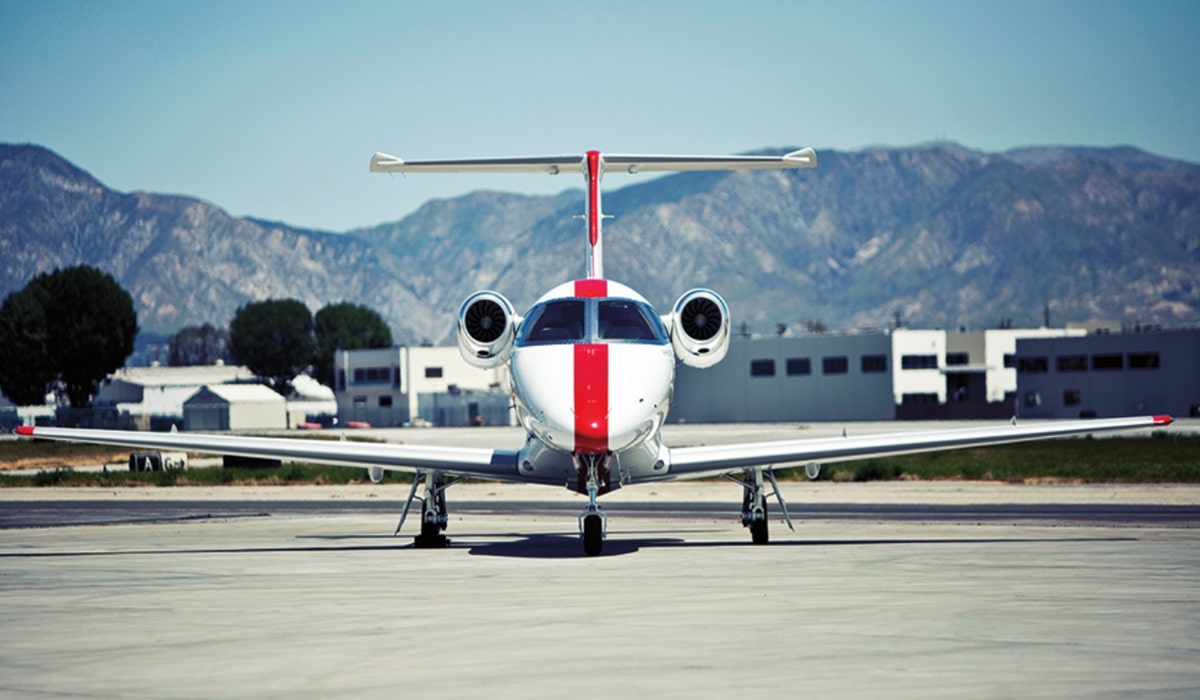
You board a private jet expecting a smooth flight. No delays. No congestion. The plane climbs quickly and cruises above the clouds. You arrive 30 minutes faster than any commercial airline could manage.
Private jets avoid commercial traffic through specific strategies. They fly higher. They choose direct routes. They access different airports. The system works because pilots and air traffic controllers coordinate perfectly within controlled airspace.
Understanding how private jets navigate around crowded skies reveals why this travel method saves time consistently.
Flying Above The Crowds: Altitude Strategy
Commercial Airlines Operate Below 41,000 Feet
Most commercial aircraft cruise between 31,000 and 38,000 feet. This altitude range becomes congested during peak travel hours. Airlines follow strict flight paths assigned by air traffic control. Hundreds of jets share the same vertical airspace.
Boeing 777s and Airbus A350s create wake turbulence. These invisible horizontal tornadoes trail behind heavy aircraft. Smaller planes flying through this turbulence experience severe disruption.
Private Jets Climb to 41,000-51,000 Feet
Private jets fly at higher altitudes—often between 35,000 and 51,000 feet—well above the majority of commercial air traffic. Long-range private jets like the Gulfstream G650 and Bombardier Global 7500 routinely cruise at 45,000 feet or higher.
This altitude difference matters significantly. Private aircraft avoid the bottlenecks of large airports, where waiting for takeoff slots can significantly increase travel time.
Flying higher provides three key advantages:
Less air traffic: Fewer aircraft operate above 41,000 feet. Private jets enjoy open sky with minimal congestion.
Reduced drag: Thinner air at higher altitudes creates less resistance. Jets fly faster and burn less fuel.
Smoother ride: Weather systems rarely reach these elevations. Passengers experience minimal turbulence.
The Federal Aviation Administration (FAA) designates airspace above 18,000 feet as Class A airspace. All aircraft operating in Class A must follow Instrument Flight Rules and maintain constant communication with air traffic control. This controlled environment ensures safety even when private jets fly above commercial traffic.
Direct Routes vs. Commercial Airways
How Commercial Airlines Navigate
Commercial airlines follow predetermined jet routes called J-Routes. These airways function like highways in the sky. Air traffic control assigns specific routes between major airports based on traffic flow and safety requirements.
Airlines rarely fly direct paths. They navigate around military zones, restricted airspace, and other aircraft. A flight from New York to Los Angeles might add 200 extra miles to avoid congestion.
Private Jets Take Shortcuts
Private jets have much more freedom in choosing their routes. This means they can take more direct routes, bypassing heavily congested airspace and reducing total flight time.
Pilots file custom flight plans tailored to each journey. Air traffic controllers approve these plans based on current conditions. The flexibility allows private jets to cut straight across airspace that commercial traffic must route around.
Consider a Paris to New York crossing. A private jet at FL430 may fly a more direct track than airline traffic below, saving 15 to 30 minutes on the crossing while experiencing a smoother ride.
This routing advantage compounds over longer distances. Private jets routinely save 30-60 minutes on transcontinental flights simply by avoiding the zig-zag paths commercial airlines must follow.
Accessing 5,000+ Airports Worldwide
Commercial Airlines Use 500 Primary Airports
Major airlines operate from large hub airports. These facilities handle massive passenger volumes. Security lines stretch for hours. Gates sit miles from parking areas.
Commercial jets require long runways—typically 8,000 feet or more. This limits options to major metropolitan airports where traffic congestion becomes inevitable.
Private Jets Land Almost Anywhere
Private jets can land at over 14,000 airports in the U.S., compared to only 500 available to commercial flights.
Smaller airports offer distinct advantages:
Faster takeoffs: No queue of 20 planes waiting for departure. Private jets taxi directly to the runway.
Closer destinations: Land 10 miles from your meeting instead of 50 miles away at a major hub.
Reduced delays: Weather affects one airport differently than another. Private jets reroute to nearby alternates instantly.
Fixed-base operators (FBOs) at smaller airports provide private terminals. Passengers arrive 15 minutes before departure. No security theater. No crowds. Direct access to the aircraft.
This airport flexibility eliminates the single biggest source of commercial aviation delays—ground congestion.
Air Traffic Control Coordination
Both private and commercial aircraft communicate with the same air traffic control system. The FAA monitors all flights regardless of aircraft type. Safety protocols remain identical.
The difference lies in service prioritization and routing flexibility.
Commercial flights follow rigid schedules. Airlines coordinate thousands of daily departures. Controllers manage traffic like assembly line workers—efficient but inflexible.
Private jets receive personalized routing. Controllers accommodate direct path requests when traffic permits. The system works because fewer private jets occupy airspace at any given time.
Class A Airspace Rules Apply Equally
Above 18,000 feet, all aircraft operate under Instrument Flight Rules (IFR). Pilots must receive ATC clearance to enter Class A controlled airspace.
Air traffic controllers maintain separation standards:
- 2,000 feet vertical separation for non-RVSM aircraft
- 1,000 feet vertical separation for RVSM-equipped aircraft
- 5 nautical miles horizontal separation
Private jets comply with identical safety requirements as commercial airlines. The altitude separation ensures aircraft never come dangerously close even when sharing vertical airspace.
Controllers issue specific instructions: “Climb and maintain flight level four-three-zero.” Private jet pilots follow these clearances precisely. The system prevents conflicts through constant radar monitoring and communication.
Speed and Efficiency Advantages
Faster Ascent to Cruising Altitude
Private jets are typically smaller and lighter than many commercial aircraft. These jets also have a higher power-to-weight ratio when compared to commercial jets.
A Phenom 300 reaches cruising altitude in 15-20 minutes. A Boeing 737 requires 25-35 minutes for the same climb. This faster ascent means private jets spend less time in congested lower airspace.
The reduced payload makes the difference. Commercial jets carry 150-400 passengers plus baggage. Private jets transport 6-10 passengers with minimal cargo. Engines push less weight, achieving rapid climb rates.
Higher Cruising Speeds
Most private jets cruise at 500-650 mph. Some models exceed 700 mph. Commercial airlines typically cruise at 480-540 mph.
Higher altitudes result in cooler and thinner air that has less resistance on the aircraft. This allows the private jet to fly faster than a regular plane and maintain elevated cruising speeds.
The speed difference adds up. On a 1,500-mile flight, a private jet flying 100 mph faster arrives 30-45 minutes earlier. Combined with faster ground procedures, total time savings often exceed 2-3 hours compared to commercial travel.
Weather and Turbulence Avoidance
Flying Above Weather Systems
Most weather disturbances occur below 35,000 feet. Thunderstorms rarely reach above 40,000 feet. Private jets cruising at 45,000 feet fly above these systems entirely.
Flying at higher altitudes gives private jets more flexibility in choosing routes. By navigating these less crowded zones, they can avoid potential slowdowns that commercial flights might encounter.
When weather forces route changes, private jets adjust instantly. Commercial airlines must coordinate with dozens of other flights before deviating. Private jets simply request an alternate path and receive immediate clearance.
Reduced Wake Turbulence Exposure
Heavy commercial jets create significant wake turbulence. Air traffic controllers mandate separation distances behind large aircraft. Smaller planes must wait 5-7 minutes before following a Boeing 747.
Operating at these altitudes also helps reduce the risk of mid-air collisions by maintaining greater separation from other aircraft.
Private jets flying above commercial traffic avoid this issue completely. No wake turbulence. No mandatory separation delays. Continuous smooth flight from departure to destination.
Flexible Departure and Arrival Times
Commercial Airlines Follow Fixed Schedules
Airlines publish schedules months in advance. Flights depart at predetermined times regardless of passenger readiness. Miss your slot and wait hours for the next departure.
Peak travel times create bottlenecks. Morning departures from New York might stack 15 jets in takeoff queue. Each plane waits 20-30 minutes for its turn.
Private Jets Depart On Demand
Passengers arrive at the FBO. Aircraft is ready. Pilots file the flight plan. Clearance comes within minutes. The jet departs.
No schedule constraints. No competing with 200 other flights for takeoff position. Controllers slot private jets into available gaps in traffic flow.
This flexibility extends to arrivals. Commercial flights land in assigned time slots. Private jets request priority if needed for time-sensitive situations. Controllers accommodate when traffic permits.
Strategic Airport Selection
Commercial Hubs Create Congestion
Major airports like Los Angeles International (LAX) or John F. Kennedy (JFK) handle 1,000+ daily flights. Ground operations become choreographed chaos. Jets taxi for 30 minutes just to reach runways.
Airline hubs force connecting passengers through these bottlenecks. A Denver to Miami trip might route through Dallas—adding 400 miles and 2 hours to the journey.
Private Jets Choose Optimal Airports
Consider traveling to Jackson Hole, Wyoming. Commercial routes require connecting through Denver or Salt Lake City. Total travel time from Miami exceeds 8 hours including layovers.
A private jet flies direct from Miami to Jackson Hole Airport in 4.5 hours. No connections. No hub routing. Straight line from origin to destination.
Access to over 5,000 airports enables closer proximity to final destinations, reducing ground transportation time.
The airport selection strategy eliminates ground congestion entirely while providing door-to-door convenience that commercial aviation cannot match.
Real-World Time Savings
The Complete Journey Comparison
A business executive needs to travel from Manhattan to Aspen for a 2 PM meeting.
Commercial option:
- Depart apartment: 6:00 AM
- Arrive JFK: 7:00 AM (1 hour)
- Security/boarding: 8:30 AM (1.5 hours)
- Flight to Denver: 12:00 PM (3.5 hours)
- Layover: 1:30 PM (1.5 hours)
- Flight to Aspen: 2:30 PM (1 hour)
- Rental car/drive: 3:00 PM (0.5 hours)
- Total time: 9 hours – Meeting missed
Private jet option:
- Depart apartment: 10:00 AM
- Arrive Teterboro: 10:30 AM (0.5 hours)
- Board aircraft: 10:45 AM (15 minutes)
- Direct flight: 1:15 PM (2.5 hours)
- Arrive Aspen: 1:30 PM (local time)
- Total time: 3.5 hours – Meeting made with time to spare
The private jet saves 5.5 hours by avoiding commercial traffic, eliminating connections, and accessing convenient airports.
Conclusion
Private jets avoid commercial traffic through altitude management, routing flexibility, and strategic airport selection. They cruise 5,000-10,000 feet above airline traffic. They fly direct routes instead of following congested airways. They access thousands of airports unavailable to commercial carriers.
Air traffic control coordinates all movements within controlled airspace. The same safety standards apply to every aircraft. Private jets simply operate in less crowded vertical and horizontal space.
The result: faster flights, fewer delays, and significant time savings. Understanding these operational differences explains why private aviation consistently delivers on its promise of efficient travel.
Your next flight could save you hours by avoiding the commercial traffic completely. For more information, visit Crewdaily.com.
